Middle Earth Travelogue Part 1/3 – Intro, The Shire and Mordor

Dual Wield

Let me just get one thing immediately clear.  I am, and always will be, a Lord of the Rings apologist.  I am comfortable in my nerdiness to admit it.  Like most of the population, I discovered Tolkien’s masterpiece through Peter Jackson’s film adaptations in the early aughties.  I was immediately gripped by the theatrical experience; the wide sweeping visuals, the grand scale of the adventure, the beauty of the dialogue, and of course Howard Shore’s truly masterful score.  Jackson’s cinematic experience continued to affect my subconscious long after departing the theater and the underlying themes of the story and its characters became my obsession. To me, The Lord of the Rings is much more than the universal tale of good vs. evil.  It’s a grand epic about the human condition.  It’s about romantic idealism, friendship and loyalty, leadership and honor, the importance of history, the relationship between power and morality, and the awesome force of hope.  Its characters are archetypal just enough to be accessible, but complicated enough to be interesting.  Despite Peter Jackson’s brilliant envisioning of the books, it is Tolkien’s content that ultimately guarantees that the films will endure as timeless classics.

Lord of the Rings struck me during a very crucial time in my life.  I was dealing with the many cliché coming-of-age struggles that every 17-22 year old has during the formative high school and college years- breakup, rejection, identity issues, grades, stressing over the future, etc.  And as dumb as it sounds, I drew a lot of childish inspiration from The Lord of the Rings that kept me hungry and idealistic enough to fight for my goals into adulthood.  In High School, and especially throughout my time at The Naval Academy, my subconscious always found some kind of motivational parallel to the story; whether it was King Theoden’s battle speeches, the grace of Lady Galadriel, Aragorn’s reassurance to the defeated Rohirrim, Boromir’s noble (and utterly badass) last stand, or the unconditional loyalty between Frodo and Sam.  I realize this sounds insanely lame and sentimental but whatever.  Lord of the Rings rules.

gandalf-the-lord-of-the-rings-aragorn-gollum-gimli-legolas-samwise-gamgee-the-return-of-the-king-fro_www_wallpapermay_com_22

This is epic. Your party last night was not.

Fast forward to October 2014.  My childhood fantasies would be realized upon reaching the end of a three-year assignment flying Navy P-3 Orions around the globe.  I was granted a precious 2 weeks of end-of-tour leave to basically do whatever I wanted.  Stationed in Hawaii (life was rough), my wife Sarah and I decided to take advantage of our close proximity to New Zealand.  Naturally, and much to Sarah’s chagrin, I oriented the entire trip around the exploration of Lord of the Rings film sites.  It would be a mammoth 1300 mile road trip spanning both islands from Auckland to Queenstown.   Armed with a few maps, a film site guide, and The Fellowship of the Ring on audiobook, we began our 8 hour nonstop flight to the bottom of the world…

Lord-of-the-Rings-New-Zealand-Map-of-Middle-Earth-by-Weta-14265016-5

“The Shire” – Auckland, Rotorua, and Matamata

We arrived in New Zealand’s largest and most northern city of Auckland – and yes – to the tune of Lorde’s Royals playing in my head since Auckland is actually her hometown.  We debarked and picked up our travel itinerary made with the Kiwi travel company “Relaxing Journeys”, which I would highly recommend. Then we picked up our trusty steed, a red Toyota Camry.  My mind was blown within about 1 or 2 seconds upon settling into the driver’s seat…on the right side.  Learning to drive on the opposite side of the road jetlagged on zero sleep in New Zealand’s biggest city was no easy task.  My mind remained blown throughout that harrowing first drive into the city.  I felt like I was in high school driver’s ed all over again.  I navigated the alien roadways slowly and cautiously.  I was terrified because I knew that the moment I broke focus I would revert back to my normal USA right-side-of-the-road autopilot mode and risk a head-on collision.  Left is life I kept repeating until my brain eventually adjusted to the opposite driving challenge.  Our first day was spent exploring the Waitakere Forest and western Tasman coast where we saw our first notable sight- a vast, rocky coastline whose beauty rivaled even that of Hawaii’s.

10625108_940459699175_6145283296558464264_n

The western Tasman coast

The next day we made our way south to the rural city of Rotorua.  The urban landscape of Auckland quickly dissipated into a rustic paradise of rolling emerald green hills.  It looked like a fairy tale.  It was quite literally, The Shire, and it blew my mind (of which there will be many future blowings of).  I love the Midwest to death but growing up there has caused my idea of “farmland” to be associated with boring flat brown plains extending to infinity.  The farmland of New Zealand was anything but that.   I had never seen so much green before- and also white- as there were thousands of sheep everywhere.  Apparently the New Zealand spring (our fall) is prime time for birthing lambs.  We were told there were more sheep in this country than humans and it definitely appeared to be true.  I initially craved to listen to the Pink Floyd album Animals, but I resisted, instead popping in disc 1 of The Fellowship of the Ring unabridged audiobook narrated by Bob Inglis.  The book of course begins in the Shire and it was just too perfect.

10665083_940459739095_336424532732270002_n

IMG_1692

We arrived in Rotorua in the late afternoon, having stopped at the Waitomo glow worm caves on the way.  We were bombarded with signs for “agro-adventures” as we entered the town, highlighting the many bizarre outdoor activities invented by bored New Zealanders such as “zorbing”.  Rotorua is a beautiful little town nestled beside a big lake with hilly outcroppings.  We arrived at the first of our long list of motels and decided to catch the last bit of twilight on a gondola ride on our way up to dinner.  The restaurant was nestled atop a big hill that provided a beautiful view overlooking the lake.  This is totally like Lake Town from The Hobbit!, my hopeless inner nerd exclaimed.

IMG_1709

The Town of Rotorua

The next morning I went jogging beside the lake to the Queen album Made in Heaven which fit my mood perfectly.  Following the run, it was time to make our daytrip north to Hobbiton, located in the small podunk town of Matamata.  Our excitement was blunted slightly when the day became gray and overcast- hardly the proper weather to experience the heart of the Shire in.  But we kept our spirits up and rationalized that the gray-green landscape was still beautiful in a kind of sophisticated English, Jane Austen kind of way.

10418939_940459769035_4767921459957343650_n

We arrived at a quaint looking office/farmhouse with a big dirt parking lot with sheep pens by the road- hardly what I expected for a film set as grand as Hobbiton.  Inside we got our tickets for the tour and marveled at the dizzying array of movie paraphernalia in the giftshop.  Sarah really loved the green leaf brooch the Fellowship wore with their elvish cloaks, but at $300 they were out of the question.

The actual film set was deep inside private land, and could only be reached by the official tour busses that ran on a schedule.    Hobbiton was unique in that it was the only LOTR film site that was still preserved by order of Peter Jackson.  This was in order to provide last minute shots for the recent Hobbit trilogy.  The land for the set is owned by a humble New Zealand family farm, of course making loads of money off the tourism.

Shire

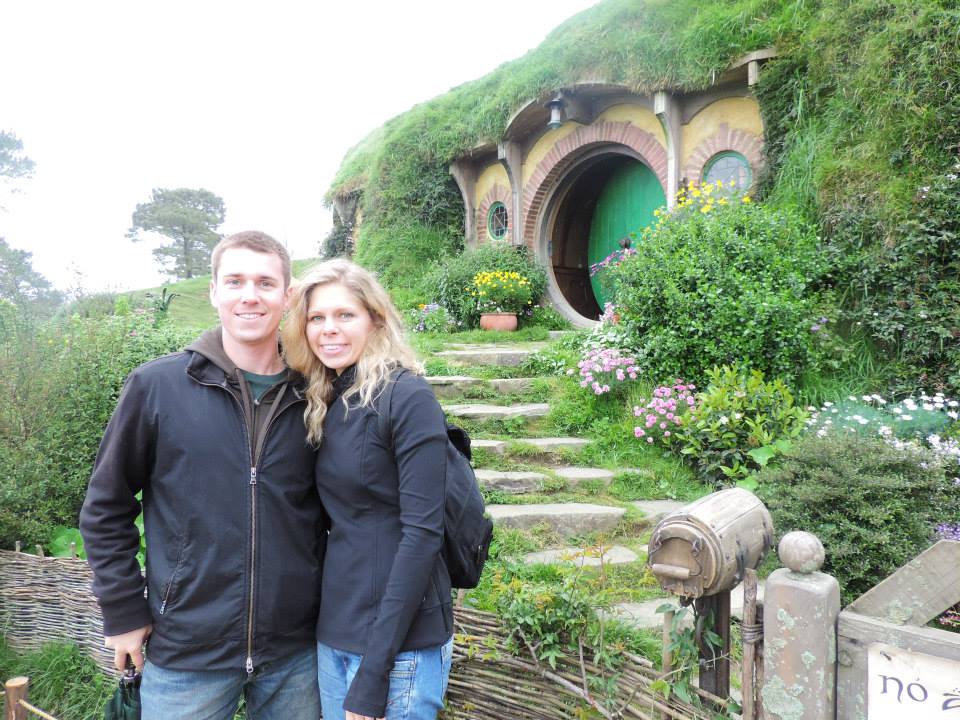
We unloaded off the bus and herded through the entrance.  Nobody in our tour group was dressed up which kind of surprised me.  Giddy like a schoolgirl, I was immediately transplanted into the movie.  It was a truly surreal sight to behold.  The set was impressively well-preserved and all 44 original Hobbit holes remained.  Even the chimneys were smoking, which the film crew used honeybee smokers to provide the effect.  The set wasn’t very recognizable from the entrance at the bottom, but after making our way up to the “House on the Hill”, the Shire’s cinematic panorama was unmistakable.  We then made our way to the famous Party Tree passing Sam and Elanor’s house on 3 Bagshot Row.    The real thing felt much smaller, but highlighted just how brilliantly Jackson’s crew engineered the scale of the set to cast the illusion of depth and space.   Our Hobbiton tour ended with free pints of Southfarthing ale at the Green Dragon.  Sarah and I called first dibs on the fireplace, and drank our brews in geeky bliss.
10710818_940459933705_3216923228937314055_n IMG_1735

We departed Rotorua the next morning and made our way south to Ohakune where they filmed many of the Mordor exterior shots.  But before leaving Rotorua I finally talked Sarah into going “zorbing” with me.  I knew I could never live with myself if I didn’t know what it was like to tumble around in a giant plastic ball careening down a steep hill.  It was an uncomfortably cold day, but the water inside the big plastic orb was pleasantly warm.  The ride itself was actually more benign than I expected since the water inside keeps you pretty stable.   At the end they opened a big drain plug and we slid out of the zorb in a kind of “wet live birth” experience.

10665732_940460108355_5294017782697326451_n

“Mordor” and The Barrel Escape – Ohakune and The Waikato River

As we drove south, the innocent rolling green terrain began to give way to rocky crags carving the terrain.  We were proceeding into the volcanic heartland of the North Island – Mordor.  It seemed a bit ironic that the two most distant places on Middle Earth were so close in real life.  We stopped enroute at the Wai-O-Tapu geothermal park which featured an alien landscape of colored geothermal pools.  It felt more like I was on the set in Star Trek: The Original Series than Lord of the Rings.

IMG_1751 IMG_1750 

We continued the drive around the massive and incredible Lake Taupo which looked like Nen Hithoel (the big lake behind the twin rock statues) from Fellowship of the Ring.  This lake provides the source water for the Waikato river on which they filmed the “barrels out of bond” scene from The Hobbit.

IMG_1755

The Waikato River, minus barrles and dwarves.

We then proceeded on the last leg of our journey to Ohakune which saw one of the biggest scenery transformations of the entire trip.  What remained of the rustic paradise of the northern region, completely dissolved into a bleak, arid volcanic plains riddled with dead trees.  It was a landscape I had never seen, let alone envisioned before.  We were actually ascending into the higher elevations of the North Island’s core where most of New Zealand’s volcanoes lie.  The entire bleak area was actually within the confines of Tongariro National Park, and it was here where they filmed Mordor and the Emyn Muil (the craggy misty place Sam and Frodo wandered through in the beginning of Two Towers).  We checked into our hotel in the mountain town of Ohakune, which was actually nestled in a beautiful alpine region at the base of Mount Ruapehu.  It was late afternoon and we were racing daylight to make it up to the Whakapapa Ski Lodge near the mountain’s summit.  This is was our only chance to see a sunset from Mordor, so we sped (which is like over 100 km/hr in NZ) up the mountain and basked in the last rays of sunlight from the barren volcanic desert.  This was the legendary Dagorath Plain of Mordor where The Battle of the Last Alliance was fought and Isildur cut The One Right from Sauron’s hand.  This was also the Gorgoroth Plain where Frodo and Sam trudged toward Mt. Doom cloaked in orc armor.  And it was here, at the base of the Whakapapa ski lodge where they filmed it.  The translucent sunset over the black plain had an eerie kind of majesty to it.  You could even see Mt. Ngauranga (the real life Mt. Doom) in the distance.

IMG_1765

IMG_1768

The next morning we drove up a different part of Mt. Ruapehu to see the spot where Gollum chased a fish down the river in Two Towers.  It was a beautiful mountain stream that plunged into a nearby waterfall.  There was still a ton of residual mountain snow from the IMG_1773winter during filming, so the crew hired the local fire department to wash away the snow with fire hoses.  Andy Serkis was apparently really pissed at Peter Jackson who, true to form, made him do a ton of takes despite the freezing cold water!

This concludes part 1/3 of my travelogue.  Part 2 will cover our southbound journey to Wellington and Christchurch where we’ll discover Peter Jackson’s private Hollywood, the great river Anduin, the Nazgul chase, and most importantly- Rohan.  Stay tuned!
 

Campaign Stories: Wiliken 24

The githzerai never did learn from his mistakes.

When he watched The Shining City disintegrate before the might of a devastating arcane weapon that he’d powered, Wiliken had dropped his sword and abandoned the life of a blackguard warrior. This is true.

But then he’d picked up the bow, and in so doing he gave his soul over to war once again.

Wiliken and company had made some powerful enemies in their short time together. They’d traveled deep into enemy territory only to put a target on their backs, because the moment they crash landed the severed bust of an other-worldly leviathan into the tranquil fields of the realm they had all grown to know and love, the sound and fury alerted everyone in the region to their presence. It was only a matter of time.

He’d very nearly learned the value of a calm mind on the battlefield. After nearly getting killed in the pits of Valgaman’s Menagerie of Doom simply because he’d rushed into battle rather than assessing the situation, Wiliken had taken to meditation.

But rather than removing himself from the cosmic drama and acquiring inner peace, the visions pushed the githzerai toward the pursuit of justice at any cost.

When the first enemy to find them turned out to be a troop of ogres covered in tumors and various grotesque animal parts — a feathered wing here, a pig’s snout there, and never in the proper place either — vulgar tongued imps, and a single githzerai as their leader, Wiliken showed no restraint.

“I know you’re there,” the other githzerai had taunted. “I’ve been watching you, dad.”

“Dad?” the bewildered mage Jenkins said.

“The githzerai is my son,” Wiliken said. “He calls himself Iiuza, but he is no son of Iuz.”

Wiliken hoped to hurt his son with these words, but thinking of his wife, the woman Iiuza had hunted down and killed, the githzerai softened. “Why did you do it, boy? Why did you kill her?”

“She was a traitor like you,” Iiuza said. “All traitors die the same traitor’s death.”

Wiliken rushed his son just as he’d rushed to rescue the camel Jean-Baptiste, only to be cut down the bolts of two hidden basilisks in a battle that seemed to take place so long ago.

Wiliken loosed three arrows as he charged at his son.

When a raiding party of githzerai entered this realm to battle Iuz, Wiliken had been the only one to survive. He’d allowed the Iuzians to take him prisoner rather than continue to fight beside his brothers and sisters, placing his life above theirs. He’d valued his moving up in the ranks of the Iuzian army over his relationship with his wife, and now she was gone. Instead of raising his son to serve the good, Wiliken had wallowed in the evils of his past, and so Embrion became a far more villainous “Iiuza” than Wiliken had ever been. In the last few weeks Wiliken had tried to put his selfishness behind him in service of the Barony of Felshore and the allies who’d rescued him from Valgaman’s doom.

But he left those friends behind in pursuit of vengeance.

The githzerai’s arrows missed their mark, but his son’s blades proved more accurate. Iiuza teleported three times, and each time he left his father with a wound more deadly than the last. The first was a slash to the arm that caused Wiliken to drop both his bow and his guard. The second was a stab to the gut, which alone would have killed Wiliken in due time. The third was a slash across Wiliken’s throat.

Wiliken never managed to learn from his mistakes, so he died as he’d lived — alone.

Thus ends Campaign Stories.

Sunday Roundup: #Selma50, Red Wings, and Social Justice Warriors

It’s Sunday and it is time to catch up on the best the internet had to offer during the past week. If you have any article suggestions for the Sunday Roundup send me a tweet @tbone1225.

Glendening hamstrings Red Wings top line

Tom Mitsos disputes Mike Babcock’s decision to put Luke Glendening on the top line with Pavel Datsyuk and Tomas Tatar in his article “Red Wings: Why is Luke Glendening Getting Top-Line Minutes?” for The Hockey Writers.

Red Wings goalies: Mrazek elite, Gustavsson obsolete

“Gustavsson’s time in Detroit was great, but it’s time to end the experiment and look toward the future.” While Tom Mitsos is thankful for the service of goalie Jonas Gustavsson, he makes the case for the Detroit Red Wings investing in Petr Mrazek instead in his article “Time For the Jonas Gustavsson Experiment to End” for The Hockey Writers.

A #Selma50 tour of the Freedom Movement in Mississippi

Richard Thomas details how the freedom movement in Mississippi required different strategies than anywhere else in his article “Lessons from #Selma50: #1 Medgar Evers and organization #TCUCRBT” for The Resist Daily.

Next stop, Alabama: #Selma50 tour continues

In his article “Lessons from #Selma50: #2 Bloody Sunday,” Richard Thomas of The Resist Daily describes the systemic inequalities many residents of Selma, Alabama have faced and continue to face today.

Red Wings potential first round playoff matchups

Tom Mitsos of The Hockey Writers forecasts a few of the more likely first round matchups in his article “Red Wings’ Possible Playoff Matchups.”

Social Justice Warriors and the wake they leave

“Organizing, advocacy, agitating, etc. is not about social or moral purity. Calling out injustice is not about bullying individuals but about naming a visible problem.” Gabe Pfefer discusses privileged apathetic approaches to social justice that ultimately create more problems in his post “For the Last Time, Social Justice Activism is not about Ideological Purity” on Ephphathoughts.

Holy anger in the face of injustice

Gabe Pfefer discusses how anger can be valued negatively or positively depending on its context, expression, object, and purpose in his post “Anger What Is It Good For? Quite A Lot Actually.” on Ephphathoughts.

Campaign Stories: Wiliken 23

The githzerai was surprised at the appearance of this older version of Jenkins, and he was put off by the mystery of the two wizards, but for his comrades — those who had traveled with Jenkins and lived according to his authority for so long — the disbelief was complete. Were they not beset on all sides by a swarm of mucous-slaked giant insects, this would have been a fantastic time to clear the air on exactly what was going on. As it was, however, the conversation would have to be put on hold.

Perhaps of greater importance was the fact that the party’s entrance into this foreign realm had just been cut off and, like this broken old man with dirty, tangled curtains of hair, they would be trapped here until other adventurers found a way into this strange plane.

“What is this place?” Wiliken said to the older Jenkins.

The wizard was weeping. At first the githzerai thought them tears of pain. After all, this Jenkins was limping about on a leg turned sideways, likely broken years ago and healed incorrectly. It took a few moments for Wiliken to realize they were in fact tears of joy. Jenkins was among friends he hadn’t seen for years, friends he’d likely thought long dead. “No place,” Jenkins said, confused, as if language no longer came easy to him.

Wiliken stomped his foot twice on the solid ground beneath him. “This. Place.”

“No place,” Jenkins said. “Thing.”

“What?” Wiliken responded.

“Leviathan.”

If this were the real Jenkins, Wiliken thought, and it seemed so from his response to seeing his supposedly fallen comrades, then who was the wizard they’d seen in the remains of the Shining City, the man that Wiliken had revealed his deepest desire to, the one he’d hoped to enlist the help of in order to stop his son? Who was this man who had chosen to set Wiliken free?

As Wiliken fired off arrow after arrow into the sky above them, he noticed Jean-Baptiste take off frantically into the darkness, and he might have been swallowed by the horde of parasites were it not for the reflexes of strong Ugarth who grabbed their friend by the shoulder and pulled him back.

“You’re no good to us dead,” Ugarth said.

“But,” Jean-Baptiste said, “the portal.

“We stick together,” Ugarth said. “We survive.”

“A portal!” Jenkins shouted. “You have a portal?”

“We had a portal,” Jean-Baptiste corrected him.

“No! No! No! No!” Jenkins shouted. The old wizard scurried off in the same distance Jean-Baptiste had attempted to traverse. He succeeded in escaping the grasp of Ugarth, who cursed under his breath. Wiliken darted forward only to stop dead in his tracks and recoil as a blinding beacon shot up into the air around them. For a moment, the sky was as bright as a sunny day, and the multitude of flying beasts was uncannily clear. When that moment had concluded, there remained a faint jet of light travelling off into the distance, tracing the path to their collapsed portal. The old wizard Jenkins apparently had a few tricks up his sleeves even now.

Wiliken and friends used the moment of brightness to regroup around the wizard.

“Can you reopen the portal?” Wiliken asked.

“I can,” Jenkins said. “But we will have to get closer.”

Wiliken stepped forward before Jenkins stopped him. “Not that way,” he said, and then he pointed in the opposite direction. “That way.”

It was a leap of faith, but Wiliken turned in the opposite direction and ran with the surprisingly spry old man. He and his allies kept the creatures from flying down and swiping at the wizard who might be their only way out of this place. Sometimes to go one step forward it was required to go two steps back.

The group ran, Ugarth punching the dive-bombing insects out of the sky, Wiliken popping off quick shots, sometimes two at once, everyone helping in their own way, and it seemed like they were running a fool’s errand, but when they approached a large membranous chasm, they stopped.

“I think I sense what Jenkins was saying,” Jean-Baptiste said. “In fact, I’ve been sensing it since we got here. This thing we are on. It is alive.”

“Ah,” Wiliken said. “The ancient beast of legend. The leviathan. Large as a world, ever twisting and turning through the nether.”

Grace pointed to the chasm. “Then what is this?”

“A nostril,” Jean-Baptiste said. “I have an idea.”

He shoved his staff into a pink spot on the ground, and it gave way before his strength. A din erupted in the air that threatened to shatter the githzerai’s eardrums. Whatever this beast was that they were currently upon, leviathan or otherwise, they had hurt it. Jean-Baptiste pulled back on his staff, working it like a lever inside the creature’s sense organ, and Wiliken could feel the ground move as the monster fought against Jean-Baptiste. As Jean-Baptiste struggled with his staff, a surprising smile came over his face. Jean-Baptiste was winning. He was turning the beast around.

“Now it’s your turn,” Wiliken said. “Get that portal open.”

Ugarth had turned into a living shield for the wizard Jenkins who had brightened the sky once more with his staff. The now familiar trail of brightness shot off in the same direction as before, but this time it did not taper at the end and whisper away. It continued throughout the emptiness and brightened at its furthest point. As Jenkins muttered silent words from his lips, waves would flow along the route of this string, and the string itself began to grow. Before long the portal was once again visible. It was growing.

But the leviathan was now hurtling toward the portal, and it became clear that the portal was growing too slowly.

“We’ll never make it,” Grace said.

Wiliken was surprised by his own feeling, but he felt his own kind of brightness, something he couldn’t remember feeling. Wiliken had friends. In his mind, he’d called these people friends for most of the day, and sometimes in previous days as well. His wife was dead and his son was a vicious murderer bent on destroying most of what Wiliken had ever known, and yet he felt hope. Nobody was as surprised by this as the githzerai, despite the strange silence that erupted when he placed his hand on Jenkins’ shoulder and spoke.

“Yes,” Wiliken said. “We will.”

Jenkins was straining beyond what should have been his limit, and yet he pushed even harder, breaking any mental barrier, stepping outside of the game of human limitation, a true wizard in every meaning of the name. The githzerai had once encountered a tribe of humans during his military days who had a secluded shaman of great power. They had explained that one of these individuals was born in each generation, and the word they had used for this shaman translated loosely to “miracle.” Jenkins was one of these miracles.

They were far too close to the tiny portal for comfort, and it became clear that the consequences of the leviathan barreling head-first into this tiny portal would be cataclysmic, but at the last moment Jenkins screamed and there was a sudden burst of light. The portal ripped open wide. They were going to make it.

“The portal,” Ugarth said.

“Yes,” Grace said. “It’s open. We’re going home.”

“No,” Ugarth said. “We have to close it.”

“What?” asked Grace.

“We have to close it,” Ugarth said. “If we don’t, this leviathan will destroy everything we’ve ever known. Everything we’ve done will have been for nothing.”

“Can you do it?” Wiliken asked Jenkins, but the old man had collapsed. “Jenkins?”

Campaign Stories concludes in Wiliken 24.

Star Trek Into Whiteness: Khan and Racial Identity

It is a well-documented fact that I understand the meaning of a variety of highly revered holidays differently than my peers. This fact is perhaps best exemplified by the fiasco surrounding my interpretation of “veteran” which disrupted many of my Facebook friends’ celebrations of Veterans Day in 2013. As such, it should come as no surprise that my own personal traditions during the Christian holy week leading up to Easter differ from standard liturgy of the season.

My ideal Good Friday involves sitting back and watching Star Trek II: The Wrath of Khan with optional artisan bread and wine. Widely acclaimed as Star Trek’s greatest moment, The Wrath of Khan is perhaps best remembered for its conclusion in which beloved science officer Spock (played by Leonard Nimoy) sacrifices himself in order to restore the warp core of the Enterprise and prevent the demise of its entire crew. Those of you who think I am as antithetical to holidays as a Jehovah’s Witness may find my ritual surprisingly close to the ceremony of the body and the blood and the personal sacrifice of Christ observed by your standard issue Christian.

This year’s viewing of The Wrath of Khan is likely to be profoundly different than those of years past because of a couple of changes that have taken place in the past few months.

Nobody will be surprised to learn that the death of actor Leonard Nimoy at the age of 83 near the conclusion of February is likely to factor into the general mood of this year’s Good Friday. The actor best known as Spock has had an inordinate amount of influence on my life since the early childhood Star Trek conventions my father would take the family to.

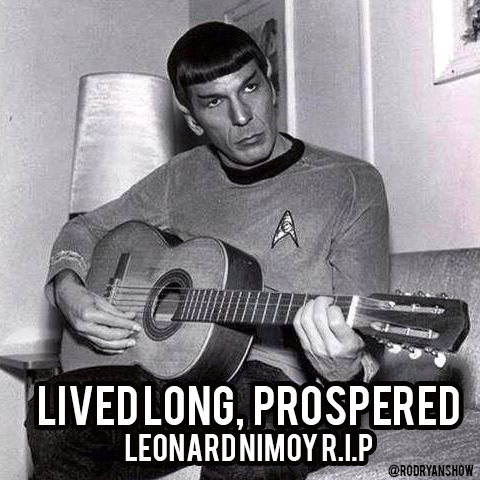
Leonard Nimoy passed away on February 27, 2015 at the age of 83 due to complications related to chronic obstructive pulmonary disease (COPD).

Leonard Nimoy passed away on February 27, 2015 at the age of 83 due to complications related to chronic obstructive pulmonary disease (COPD).

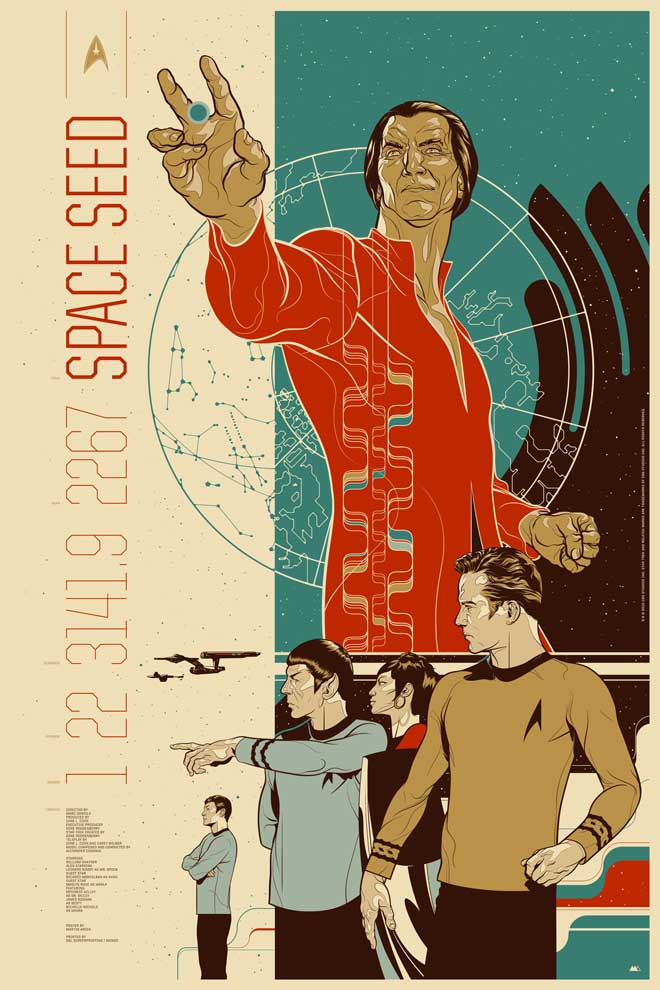
But it wasn’t just the influence of Leonard Nimoy that made The Wrath of Khan one of my favorite films of all time. After dissatisfaction with Star Trek: The Motion Picture in 1979, Paramount executives brought producer Harve Bennett into the discussion about where to go with its sequel. Bennett is reported to have watched all 79 original series episodes in preparation, and it was during this process that he was struck by Ricardo Montalban’s portrayal of Khan Noonien Singh in the 1967 episode “Space Seed.” Bennet’s desire to bring Khan and crew back from exile was the “seed” that grew into Star Trek II: The Wrath of Khan. Producer Harve Bennett and actor Leonard Nimoy, both heavily responsible for some of the best scenes in film history, died within days of one another.

These deaths are likely to add a great deal of gravity to the final scenes of The Wrath of Khan, but perhaps more transformative even than the deaths of Nimoy and Bennett is the fact that I have been rewatching the early episodes of Star Trek: The Original Series with a group of friends. This past week, like Bennett before me, I watched Khan’s first appearance in “Space Seed” myself. While the episode is rife with difficulties, from the awkward emphasis on romance between Khan and ship historian Marla McGivers to the Kirk’s foolish oversight in giving a tyrannical super soldier access to the ship’s most sensitive documents, there was a general agreement that something great was happening in this episode. Admittedly, our perception of the episode was colored by the film sequel we knew would come years later, but “Space Seed” also succeeded at developing a large chunk of the history between the 1960s era when Star Trek was produced and the 2260s era when Star Trek takes place. Ultimately, I think there is reason to believe that it is a great episode in its own right, even despite its shortcomings.

The episode "Space Seed" of Star Trek: The Original Series introduced the quintessential Trek villain Khan Noonien Singh (played by Ricardo Montalban).

The episode “Space Seed” of Star Trek: The Original Series introduced the quintessential Trek villain Khan Noonien Singh (played by Ricardo Montalban).

It was a point brought up by fellow Longest Wind writer Josh Toulouse that promised to “color” my future viewing of The Wrath of Khan. Josh was so spot on in his criticism that I wish to quote him directly from his Facebook post:

Watching this episode, I was again reminded how much the latest Star Trek movie kind of annoyed me. SPOILERS: How the hell is Benadict [sic.] Cumberbatch Khan? People get so pissed off when they hire a person of color to play characters that have previously been white (see the new Johnny Storm and the rumor that the new Spidey might be a black actor or that Idris Elba might be the new James Bond), which is ridiculous since the race rarely has anything to do with who those characters really are. Here, however, Khan is very defined by the fact that he is not a white European or American, so of course the new movie hires a white Englishman to play him. Rubbish. Ruined the film for me, even more than the nonsensical Historian Star Fleet officer ruined this episode [“Space Seed”] for me.

While I couldn’t help but to solicit Josh to write a post expanding on this juxtaposition, possibly throwing in references to casting choices for Kingpin in Daredevil, Nick Fury in The Marvel Cinematic Universe, and Heimdal in Thor, I knew that my friend Rod Thomas had actually written two-part review of Star Trek Into Darkness that got to the root of Josh’s problems back in 2013 for his blog The Resist Daily.

In the first part of his review, titled “Star Trek Into Darkness Review Part One: What I Enjoyed,” Rod started out with the positive aspects of the film. In addition to giving praise for the performances of many of the main characters, Rod was generally happy with the importance of persons of color in this film.

Into Darkness passes the Race/POC Bechdel test, which for those unfamiliar is just a way of measuring racial diversity of a film. How so? There has to be one scene where 2 people of color discuss anything but (usually) white protagonist. That simple, really. The Help barely passes. No, I’m dead serious, it was 90 minutes into that movie before it happened. Into Darkness within the first 2 scenes I believe had a scene with Sulu and Uthura [sic.] taking about the U.S.S Enterprise. It was a pleasant surprise.

The second part of the series “Star Trek Into Darkness Review Part 2: Whitewashing Khan Means Plotholes & Mediocre Science Fiction” was unsurprisingly less pleasant. Rod notes the “Space Seed” depiction of Khan as “a political tyrant from India in the 1990s, possibly Sikh” and The Wrath of Khan‘s similar portrayal as “a POC powerful villain who outmatches Captain Kirk,” both of which are strongly at odds with J.J. Abrams’ decision to cast British actor Benedict Cumberbatch. Rod does note the problems associated with Gene Roddenberry’s decision to cast Ricardo Montalban, an actor of Spanish and Mexican heritage, as a dictator originating in the Indian subcontinent, but notes a consistency of message in this early faux pas, the idea that a “person of color can portray a complex, sympathetic antagonist, one who puts our leader on the brink, and who REMAINS part of the cast in what is considered one of the greatest (if not the greatest) science fiction films of all time.”

Benedict Cumberbatch succeeds Ricardo Montalban as Khan in Star Trek: Into Darkness.

Benedict Cumberbatch succeeds Ricardo Montalban as Khan in Star Trek: Into Darkness.

Rod goes on to list several other critiques he has of Star Trek Into Darkness, but I do not wish to discuss them here. His posts are well-worth reading and I have linked them above for your enjoyment. In fact, it is worth noting that Rod nearly overshadows his valuable criticism of Into Darkness with an exposition about his love for Star Trek: Deep Space Nine which is about as on-cue as any description I’ve ever read of the series.

When I look forward to Good Friday, I cannot help but to see a contradiction, and that is the fact that my traditional holiday is proving to be more and more a-traditional with each passing day. It is true that I have at times prided myself at being described by others as an iconoclast, but that doesn’t mean that I’m completely against finding little bastions of comfort here and there, especially as I get older and have more difficulty dealing with change. The important question I have to ask myself is whether or not this change is for the better, and I believe the answer must be yes.

To watch Star Trek II: The Wrath of Khan was to become like a child again. I could easily put myself into the shoes of the boy who would watch his dad’s old VHS copy or catch the film during a TBS holiday weekend marathon. Slowly, however, I’m beginning to see things through the eyes of the father. I’m married and seriously entertaining the idea of having children in the next couple of years. It is only right to add some depth to my Good Friday tradition. Life is not without pain. Leonard Nimoy and Harve Bennett have passed away, and so must we all. Life is also not without injustice, and it is our job to name the sources of injustice and do our best to overcome them.

And after these servants of entropy waltz into my life, what of my original tradition will remain?

Rebellion against the breaking apart of the universe, no matter how hopeless, or, as it is more commonly known in most circles of society, communion — this will remain. In the spirit of communion I welcome all of you to join me on Friday, April 3, “Good Friday,” as it is called, in order to watch Star Trek II: The Wrath of Khan, to eat, to drink, and to remember.

Remember

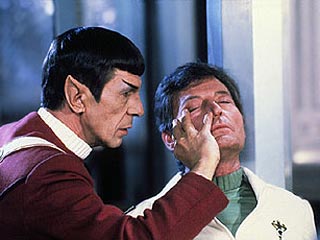
Leonard Nimoy as Spock and Deforest Kelley as Bones in the 1982 film Star Trek II: The Wrath of Khan. “Remember.”

Sunday Roundup: Spocking the Fivers, Duncan Keith #WhatsYourGoal, and ISIS Social Media Presence

It’s Sunday and it is time to catch up on the best the internet had to offer during the past week. If you have any article suggestions for the Sunday Roundup send me a tweet @tbone1225.

STOP SPOCKING THE FIVERS!

https://twitter.com/The_CDR/status/571379011886059520

“With a pen and a little bit of time, former Canadian Prime Minister Sir Wilfrid Laurier, who is featured on the Canadian $5 bill, can pass as a pretty convincing Spock.” Brian Koerber of Mashable writes about Canadian Design Resource’s (CDR) call to action to “Spock” Canadian five dollar bills in memory of Leonard Nimoy’s passing in his article “Canadians ‘Spock’ their $5 bills to honor Leonard Nimoy.”

Red Wings gain a physical presence in former Dallas Star Erik Cole

“[Cole is] a physical body with some scoring touch the Red Wings have lacked ever since Franzen went down.” Tom Mitsos discusses Detroit’s trade-deadline deal for former Dallas Star Erik Cole in his article “Erik Cole Acquisition a Solid Move for Red Wings” for The Hockey Writers.

Howard’s injury, scouting, and more in a Red Wings Mailbag

Tom Mitsos answers a barrage of Red Wings questions in his post “Red Wings Mailbag: Was Jimmy Howard’s Injury a Positive?” for The Hockey Writers. As an added bonus, you can read Ansar Khan’s answers to the same questions at MLIVE in his artlce “Ask Ansar: On Red Wings trade possibilities and whether Marek Zidlicky is a viable lower-cost option.”

Red Wings prospect Xavier Ouellet tells all

In his post “Q&A With Red Wings Prospect Xavier Ouellet” for The Hockey Writers, Tom Mitsos interviews Grand Rapids Griffins d-man and Detroit Red Wings hopeful Xavier Ouellet.

Intra-faith implications of ISIS in Libya

“The narrative that the 21 martyrs in Libya somehow fit into the American Culture War is just as dangerous and inaccurate as the claim that the Coptic faith does not fit into Christianity.” Guest blogger Nathan Lewis Lawrence of George Mason University returns to The Resist Daily with an article titled “Will ISIS Bring About Christian Unity?” which addresses the implications of ISIS in discussions of Christian identity.

Blackhawk Duncan Keith teaches wheelchair bound child Cammy to skate

“The two quickly hit it off by bonding over how many teeth each have lost, and sharing their love for the Blackhawks.” C. Roiumeliotis of CSN Chicago tells the heartwarming story of the day a young Blackhawks fan named Cammy skated with her favorite hockey player Duncan Keith in his article “Duncan Keith makes Blackhawks fan’s dreams come true.”

Howard, Jurco, Zidlicky and Cole may decide Red Wings playoff berth

With the playoffs on the horizon, Tom Mitsos examines what the Detroit Red Wings need to do in order to stay in the game in his article “3 Keys for Red Wings Down the Stretch” for The Hockey Writers.

ISIS: Now available via Twitter and the Android operating system

In an article titled “Islamic State takes to social media, has about 46K Twitter accounts,” David Kravets of Ars Technica describes how social media, which was once a vehicle for pro-Western revolution a la the Arab Spring, has become a vehicle to promote ISIS.

“Sign her up.” Blackhawks fan won’t leave game despite head injury

“She said she knew she was in trouble when she saw bloog on other people’s hands and assumed it was hers.” Greg Wyshynski tells the story of a Blackhawks fan named Alexis Bovard who wouldn’t leave her first live game despite getting swatted by a pain of glass and bleeding all over in his article “Blackhawks fan cut by glass stays in her seat to watch the game (Video)” for Puck Daddy.

Campaign Stories: Wiliken 22

Darkness. Darkness was the feel of this place, the thought that came to the githzerai’s mind when he tried to capture this alien world in his mind, and yet this landscape was not without light. A strange glow arose here and there, casting strange shadows with dull bio-luminescence. The ground was rough and moist, pebbled with slick scales. Wiliken half-expected a light rain, like those that arise in dense, murky forest, not because of clouds in the sky but because the muggy air had become greedy in its liquid holdings — like all others punished for their hubris its prize was forfeit. Thus the rain. But not so here. Where there should have been water, there was a hot, acrid stench. The githzerai was certain that no life could form in this place. Perhaps they had finally arrived at that preached of place where darkness rules and the inhabitants bite down on stone and bitumen, the place of living death. Perhaps this was the final chapter for Wiliken and his allies.

In death there is nothing left to fear. Wiliken could not remember the source, but the quote had long resonated with him. When he entered this world from the other one and all who came with him were put to the sword, though he was just a boy he would not let the despair of death defeat him, and when the allure of death brought him into the service of the Iuzian empire as one of their most feared warriors he feared neither the foes who stood in his way nor the punishment of his leaders were he to turn from their orders. Perhaps some dark prophet of the god Iuz emerged from one of his ecstasies with only those words on his tongue. Perhaps it was some profound poet of revolutionary peace. To the githzerai, it did not matter. These words were in his blood. They commanded him to move forward one footstep at a time, to trust his senses, to surrender to the inevitability of the landslide of time.

The strange light revealed mounds to either side of the githzerai, few taller than his tallest comrade, mountains in the miniature. He’d seen similar in some of the villages he’d walked through, those less advanced than the cities he’d always called home. These mounds marked where the people had put to rest their loved ones once they had passed away. Even in those days Wiliken had felt reverence for such mounds. It could have been that he’d valued life even in his darkest days or even that he knew that he had put many of those people in the ground either directly or due to the consequences of his choices, but he felt reverence no less.

Time and time again, the githzerai had noted that life will show itself in the most unlikely of places, for even in this place tiny pests skittered this way and that, revealing themselves in the gloomy light. Larger sounds spoke to the possibility of larger beasts. Wiliken drew his bow and readied an arrow. He’d expected a grey-scale gloom and eternal nothingness, but perhaps he ought to have readied himself for the vicious beasts that had proven strong enough over the generations to survive in this horrid clime. Wiliken detected a shuffling behind one of the mounds some fifty paces to his right, and, having decided that the best defense is a good offense, he sneaked off toward the origin of the sound, himself the night-stalker.

His keen ears detected a strange variation of a yawn, a quiet shuffling, and then rest. As he stepped sideways, one foot over the other, he noticed that the sound had died down. His prey was alerted to his presence. Though the beast was clearly attempting to go noiseless, Wiliken heard its labored breathing on the stink-filled air.

Wiliken paused, uncertain how to proceed. He heard the familiar footsteps of his allies as they crept up behind him. The beast might be dangerous, but the githzerai would not die alone if the battle went poorly. It’s better than I deserve, he thought before shouting out, “We have the greater numbers! Show yourself!”

He heard a slight shriek followed by a skittering not unlike a two-hundred pound rodent. What emerged from behind the mound was certainly human, a pitiful old cripple covered in a shroud and stinking of his own waste. The man pulled back his hood to reveal a pair of rheumy eyes, and an unmistakable complexion, if not marred by wrinkles and scars. “Hello,” said the tentative voice. “Who are you?” He raised a staff, still brimming with the spunk of a man accustomed to winning at quarrels.

It was Jean-Baptiste who uttered the impossible words that everyone was thinking: “Jenkins?”

The old man cocked his head sideways like a trained dog at the sound of an unfamiliar command. “Do I know you?”

The last syllables of his question were drowned out by a sudden din as the ground around them erupted with seismic waves. It was as if the stones of the earth themselves were attempting to take form and eject these foreigners.

“Oh no! Oh no! Oh no!” Jenkins said, clutching at his few remaining wisps of hair. “You’ve really done it this time! You’ve really done it this time!”

There were enough explosions in quick succession that it began difficult to track exactly where the sound was coming from, but what was present to the githzerai’s senses was the fact that large nests of insectoid creatures emerged in a blast of puss-like ooze with each blast. Where once there was complete and utter waste, now there emerged a swarm of aggressive beasts that had already began to take quick and painful swipes at Wiliken and his allies.

He raised nocked an arrow and halted. Something else had changed. Something perhaps more dangerous than the flying parasites. The darkness here was different somehow. It was more complete. No sooner had Wiliken posed the mystery to himself than Grace solved it.

“The portal,” she said, holding a limp coil of rope in her hand. “It’s closed itself. We’re trapped here.”

Campaign Stories continues in Wiliken 23.

Sunday Roundup: Academy Awards, Leonard Nimoy, and Black History Month

It’s Sunday and it is time to catch up on the best the internet had to offer during the past week. If you have any article suggestions for the Sunday Roundup send me a tweet @tbone1225.

Social justice, science (fiction), and animated flicks are amongst the winners of the Josh2K14

Mere hours before the Academy Awards aired, Joshua Toulouse at Fat Train put up his post “TOP TEN FILMS OF 2014.” Josh is my go-to guy when it comes to film and television, and I look forward to his top ten all year.

Transcripts from an Academy Award live tweet

While the Oscars were going on Joshua Toulouse at Fat Train was busy live-tweeting the event. He collected all of his tweets in a post titled “8th (Mostly) Annual My Thoughts As I Had Them During The Oscars.”

West coast Wings watching

Tom Mitsos of The Hockey Writers made a trip to the Staples Center in Los Angeles to witness The Kings going head-to-head with the Detroit Red Wings. He wrote about his experience in his post “Behind Enemy Lines: A Red Wings Game at Staples Center.”

Red Wings pick up a bunch of away jersey wins

For Tom Mitsos of The Hockey Writers the key to on the road wins for the Detroit Red Wings is playing strong after those slow starts. In “February Road Trip Has Been Successful for Red Wings” Tom writes about Detroit’s epic road war throughout the first months of the year.

Eucharist, ISIS, and the brotherhood of man

“At the Lord’s Table, characterization and dehumanization must end.” For Adam Schneider, graduate student at The Seattle School of Theology & Psychology and guest writer for The Resist Daily, the transformation that takes place during the Eucharist is enough to change the world and bring about nonviolence. Read more from his theology of communion in his article “The Path of Forgiveness: Inviting ISIS to the Eucharist.”

Wil Wheaton joins the entire universe in mourning Leonard Nimoy’s death

“In ways that I couldn’t articulate at the time, I wanted to be Mister Spock because if I was, I could be myself — quiet, bookish, alien to the people around me — and it wouldn’t be weird. it would be awesome.” Internet geek mogul and Star Trek alumnus Wil Wheaton reflects upon Leonard Nimoy’s influence on his life in his article “REMEMBERING LEONARD NIMOY.” Nimoy, best known for playing the beloved Vulcan Spock, passed away on February 27th after a long battle with COPD.

Couture’s fine is pennies in a bucket

“My biggest gripe with the Department of Player Safety is it bases its fines and suspensions on the severity of the injury.” In his article “Is Logan Couture’s Fine Too Lenient?” Tom Mitsos of The Hockey Writers explores crime and (lack of) punishment in the NHL.

Black history / white supremacy

“What I am not for is a Black History Month that exists as a ritual that reminds Black people annually of our need to assimilate to the dominant culture.” Rod Thomas at The Resist Daily discusses the achievements of African Americans, the contradictions of Black life, and the reasons why there is not a White History Month in a brief post titled “Why I Won’t Waste My Time Defending Black History Month.”

Blackhawk Brent Sopel’s retirement and his impact on the LGBT sporting community

“Brent Sopel bringing the Stanley Cup to the Pride Parade may not define his 18 years as a pro or 12 years in the NHL — nor does it erase some of the other questionable stances he’s taken — but it remains an important moment for LGBT hockey players and fans.” Greg Wyshynski at Puck Daddy recounts the impact of Brent Sopel’s decision to bring the Stanley Cup to a 2010 Pride Parade in his article “As Brent Sopel retires, impact on LGBT hockey not forgotten.”

Sunday Roundup: Red Wings prospects, Northern Racism, and Lentsploitation

It’s Sunday and it is time to catch up on the best the internet had to offer during the past week. If you have any article suggestions for the Sunday Roundup send me a tweet @tbone1225.

Things you’ve always wanted to know about the Red Wings

Tom Mitsos answers questions about the Red Wings in his mail bag post for The Hockey Writers. As an added compare/contrast bonus, Ansar Khan answers the same questions at MLive.

Racism is alive and well in northern states

“The perfect storm of Northern amnesia and largely white rural-sides weave a story that claims that Northern racial tensions (if they exist at all) only seem to occur in large cities where blacks are concentrated; thereby subtly implying that the issue is the very presence of said communities.” Guest writer Nathan Lewis Lawrence writes about manifestations of white supremacy in northern states in general and Ohio specifically in his post “Four Things You Didn’t Know About Northern Racism” for The Resist Daily. Check out his other writings at his blog Taming Cynicism.

Petr Mrazek won’t be stuck in the AHL for long

“[Mrazek is] the future goalie for the Red Wings, but he’ll need some time to adjust to the NHL.” Tom Mitsos talks about the short- and long-term possibilities for goalie Petr Mrazek in his article “Red Wings Prospect Petr Mrazek Motivated to Improve” for The Hockey Writers.

Is Marchenko a good defensive fit for the Wings?

Tom Mitsos discusses the need for right-handed defenseman Alexey Marchenko on the Red Wings in his article “Do the Red Wings Need to Trade With Alexey Marchenko?” for The Hockey Writers.

Exploited foreign workers and the spiritual season of Lent

“I think it is appropriate here to illustrate the exploitative nature of outsourcing through the context of the current season of Lent.” With the religious observance of Lent in mind, Richard Thomas discusses concepts of freedom in the face of oppressive economic institutions in his article “Our Bondage And Our Freedom: on Lent and neoliberalism” for The Resist Daily.

“Psychic” by DARKSIDE album review

I want to talk about a relatively unknown two-piece recommended to me by my good friend Josh Goulding. The name of the band is called DARKSIDE. Having recently attended one of their live shows Josh immediately recognized their brilliance; and after telling me about them, their atmospheric jams would come to haunt my mind for weeks to come (in a really good way). They are a band responsible for crafting an electronic sound unlike anything I’ve heard before. DARKSIDE is the collaborative union between New Yorkers Nicolas Jaar and Dave Harrington, two young Ivy Leaguers (Brown) who bonded over laptop songwriting in hotel rooms.  Together they birthed an album (their debut LP) that pushes modern guitar rock in a direction yet unexplored by what few champions of the genre still exist (Radiohead, Kurt Vile, The Kills, and Muse to name a few).  The name of that album is Psychic (Matador, 2013), and despite its quiet downtempo veneer, Psychic roars as a bold and promising statement of what can be achieved by the inevitable union of rock ‘n roll and electronica.

Psychic can perhaps be best described as a minimalist “indie” (God I hate that term) rock experiment that places a refreshing emphasis on groove and atmosphere over vocals/lyrics. The album’s vocals are often times unintelligible, with hints of MGMT-esque psychedelia at times. Rather than serving as sonic focal points, vocals are merely decorations adorning the LP’s eight captivating, pad-riddled soundscapes. The lyrics are obviously not taken seriously, which is totally fine given this endeavor of music.

The album kicks off with “Golden Arrow “ abducting the listener into an alien starship dreamscape laced with four minutes of static, scratches, and cyberpunky synths- all tied to the droning of a soft bass kick. Then suddenly the fog dissipates, and the listener awakens to a tight dance kick that eventually leads into a subtle, muted rhythm guitar jam. What follows is an icy cool A minor arpeggio in the distance. A flowing bass groove takes over as these frantic little tremolo strums ring out from above. At times the track almost sounds as if were written for the late 90’s video game Unreal Tournament (a compliment).

The album breaks its stiff upper lip and loosens up with “Heart”, which hits with a badass, simple-as-hell blues guitar riff, shitty tone, and followed by these wonderfully precise hits of awe-synth. A couple cool interval slides follow (the thing Keith Richards does on Wild Horses) accompanied by some unintelligible vocals and lovely atmospheric keys. The track is somehow able to sound both massive and small at the same time.

“Paper Trails” (personal favorite) is a lighthearted blues number with a brilliantly catchy riff on repeat throughout the track. The tone is again simple, probably recorded off a Vox or Fender amp. It’s a basic riff played imperfectly, but it just sounds perfect (kind of like Stephen Stills’ middle-finger-waving guitar solo in the beginning of CSNY’s “Ohio”). A simple bass walk provides an open canvas for a few minutes of cleverly played blues quips which culminate at 3:35 into a tight little bend played and then re-sampled into the background as Jaar’s synth takes us into space.

The danceable, borderline funky “Only Shrine I’ve Seen” starts out with a few minutes of clap-chant drone that eventually evolves into a steady compressed dance kick. Halfway in, the track is set ablaze by a funk guitar riff that sounds so creamy and slick it feels robotic-but it’s entirely real. “Freak,Go, Home” continues the album’s dance movement with a super cool Thom York-ish bass/synth groove that crescendos and fades as if swimming in a wavepool of psychadelia.

The emotionally devastating “Greek Light” hits out of nowhere and takes the album to its lowest, darkest place. It’s a brutal three minute meditation of pure tragedy, brilliantly accented by the rhythmic oscillations of some kind of soulless hospital machine. An unintelligibly silly voice accompanied by eighth-note hits of sparkle-synth give the song a trace of light-heartedness. I sometimes find “Greek Light” too emotionally overwhelming to listen to, but it is undoubtedly the album’s most beautiful moment.

“Metatron” is the smooth comedown after “Greek Light”, confidently anchoring the listener back into a warm and safe embrace. Harrington throws down another simple reverb-drenched guitar lead in between little funk strums on the “and” of the beat. Jaar then joins in with triumphant blasts of synthesizer at all the right moments. The track cleverly closes under a lo-pass filter as the song’s signature blues riff fades into oblivion.

As a wannabe amateur musician myself, Psychic is the album I’ve always fantasized about making. I must admit that I both love and hate DARKSIDE – love them because they made brilliant music that immediately enhanced my life, but hate them because I am jealous they made this album before I could (and will probably never will).

Psychic by DARKSIDE is a brilliantly paced and articulated statement of minimalism, atmosphere and groove. The kings of subtlety and nuance, Nicolas Jaar and Dave Harrington are two Millennial electro-rockers doing it right