Longest Wind Briefs – Independence Day: Resurgence, Franklin Roosevelt, Bernie Sanders and Killer Mike

mota_ru_1062731

If you don’t have time for the longer articles just yet — you’re bookmarking them and reading them later, right? — Longest Wind Briefs provides some shorter pieces for your immediate consumption.

Trailer Season

I’m not sure if this is a thing but it feels kind of like it is movie trailer season. Basically, everywhere I go someone is telling me about some new trailer that I have to see. There’s the Captain America: Civil Wartrailer, the X-Men: Apocalypse trailer, the new Teenage Mutant Ninja Turtles trailer, the trailer for the Independence Day sequel, the Star Trek Beyond trailer, the Harry Potter spin-off trailer. It feels like Superbowls of yester-years.

But there were only two recent trailers that have really gotten me excited. The first is Captain America: Civil War.

To date, the Captain America films have gotten better and better, with more and more heart, whereas the other sequels, with the exception of Avengers, have gotten more lackluster with each increment. Captain America: Civil War promises a complex, adult drama, and moreover, it features the long-awaited first appearance of Black Panther in the Marvel Cinematic Universe. Personally, I’ve been waiting since I noticed a big red blip in Central Africa on the SHIELD world map when Nick Fury brings Tony Stark into the fold in Iron Man 2.

The other trailer was Independence Day: Resurgence.

Jeff Goldblum is signed on. That’s enough. I’m already buying a ticket. Add in the fact that the premise is actually pretty interesting — our world has been advancing at epic speeds with the use of alien technology, but we are TOTALLY not ready for the second invasion — and I’m considering naming my first child after President Thomas J. Whitmore.

FDR on Predatory Practices in the Workplace

The following is an excerpt from my minimum wage research that didn’t seem to fit anywhere but which I found interesting nonetheless.

During an ironically titled Fireside Chat radio broadcast — taking place on an exceedingly warm evening in June of 1938, the President most certainly would not have been found beside a fire — FDR gave one of the most scathing reviews of American economic inequality as the result of the predatory practices of CEOs that I have ever read. This Chat is not quite as quotable as the 1933 speech in support of the NIRA, but there was one section I thought worth quoting in full:

Do not let any calamity-howling executive with an income of $1,000.00 a day, who has been turning his employees over to the Government relief rolls in order to preserve his company’s undistributed reserves, tell you — using his stockholders’ money to pay the postage for his personal opinions — tell you that a wage of $11.00 a week is going to have a disastrous effect on all American industry. Fortunately for business as a whole, and therefore for the Nation, that type of executive is a rarity with whom most business executives most heartily disagree.

Depending on how many days per week the typical executive worked during this era, which I will safely assume is between one and seven days, CEOs in America made between 90 and 637 times their lowest paid employee, and that was only after the minimum wage law was passed. We can only assume that there were cases of executives making thousands of times as much as their lowest paid employee in the 30s before the generous 25 cent minimum wage was put in the books.

For those of you who think this is a thing of the past, CNN Money recently determined that in 2013 the chief executives of the largest companies in the USA made about 354 times the wages of the average American worker. We’re not exactly comparing apples to apples but these rates are staggering, especially considering the fact that in 1980 CEO’s made on average only 42 times that of the average worker.

The Killer Mike and Bernie Sanders Sessions

A couple of years ago, I took the wife to the Pitchfork music festival in Chicago. It was hot and we didn’t get to stay long, but the highlight for me was getting my first dose of rapper Killer Mike. Since then, Killer Mike has become a hero of mine, not so much for his music — though I adore his song “Reagan” — but moreso for his concern toward activism and social justice.

The story I heard was that Killer Mike sent Senator Bernie Sanders a tweet commending his progressive views, and the result was that the two sat down to chat at Killer Mike’s barber shop. The discussion was filmed and Killer Mike put the six-part video series on his YouTube channel. I am still trying to feel out Sanders, but I know that Killer Mike is the real deal. The dialogue between the two is one of the more inspiring things I’ve watched this year.


Your Vote: Where Do the Candidates Stand on Raising the Minimum Wage?

Minimum-Wage

I really enjoyed researching the Fight for $15 movement, the history of the federal minimum wage, and doing the calculations that are missing from most of the economic articles that we are all reading, and it was also really fun engaging in discussion with others who have concerns about this issue, but what I realized is that the discussion isn’t over. We talked about some fundamental policy issues that affect the future of our country, but we are currently heading into a primary election in the next couple of months and a general election in just under a year. There has never been a better time to discuss the presidential candidates’ positions on all of these issues than right now.

If you couldn’t already tell, my personal stance on the federal minimum wage after conducting quite a bit of research was that we should have a $12 minimum wage that is phased in over somewhere between three and five years, the wage needs to be supplemented by an expanded Earned Income Tax Credit (EITC), an overhaul of the IRS, and support for even higher increases in state and city minimum wages assuming the mathematics (minimum wage = 1/2 median wage) works. Despite the fact that these numbers are not universally supported, I thought they would be a good starting point for an analysis of how seriously the candidates are taking this issue.

Increasing the Federal Minimum Wage

Despite the likelihood that a small increase of the minimum wage — raising it to $8.50 or $9 per hour — would more than likely bring about long-term benefits, the Republican candidates are avoiding the issue of raising the federal minimum wage like the plague. At first glance, this appears dangerous. Depending on which poll you are looking at, somewhere between 70 and 75% of Americans are in favor of raising the minimum wage to some degree, though not necessarily all the way to $15 per hour. I also think it is unwise to ignore the success rate of the Fight for $15. Deals are being made at surprising rates at the state and local level and also in negotiation with the private sector. The thing I think we need to keep in mind before we jump to conclusions about the Republican Party is that we are still dealing with the Primary Elections. This means that the Republican candidates are pandering specifically to their conservative allies and looking to gain the support of their party in the General Election. I would not be surprised if the Republican candidate for the presidency has added a moderate increase in the minimum wage by the time of the debates between the Democratic and Republican candidates (and any other candidates with enough clout to appear with them). At the current time, it appears that the Republican Party is not taking the idea of raising the minimum wage seriously.

Of the Democratic candidates, there are two who take their talking points directly from the Fight for $15. Both Bernie Sanders and Martin O’Malley fully support a $15 minimum wage. While there is certainly a lot of potential for financial danger in suggesting that every square inch of the United States of America can support a $15 minimum wage, I think what Sanders and O’Malley are telling the American public is, “We see you and we hear you.” Before we all start yelling about the fact that these Democrats are going to sink the boat of the American economy with their radical spending, keep in mind that both the House of Representatives and the Senate are currently majority Republican. This means that a $15 minimum wage is simply the starting offer in a series of aggressive negotiations that are likely to take place if either Sanders or O’Malley are elected.

This leaves Hillary Clinton, whose proposed policy for raising the minimum wage to $12 per hour is receiving great reviews from some of the best economic analysts and whose plan is basically identical to my own after conducting extensive research. This falls short of the $15 per hour demanded by Fight for $15, but Clinton has also said that she will support the fight for a $15 minimum wage in cities and states where the economy will support such an increase. This is maybe not the universal support that the Fight for $15 would want from Clinton and those involved in the movement are probably already not too happy with Clinton’s relationship with super PACs and other high rolling sponsors, but her nuanced approach to the issue might actually be the best of both worlds.

Expanding the EITC

We know that the EITC is a great option for increasing the effective wages of people with low income, but what is unclear is how far we ought to go with the expansion. Jeb Bush thinks that we should double the EITC benefits for childless filers, and expand the program for filers between the ages of 21 and 24. Ted Cruz believes that the entire program needs to be expanded by 20% and John Kasich thinks 10% would be the best. No other candidates have any clear plans for the EITC. One thing that is clear is that for the EITC to be efficient, we need to restructure the IRS. A properly functioning EITC would probably be a more efficient wage booster than any other social welfare program, so part of me thinks that none of the proposed increases by Bush, Cruz, and Kasich would be over the top.

I think if Jeb Bush’s proposal were to double the EITC for all filers rather than expanding benefits for small sub-sections, he would probably get a lot of support from the American public. Of course, his policy would have to be ratified by the ultra-conservative wing of the GOP during the Primaries before we could even put this to the test, which doesn’t seem likely because of how much it would look like we were giving out handouts / re-distributing the nation’s wealth. As it stands, Ted Cruz may have the best suggestion in terms of the EITC. This is hard for me to say, because I am strongly skeptical of Ted Cruz’s policy decisions. Though Kasich offers a smaller expansion to the EITC, I feel inclined to suggest that he may have the right idea. It is impossible not to acknowledge Kasich’s superior budgetary skills and his record of compromise between parties for the greater good. In other words, though Cruz’s policy is more appealing, Kasich’s ultimately feels more appropriate simply because Kasich is a better candidate than Cruz.

Whatever we do with the EITC, the most important thing is that we make changes in the IRS. Without eliminating the hurdles between taxpayers in need and getting their EITC benefits, the policy suggestions of Bush, Cruz, and Kasich have little value.

* * *

Currently, there is no sensible middle-ground of a moderate increase of the minimum wage coupled with an expansion of the EITC. Without looking at any other issues, it seems pretty clear that Hillary Clinton has the best policy to help poor families to make more money. I’m a little bit scared of what would happen if Sanders and O’Malley get their way. As for Bush, Cruz, and Kasich, there’s a decent chance that their policies would result in negligible gains. Over the next few months, I expect that the journey toward defeating debt will bring us an even greater sense for economic policy and with it the ability to better evaluate the candidates.

Comic Recommendations: December 16, 2015

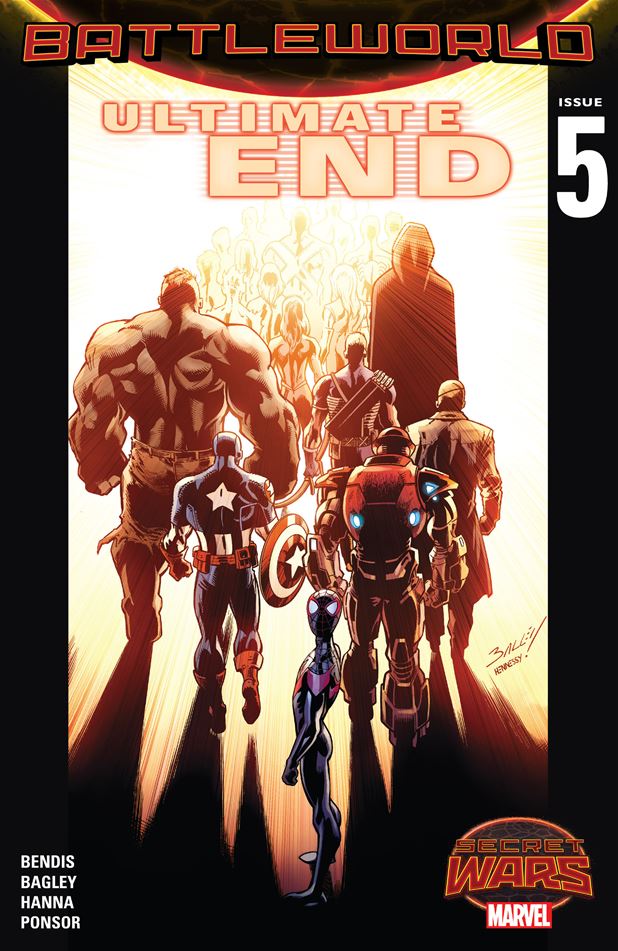
For DC Comics, it was a Justice League week, and a Justice League week is a good week; Image Comics brought us Huck #2 and I Hate Fairyland #3; and Marvel Comics brought us the end of the Ultimate universe in Ultimate End #5 alongside a great Vader solo story in Darth Vader Annual #1.

UNSPOILED

  1. Huck #2 (Image Comics), Unspoiled Edition

Huck 02 01

The Millar-verse has been hit or miss since its inception, but Huck presents a strong argument for giving everything Mark Millar writes a fair shot. In the second issue, we realize that this mini-series is not a one-trick pony. Huck and his supporting cast continue to be some of the better characters in comics right now and Huck continues to be one of the best new comics of the year.

  1. I Hate Fairyland #3 (Image Comics), Unspoiled Edition

I Hate Fairyland 03 01

With the first two issues, I Hate Fairyland set some comedic expectations for its readership. This foul-mouthed, murderous girl, who was clearly “someone’s little princess” a couple of decades ago, is not someone you want to stumble across in a dark alley or really anywhere. Issue three strengthens the narrative element beyond fun artistic and dialogue gimmicks, elevating the book above a mere torture porn version of The Wizard of Oz.

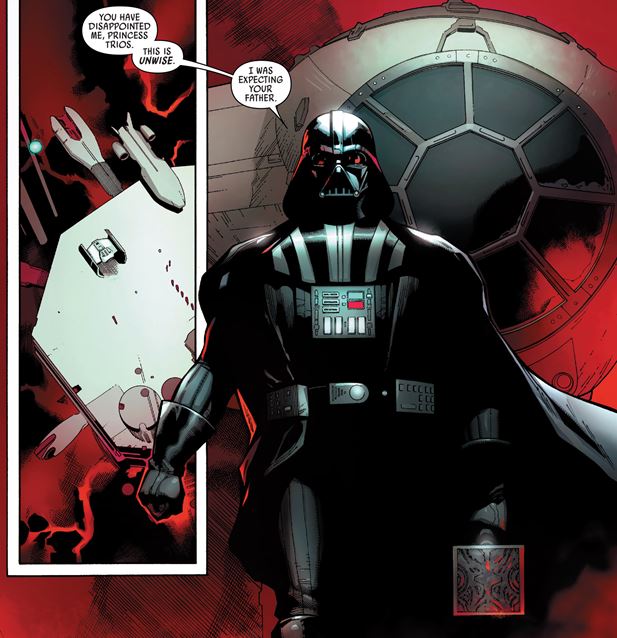
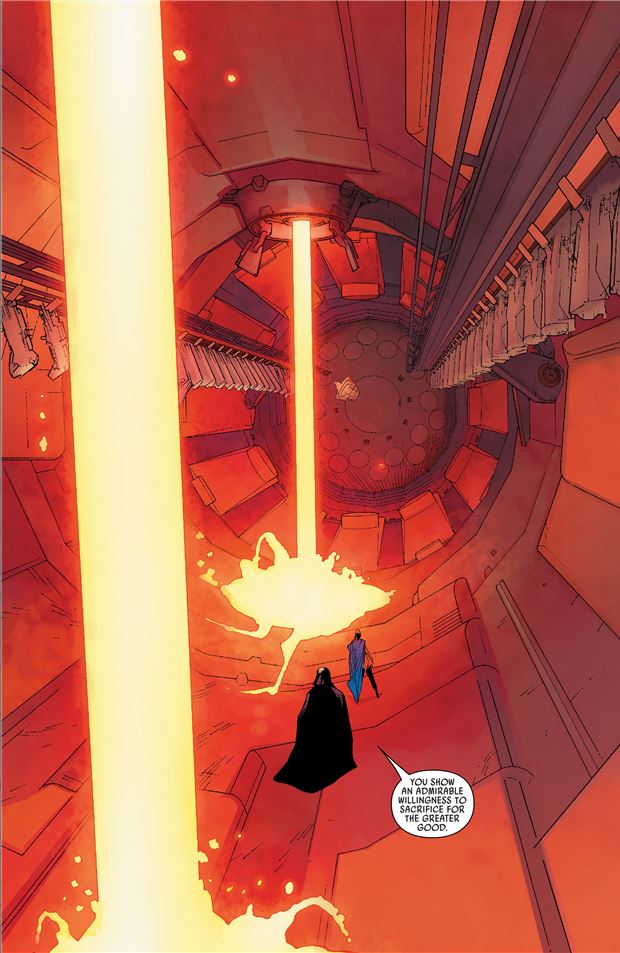
  1. Darth Vader Annual #1 (Marvel Comics), Unspoiled Edition

Darth Vader Annual 01 01

Marvel’s development of Darth Vader has been one of the strongest element of the Star Wars line of comics that rolled out earlier this year. His complicated feelings regarding family and the Sith are brought to the surface in most of his books, but in Darth Vader Annual #1 we are reminded that Vader is not one to be messed with. He may be a dog of the Emperor, but he is a shrewd dog if nothing else.

  1. Ultimate End #5 (Marvel Comics), Unspoiled Edition

Ultimate End 05 01

The Ultimate universe began with Bendis and Bagley, and it ends with Bendis and Bagley’s Ultimate End #5. Though we don’t know exactly what fate awaits the heroes and villains of Marvel-616 and Marvel-1610, we know that many of these characters are going to disappear from the pages of Marvel Comics forever. Ultimate End #5 serves as a good cap stone to the whole endeavor.

SPOILED

  1. Huck #2 (Image Comics), Spoiled Edition

Huck 02 06

My biggest concern with Huck was that the following issues would not be as strong as the first. This happens all too often in comics, but I was really hoping that the angel of boring would pass over this particular book. DC threw social justice Superman to the curb just as soon as they could, but Huck is still just a fountain of goodness, a Superman divorced of all the ideology. The enemy for the first issue is a predatory press mob besieging Huck’s place of residence. What is Huck’s response? He homes in on the rare individuals who have come to ask him for help, and he starts another list.

Huck 02 03

Clearly, Millar is building up characters to force a superhero/supervillain confrontation, but my hopes for the future are that he never abandons what we love about Huck. He is just plain good. He doesn’t need to prove anything about himself. As a result of not get tripped up by having a code, Huck can respond to conflict in surprising ways. If the Millar-verse is a body, Huck is firmly set in its heart. There are a lot of good competitors, but I think Huck might just be the best new comic of 2015.

  1. I Hate Fairyland #3 (Image Comics), Spoiled Edition

I Hate Fairyland 03 02

Though I was enamored by the oddness of I Hate Fairyland #1, the comic was starting to wear on me. Don’t get me wrong. I Hate Fairyland is consistently funny, well drawn, and filled with some great dialogue moments, but it has some serious problems with story structure. In I Hate Fairyland #3, the gimmicks that felt old by the second issue felt warm and welcoming. The characters have been introduced, their motivations have become clear, and now that story can start in earnest. With the introduction of another young girl who is much better at questing and somehow really powerful, it seems like Gertrude might have finally met her match.

I Hate Fairyland 03 03

My strongest hope is that this movement toward a more highly structured story with new options for character development — as in Gertrude either cannot kill some people because they’re too powerful or she learns not to kill some people because she begrudgingly needs some help — is sustained. The art and comedy are good enough to keep me reading for a while no matter what happens plot-wise, but if Skottie Young can iron out some of the difficulties with this book it will probably become one of my favorites of 2016.

  1. Darth Vader Annual #1 (Marvel Comics), Spoiled Edition

Darth Vader Annual 01 02

I mostly do not like annuals. They are generally not written or drawn by the same creative team as the regular series, they usually do not have the license to develop any important stories or make use of important characters, and everything else moves forward without concern for whether or not you read the special year-end issue. Occasionally, however, an annual is released based on the fact that someone somewhere has a fantastic story idea for a character or group of characters but is not currently contracted to write for that title and will not be contracted to write for that title in the future. I imagine that Darth Vader Annual #1 is one of the latter.

Darth Vader Annual 01 03

Darth Vader Annual #1 is a lesson in leadership from the Sith perspective. Darth Vader is sent to a planet to demand his tribute from their mining guilds, a natural resource that is presumably going to be used on the secret construction of the second Death Star. He meets with a king who blames his problems on those producing the goods, a leader who appears to be lead by his people. After the king sacrifices his third daughter in an attempt to kill Darth Vader, Vader’s droids slaughter the entire royal court and Vader chooses the sacrificial lamb as the new king. He sees in her a strong leader and assures her loyalty by reminding her what happens to people who are no longer in the Empire’s favor. Remember Alderaan?

  1. Ultimate End #5 (Marvel Comics), Spoiled Edition

Ultimate End 05 02

This is not exactly something that many people would boast about, but I kept up with every single comic book released in Marvel’s Ultimate imprint. At the beginning, Ultimate comics were fantastic, but over time they started to degrade. Personally, I have wanted everything Ultimate to end for a while now, and we presumably witness that end in Ultimate End #5. The thing is that you can’t just stop publishing the comics. The ending has to be delivered well in terms of story, delivered well in terms of the creative team, and we need to keep certain key characters alive and port them over to the regular universe. The first imperative is unclear. Though the Ultimate universe has presumably come to a close, it is still uncertain how this has come about. This is the fault of the Secret Wars release schedule, which has made Marvel comics much less approachable than it could be. The final issue of Secret Wars is set to be released before the end of the year, but at this rate I wouldn’t be surprised if it didn’t come out until April or May. The second imperative was hit out of the park. The first issue of Ultimate comics — Ultimate Spider-man #1 — was written by Brian Michael Bendis and drawn by Mark Bagley and so was the last issue. Well done, Marvel. The third imperative is still somewhat up in the air. The only survivor of the Ultimate universe that I have seen in a normal Marvel title is Miles Morales / Spider-man in All New, All Different Avengers, but Ultimate End #5 suggests that his whole family (even some dead people) were brought over with him. While many people were writing top ten lists about who needs to come from Earth-1610 to Earth-616, I was a hardliner for “all we need is Miles, Ganke, and Miles’s family.”

Ultimate End 05 03

These are the only characters who still seem to have some story left in them. As of right now, it seems like I won out on that one.Ultimate End #5 had a great mix of sentiment and purpose and it closed the book pretty well.

* * *

I’d like to say that my mind is on future comics, but I just watched The Force Awakens and there is nothing else that I really want to talk about. I’m going to keep putting up weekly comic book posts, but I’m a lot more excited about doing some kind of write-up of the new Star Wars. If you ever feel like I’m not giving enough attention to comic books, call me out. Pull me back in. Let me know what stories you want to talk about and we’ll keep this thing fresh.

Cases Against and For a $15 Minimum Wage

In 1933, Congress with the support of President Franklin Delano Roosevelt (FDR) passed a bill called National Industrial Recovery Act (NIRA) which instituted a broad swath of post-Depression labor protections including the first minimum wage of 25 cents per hour. His speech in support of this bill serves as perhaps the most quotable ethical foundation for movements in support of a higher minimum wage.

In my Inaugural I laid down the simple proposition that nobody is going to starve in this country. It seems to me to be equally plain that no business which depends for existence on paying less than living wages to its workers has any right to continue in this country. By “business” I mean the whole of commerce as well as the whole of industry; by workers I mean all workers, the white collar class as well as the men in overalls; and by living wages I mean more than a bare subsistence level-I mean the wages of decent living.

The bill was overturned by the Supreme Court in 1935 when Schechter Poultry Corp v. United States suggested that enforcing a nationwide minimum wage was an example of the federal government overreaching its duty to regulate interstate commerce. It wasn’t until 1938 that FDR finally signed a permanent minimum wage into law with the Fair Labor Standards Act (FLSA) which, again, set the minimum wage at 25 cents per hour. This bill was much more shrewd than NIRA in that the prefatory material was dedicated to proving that the provisions contained therein would benefit interstate commerce by expanding business influence, unburdening the free flow of goods, regulating unfair cometitive practices, handling labor disputes, and unhampering fair marketing. Because of this move, we have had a federal minimum wage for 77 years now and the federal minimum wage, as of July 2009, sits at $7.25 per hour.

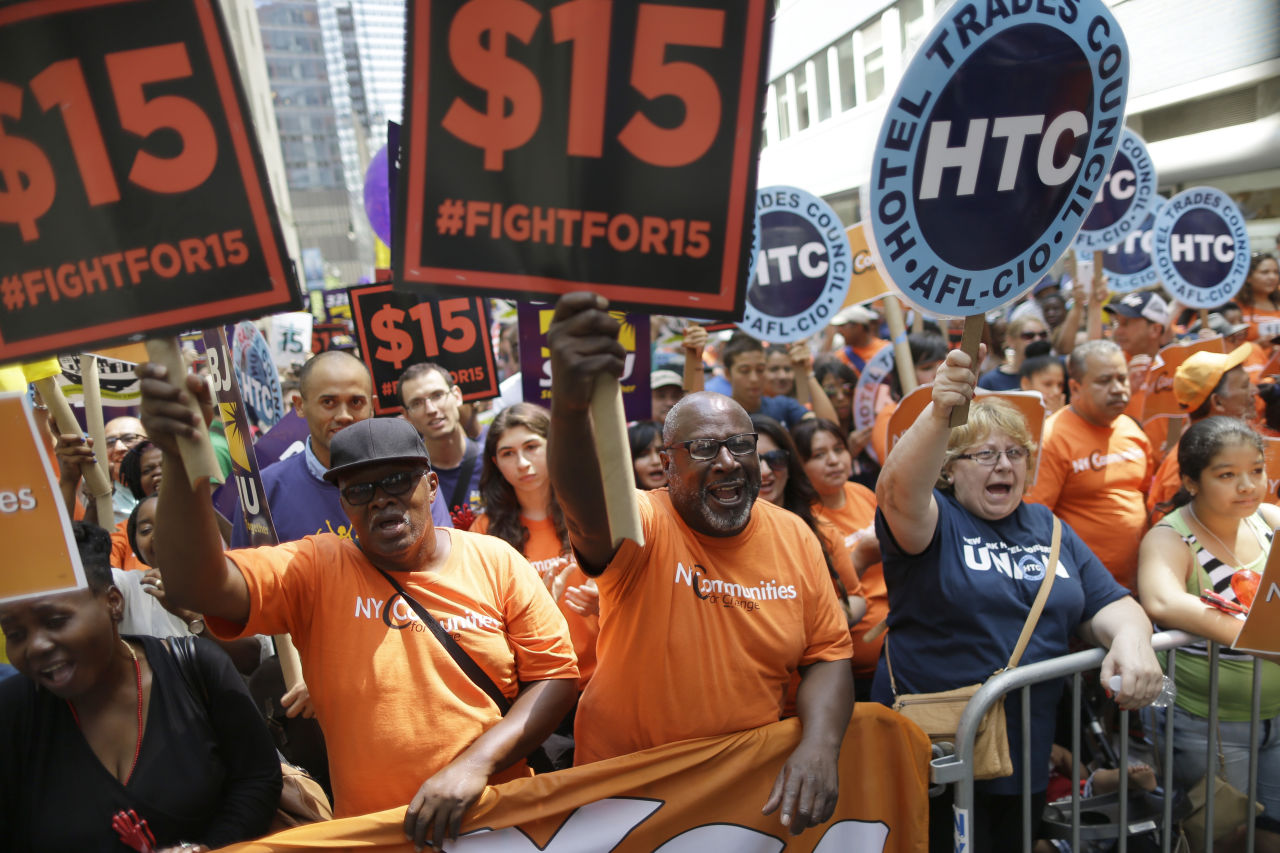
As a result of the Occupy Wall Street movement of 2011, major protests surrounding income inequality have sprung up periodically around the nation. An offshoot of Occupy called Fight for $15 took flight in late 2012 when employees of McDonald’s, Burger King, Wendy’s, Domino’s, Papa John’s, Kentucky Fried Chicken and Pizza Hut staged the largest strike in fast-food history in New York City. In time, employees from various industries staged similar protests with the desired result of establishing a living wage of $15 per hour for all workers.

This is where the discussion gets a little murky, because it is not always entirely clear what opposing parties mean when they refer to minimum wage or how they come by their calculations of an appropriate minimum wage. I want to attempt to provide some clarity for these two issues before moving on to cases against and for the establishment of a $15 per hour federal minimum wage.

Which Minimum Wage?

In the 1930s, FDR’s main issue with creating minimum wage ordinance in Washington, DC, was a question of jurisdiction. As we discussed earlier, his first bill (NIRA) was overruled because the Supreme Court did not think a minimum wage was the business of the federal government and his last bill (FLSA) was signed into law because he persuaded the people that it is. Few people I’ve spoken to know this, but at any given time up to three different minimum wage laws may be applicable to your current situation, one at the federal level, one at the state level, and at the city level. As such, the Fight for $15 is fought on many battlegrounds, in the private sector and also in the public sector, and also at federal, state, and municipal offices in the USA and across the globe.

Which Living Wage?

Though the minimum wage was originally established to approximate a living wage, much of the current protest surrounds the assertion that it is no longer a living wage. Tim Worstall of Forbes Magazine suggests that even $4.20 per hour, which FDR’s original 25 cent per hour minimum wage would amount to in 2015, could be considered a living wage due to the fact that 82.5% of the earth’s population gets by on even less than this. This rate doesn’t exactly factor into the current discussion.

Generally, discussion of a living wage centers around three sins of recent American economics: 1) the fact that the minimum wage has not kept pace with inflation, 2) the fact that the minimum wage has not kept pace with increases in productivity, and 3) the fact that the minimum wage has not kept pace with the cost of living. Though there are many measures that we can base a living wage on, there are a couple of commonly referenced metrics, the 1968 minimum wage of $1.60 per hour, the national median wage, and various national measures of the poverty line. The following figures represent a few different possible living wages and what calculations they are based on. They should be accurate within a few cents compared to any similar figures you come across.

$5.67, based on the cost of living calculated at 100% of the poverty level for a household size of 1 plus one penny (to represent the fact that we want to elevate people above poverty)

$8.55, based on the cost of living calculated at 1/2 of the national median wage

$10.85, based on the 1968 minimum wage adjusted for inflation

$11.67, based on the cost of living calculated at 100% of the poverty level for a household size of 4 plus one penny (to represent the fact that we want to elevate people above poverty)

$26.44, based on the 1968 minimum wage adjusted for both inflation and productivity, the latter using BLS Labor Productivity and Costs program (LPC) indices

I spent a lot of time trying to figure out exactly where the $15 per hour approximation of a living wage comes in, and I didn’t find it using any of these national measures. I would imagine the $15 figure was originally based on 1/2 of the median wage in New York City in 2012 but I don’t have the figures to back that up. The closest national measure I found was a cost of living estimate calculated at 133% of the poverty level for a family of four which comes out to $15.51 per hour. If we take Bernie Sanders as a source, the national $15 per hour rate is more than likely meant to be enough for a family of four to live above the poverty line which also finds a middle ground between the $10.56 and the $26.44 rates above. In other words, it is not based on any one specific value but intended to balance the need to keep up with inflation, productivity, and the cost of living for a family of four. Interestingly, if we are dealing with this issue at the state or municipal level, eight states — Alaska, Connecticut, Hawaii, Maryland, Massachusetts, New Hampshire, New Jersey, and Virginia — and District of Columbia would have a living wage higher than $15 per hour and over 100 cities would have a living wage of over $40 per hour if calculated at 1/2 of the applicable median wage.

The Case Against a $15 Minimum Wage

The drastic increase resulting in a $15 per hour national minimum wage is without precedent. In other words, nobody knows with any convincing degree of certainty what to expect. Even so, it is not unreasonable to believe some of the more dire economic predictions of lower profits, employment losses, substitution of automation for workers, higher prices, increased cost of living, and expedited inflation. On the flip side, we are about as close to universal approval of some kind of minimum wage hike as I’ve ever seen. The alternative needs to be a better solution to the problems of poverty and a declining middle class. The best approach is a multi-faceted approach based on good research. Rather than attempting to satisfy the confusing demands of inflation, productivity, and cost of living, we would need to pick one metric and stick with it. I think our best measure would be a modified inflation adjustment of the 1968 minimum wage. It was clearly the will of the people that this peak minimum wage (based on buying power) become law, so we should accept nothing less than an inflation-adjusted figure of $10.85. Additionally, it was the will of the people that this rate increase past the 1968 minimum wage. The minimum wage has changed seven times just since I was born in 1982. Since it would be impossible to make a clear adjustment for the intentions of the populace from 1968 to 2015, the round number of $12 per hour will suffice for our discussion. To minimize short-term job loss, the $12 minimum wage would be phased in over a period of three to five years and the final number would be indexed to increase with inflation so we don’t have to have this discussion again.

There are a couple of ways to tweak policy and turn this $12 federal minimum wage into a much higher effective wage. The first is to expand the Earned Income Tax Credit (EITC) and make it more accessible by implementing reforms to the IRS’s structure, politices, and procedures regarding the EITC. The second is to incentivize businesses to move toward full employment. Somewhere between 9 and 10% of Americans are currently looking to transition from part time employment to full time employment, so this would drastically change the economic outlook. I haven’t seen much research focusing on this metric, but for the sake of this proposal I would assume the main method of carrying this out would be to offer tax credits for meeting certain standards for full-time employment. Finally, since cities and states each have the ability to establish higher minimum wages than the federal minimum wage, there could be campaigns to persuade these bodies to set their minimum wage to approximately 1/2 the median wage in the area.

The Case For a $15 Minimum Wage

There are many economic factors that would be influenced by a change in the federal minimum wage, and all of them are connected to real, living people. This means that if you want a $15 per hour minimum wage to work, you just need to build up enough human capital to make it work. This is exactly what FDR was pushing for with his New Deal package of economic stimulus and social justice legislation. FDR knew that employers would increase their prices the moment they were required to pay their employees more, so he asked them simply to wait. What was on the line back then was the complete collapse of the United States economy, and people in the 30s knew what this was like. Those of voting age had all lived through the Great Depression, and few had thrived during that time. The parallels to our own experience of the Great Recession are uncanny. We find our unlikely FDR proxy in Donald Trump, who keeps saying, “American doesn’t win anymore.” Whereas FDR was attempting to establish the USA as a world power, Trump claims to be attempting to re-establish the USA as a world power. We would essentially be signing a contract. The workers would devote themselves to working full-time and not depending on government assistance, and in exchange they would get the highest wage of their lifetimes. The employers would devote themselves to restraining from raising prices and thus the cost of living for as long as they reasonably could, and in exchange the unused government assistance money could be used for temporary business tax breaks. The government’s job would be to support both sides so far as they are able. The way I imagine this would happen would be with a New New Deal package that assures the success of small business, reinforces the middle class, provides stimuli for the American worker, restructures the IRS, provides protections against too-big-to-fail companies, assures tax revenue from multi-national tax dodgers, streamlines legal immigration, and reins in noise traders on the stock exchange. The net result is that the nation’s wealth is translated more efficiently into the wealth of each member.

* * *

Many of the numbers are arbitrary, most of the loudest voices are arguing from ignorance, and some of the people involved have a vested interest in making sure that we do not know the truth about the issue at hand, and yet the issue of raising the minimum wage is going to be on the table during the 2016 primary election, general election, and more than likely for years beyond this. The Fight for $15 movement has gained more momentum than I thought possible, but then again, I never in my wildest dreams imagined that the ban on gay marriage would be repealed and so many of those petitioners looking to decriminalize/legalize marijuana would get their way, at least not by 2015. If you didn’t already get this point by the fact that I compared Donald Trump to Franklin Delano Roosevelt, the political process in America is absurd, even when the policies that you support are actually getting passed. At the end of the day, these silly little arguments that we are having from our armchairs impact a lot of human beings and can either prevent or create another recession. I have spoken before of the idea that by supporting the Fight for $15, Sanders starts with ethics rather than starting with economics, but it is obviously not that simple. If changes to the minimum wage take a turn for the worse, we can ruin lives. From my recent research, I’ve provided my best methodologies for either enacting the $15 minimum wage or rejecting it for something better.

Like always, let’s have a discussion. I challenge my readers to follow my lead. Do your own research. Let the research affect you, maybe even change your mind. Whatever happens, try to make a good case for both sides of the argument. Don’t abandon your convictions in the process. This is just an exercise in respect and humility. In case you couldn’t tell, I originally stood with the Fight for $15 workers but have developed a much more complex position since then. That doesn’t need to happen for you. I mostly just don’t want those involved in the discussion to come to reduce the views of others and sweep them aside as “liberal this” or “conservative that.” A lot of us are still making under $15 per hour, so it is not really an academic question at all. I’ve done all of my research on the Internet, but if there are any people out there who are actively involved in organizing and protesting for Fight for $15 I would really love to hear from you. There is something about activism, whether I agree with the issue or not, that is absolutely exhilerating to me. It feels like America in action!

Longest Wind Briefs – Cheers, Shamu, and 99 Luftballons

mota_ru_1062731

Because sometimes I’m not all that long winded, I thought I would string together some of the tinier little ditties to create the illusion of excess. We have an image to upkeep, after all.

Three Cheers… Proposals

o-CHEERS-facebook

I haven’t always been excited about the television programs my wife puts on when we have time together, but lately she’s been defaulting to Cheers and I have no complaints there. I think one of the reasons she likes to put Cheers on while I’m in the room is because she thinks I am a lot like Cliff Claven in that I always try to explain the origins of things despite not having clear documentation to support my ideas. (She is right on in her critique, as anyone who knows me can attest!) My running thought is that Cheers and The Cosby Show are the two best sitcoms to ever air. I’m still working on that one and am taking suggestions. Amy, for example, is a hardliner for Home Improvement and Frasier, but I think Cheers and The Cosby Show are probably still better than those two.

The other thing about Cheers is that it makes me feel creative. Just today, I came up with three ideas that I think would be fantastic. The first is a Cheers/Stanley Kubrick’s The Shining mashup in which all of our characters are proxies for patrons from decades ago as depicted in the opening credits. It is unclear what happened to those people, but it is thought of as Boston’s greatest tragedy. Sam Malone and friends must crack the code of the past and come to terms with themselves in order to keep the tragedy from repeating itself eternally. The second is an online viral campaign deriving from the fact that when Cheers first aired I thought the theme song was performed by Woody Harrelson because the tone of voice sounds similar. Using YouTube, Facebook, Twitter, etc., we would see what we could do to convince Harrelson to post a video of him performing the theme. My third idea would be to develop a conspiracy video about how Sam is secretly an abusive alcoholic. Yeah, that one is a little dark…

If anybody wants to green light one of these projects, you know where to reach me.

Seaworld $#&@ Show

PATAGONIA, ARGENTINA - UNDATED: ***EXCLUSIVE*** Mel, the Killer Whale or Orca narrowly misses out on a seal that it was hunting in Patagonia. As 2010 fast approaches these images show spectacular animals who this year captured animal lovers' hearts and minds across the globe. From a super-rare battle of the beasts between angry hippos and an unlucky crocodile, to a chimpanzee touchingly hand-rearing a puma cub, these incredible creatures have made 2009 a year to remember. And creating one of the most jaw-dropping picture series' witnessed has needed all the skills and patience of wildlife photographers at the top of their game. (Photo by Rob Lott / Specialist Stock / Barcroftmedia / Getty Images)

I just watched a video on YouTube which depicts a killer whale show at Sea World in which the whales kill a pelican in the middle of the show. Amy and I put it on because it seemed like the logical thing to do after watching a pelican attempt to eat a pigeon. I assumed the orca video was going to be about 25 seconds long, showing a long shot of the whale getting the pelican followed by a slow motion zoomed shot with the action highlighted. This was certainly part of the video, but it would continue for quite  a bit longer than I imagined. Originally, I thought I was watching three whales fighting to eat a bird, but it turned out the first orca had killed the pelican just for fun and the others were playing with its corpse. It is no surprise that the trainers seemed somewhat disturbed by this. With the amount of hours they’d spent with these animals, the trainers probably knew a thing or two about their nature, but that didn’t mean they had any intention for the audience at that whale show to learn just how sociopathic killer whales could really be. As soon as could be managed, the trainers ushered the whales into another pool and cleaned the vivisected pelican parts from the pool. This is when one of the more unsettling things happened. One of the whales began spitting pelican flesh and feathers onto the shore just beside its enclosure in an attempt to lure other birds into the water.

See for yourself. Here is the video of the orcas tearing apart a pelican for fun:

Also, if you’re interested, here is the video of the pelican attempting to eat a pigeon for nutrition:

A Tiemeyerian Thought Experiment

broken_phone

My buddy Reynaldo reminded me the other day of a ridiculous thought experiment I came up with the other day and asked me to repeat it to a group of people. It’s not quite Einstein, but it is pretty good for our generation:

Imagine you are walking along with your smart phone in your hand, and you stumble in your step, losing your grip on your phone. The phone hits the ground with a crash and then clacks its way down a flight of stairs. Two things happen when your cell phone hits the bottom of the stairs: you hear the crunch of broken glass and your cell phone suddenly starts playing the Nena song “99 Luftballons.” What do you do first? Do you check to see the extent of the damage to your phone? Or do you start dancing?

The example of “99 Luftballons” was not the original song I included for Reynaldo. Neither of us remembers what song it was, but I do remember it was much more awesome. Reynaldo recounted that it was “some 70s song,” but he is very young so that could mean anything before the mid- to late-90s. My original replacement for “some 70s song” was George Clinton’s “Atomic Dog,” but nobody knew the song even after I explained the connection to Snoop Dog.

I used to have another thought experiment, but I don’t use it as a psychological test anymore because I got the perfect answer from my friend Ken. Here it is:

Imagine you are on the 12th floor of a very tall building and the whole building is on fire. You run to the window, open it up, and get an idea of exactly how far you would have to fall. It is pretty far. You’re pretty much going to die either way. All of a sudden, an alien space ship in the classic atomic era gunmetal-colored flying saucer hovers in front of you, opens a hatch, and because it is your only alternative to death you step inside. The hallways of this ship are metallic and cold, and there are tinny speakers every few feet above your head. In an attempt to make you comfortable, the aliens play a familiar song, but instead of making you feel comfortable it makes you feel creeped out. What song is it?

When I asked Ken he didn’t even pause. He said, “Boyz II Men, ‘End of the Road.'” And I closed the book on that thought experiment. Luckily, the cell phone thought experiment is still alive and kicking. What would you do first? Are you focused on damage or dance?

Comic Recommendations: December 9, 2015

This was a good week for comic books: DC Comics rolled out both Batman and Robin Eternal #10 and Constantine – The Hellblazer #7; Image brought us The Walking Dead #149 and the final issue of We Stand on Guard; and Marvel edges one step closer to concluding Secret Wars and explaining what the heck is going on with the Marvel Universe! As an added bonus, I got caught up on Jeff Lemire and Humberto Ramos’ Extraordinary X-Men.

UNSPOILED

  1. Batman and Robin Eternal #10 (DC Comics), Unspoiled Edition
Batman and Robin Eternal 10 01

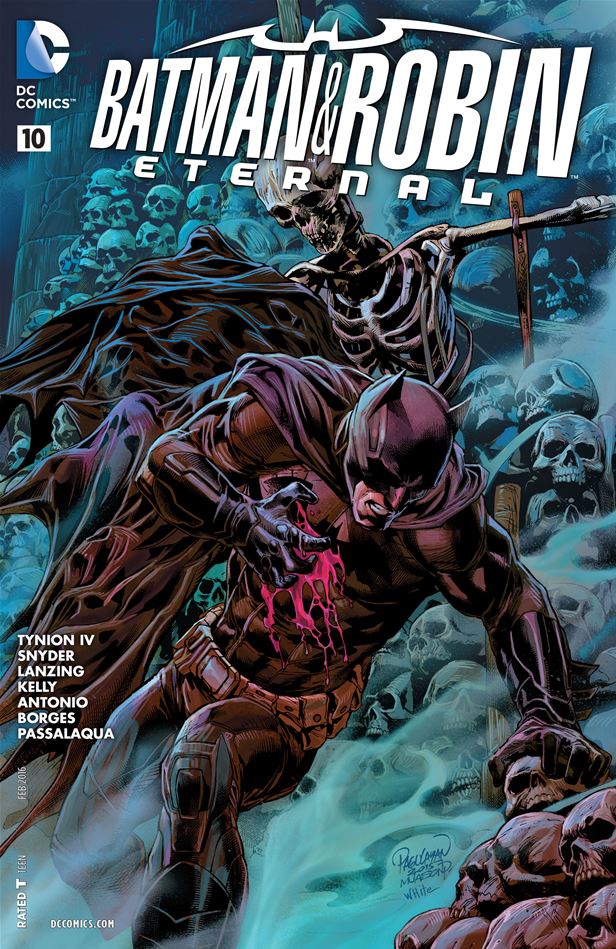
There are a couple of things that the weekly comic Batman and Robin Eternal brings to the table that many of the monthly comics are not able to accomplish, the ability to explore many more people, places, and things and a strong sense of adventure and fun. Issue #10 puts Red Hood, Red Robin, and Bane up against Azrael and his Holy Warrior Brothers for the soul of Santa Prisca. Sometimes this book feels like it is just taking you from point A to point B, but at other times it is just a blast to read. This is one of those “other times.”

  1. Constantine – The Hellblazer #7 (DC Comics), Unspoiled Edition
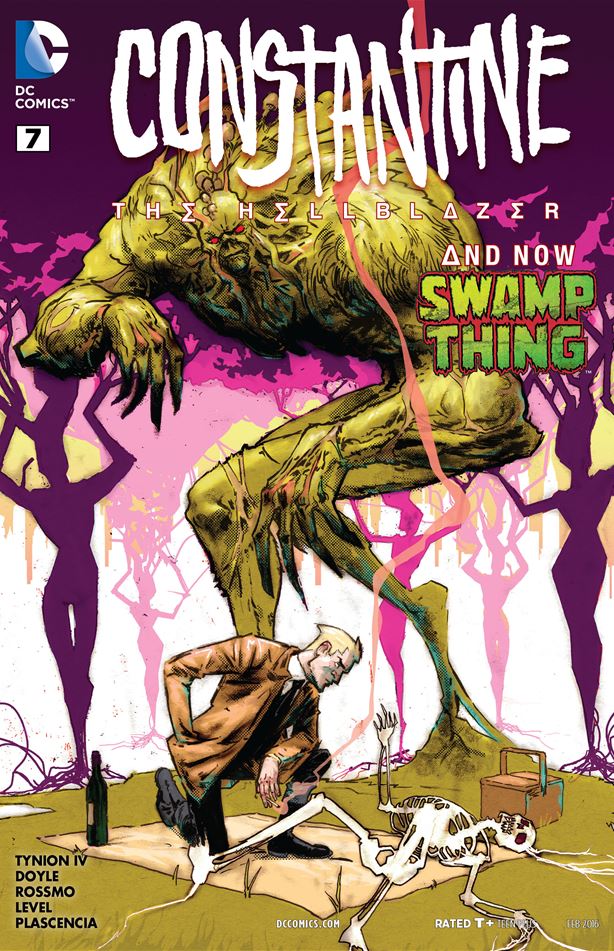
Constantine The Hellblazer 07 01

I’ve said it before and I’ll say it again, I never thought I would give a rip about John Constantine’s emotional availability but Ming Doyle and James Tynion IV have done the unthinkable. Even the obligatory cameo issue featuring Swamp Thing feels fresh and important. Constantine – The Hellblazer #7 further develops John Constantine’s risky love life experiment while delivering a pretty interesting one-off adventure in New York City. Always a surprise, this is probably the book that you are not reading but should be.

  1. The Walking Dead #149 (Image Comics), Unspoiled Edition

The Walking Dead 149 01

You never know what to expect with The Walking Dead, except that it is going to be fantastic. The only reason I didn’t ask for the 48-issue compendium editions for Christmas is because I am afraid my dog might eat them before I could show my future children what they could be reading some day. In issue #149, all of the pieces are subtly put into place for the big milestone issue. My goodness, I cannot wait for another issue of The Walking Dead.

  1. We Stand on Guard #6 (Image Comics), Unspoiled Edition
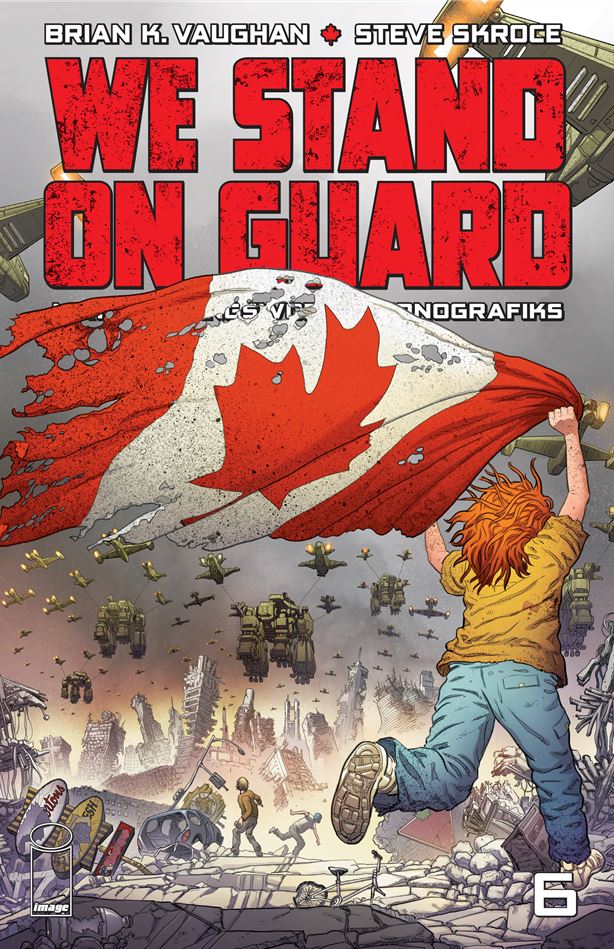
We Stand on Guard 06 01

Brian K. Vaughan’s futuristic Canadian war saga comes to an end in We Stand on Guard #6, leaving readers with only Saga and Paper Girls to quench their thirst for Vaughan’s writing. Though we will certainly miss We Stand on Guard, the other two books are more than enough. If you haven’t read We Stand on Guard the six-issue mini-series will almost certainly be available in trade paperback form within the next couple of months. It’ll be late for Christmas, but not too late for you to use your Christmas cash and gift cards on.

SPOILED

  1. Batman and Robin Eternal #10 (DC Comics), Spoiled Edition

Batman and Robin Eternal 10 03

Many of you are familiar with the fact that Facebook has doubled down on assisting users with sharing memories from previous years. Well, I was recently asked if I wanted to share some comments I’d made on Batman’s “Knightfall” arc many years ago. I had said something along the lines of, “For all of you out there who had to suffer through the Jean-Paul Valley Batman years in real time, I feel sorry for you. Those issues are really difficult to get through.” Flash forward a couple of days and I am reviewing a brand new Batman story featuring both Bane and Azrael. In fact, some of you might remember a post from a couple weeks ago where I accidentally predicted that we’d see Azrael in Batman and Robin Eternal. I feel super proud for that one.

While I really enjoyed this particular issue, it points to a difficulty that has surfaced with the New 52 universe, namely that some of the best stories of all time are getting thrown out for the sake of keeping things fresh. If this is the first time Tim Drake has ever met Jean-Paul Valley / Azrael, that means that at least some portion of “Knightfall” never happened. Considering my commentary on reading the comics from that era you’d think I’d be happy about this fact, but that is not the case. The concepts and outline of “Knightfall” are some of the coolest things that have ever taken place in the Batman universe. The idea that Batman was broken but not killed, that he passed on his legacy to an untested hero who later went rogue, and finally that a healed Bruce Wayne would have to take out this new Batman for the sake of Gotham — it doesn’t get much better than that. Furthermore, the delivery of some of the latter stories was spot on. It is possible that some portion of this story still exists in the New 52 universe, but we definitely cannot balance the whole story with the events of Batman and Robin Eternal.

Batman and Robin Eternal 10 02

What do we lose? “Knightfall” establishes Bane as one of the most formidable Batman foes of all time, second only to the Joker in importance. But if Jean-Paul Valley never became Batman then I seriously doubt that Bane ever broke Bruce Wayne’s back. The further we push this back, one has to wonder: Why did Bane even come to Gotham in the first place? Why would he come if not to take the city from the Bat? Furthermore, Bane never seemed like the type to give up easily. He was strong, fast, and brilliant, which means that he would either break the Bat or he would end up dead. Without this backstory, and backstory is crucial to DC characters more so than anyone else save maybe Spider-man, Bane is some absurd wrestler in a mask, little more. Jean-Paul Valley isn’t exactly a heavy hitter in the DC universe post-Knightfall, but he is probably as integral to Tim Drake’s backstory as Joe Chill is to Bruce’s, Tony Zucco is to Dick’s, and the Joker is to both to Jason and Barbara’s. There is something very deep missing if we do not have this story.

What do we gain? As I mentioned, Jean-Paul Valley had a disappointing reign as Batman — although he certainly brought new meaning to the nickname “Caped Crusader” — and little impact after Knightfall, so this New 52 makeover certainly suggests that he might have a more prominent and recurring position from here on out. He is now part of an organization that has been developed for some time in Grayson and he is potentially a hand-crafted crime fighting son created for Bruce Wayne many years ago. Way to go, bro. We also get a bit of uncertainty regarding the direction of our superheroes’ lives which we wouldn’t have were Knightfall repeated or assumed as canon. These are all good for story development and they are all good for sales.

I guess the take home message is that this sort of thing happens with each and every Crisis in the DC Universe. You just never know what is canon or not canon until it has been referred to (Batgirl’s flashback to Joker shooting her in Batgirl #1, for example) or overwritten (Jean-Paul Valley in this issue). If you want the depth that comes with years of continuity, you are probably reading Marvel comics anyways. Furthermore, a New 52 re-imagination of the Bane and Azrael story does not erase the existence of all those other comics. You can still pick up the trades at a Barnes and Noble and enjoy them as if they had never been retconned. In fact, “Convergence” suggested that these realities all still exist in some shape or form. However messy that is, it means we ultimately get the best of both worlds. Sure, any time you explain Batman’s history from origin to present it is now a publication history rather than a character history, but it is still Batman. And Batman is awesome. What is the true test for comics? That they keep selling! What is the true test for me? That they keep putting out stories good enough for me to review them like I am reviewing Batman and Robin Eternal #10.

  1. Constantine – The Hellblazer #7 (DC Comics), Spoiled Edition
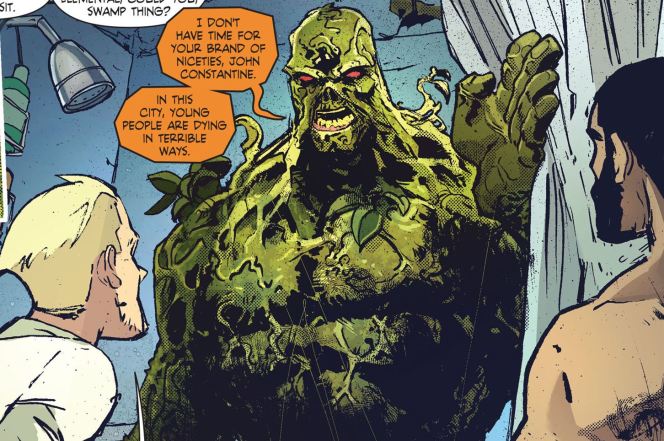
Constantine The Hellblazer 07 05

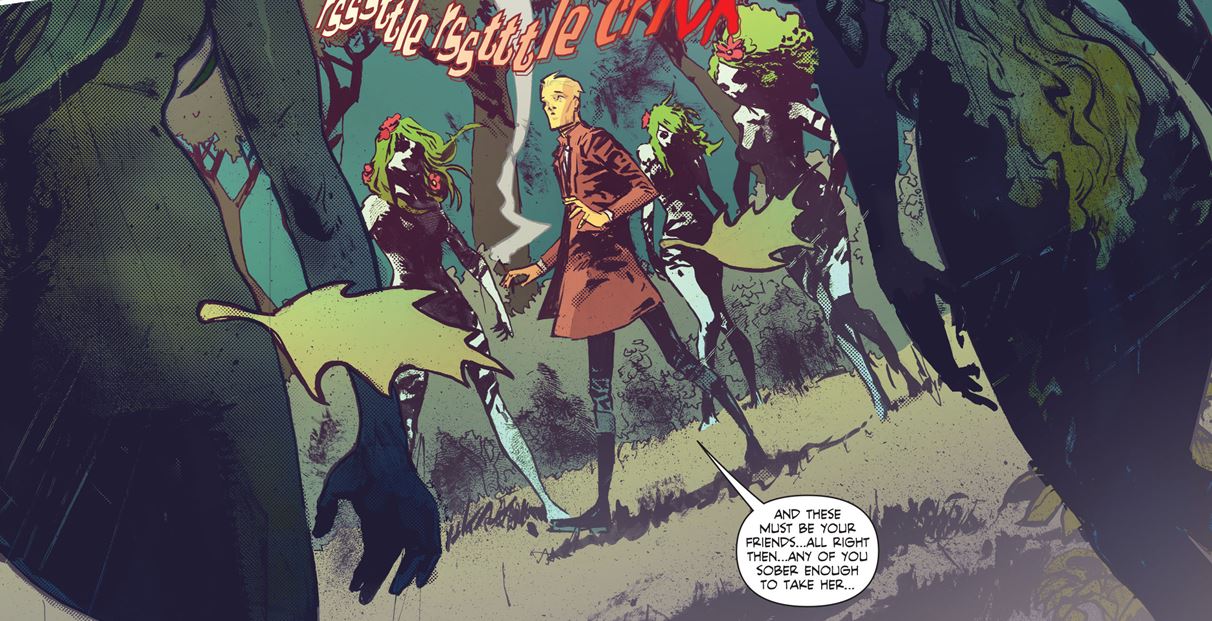
John Constantine was first introduced in Alan Moore’s Saga of the Swamp Thing, and as a result it seems like a DC Comics tradition to have a Constantine / Swamp Thing team-up in every Constantine volume. Some of these throughout the years have felt like a forced sacrifice to the gods of the green, but Swamp Thing’s appearance in Constantine – The Hellblazer was just a treat. The story came together like an early episode of Joss Whedon’s Buffy the Vampire Slayer: there is a dire situation (Swamp Thing is disconnected from the web of plant life in New York City) featuring a supernatural threat (Tree Nymphs) that shares a common theme with the overarching character development content (SEX!).

Constantine The Hellblazer 07 06

The art, as always, was fantastic, Swamp Thing was just disconnected enough from human pleasantries to be comedic but not idiotic, and the theme of the current arc was reinforced. It is dangerous life and death dangerous eternal damnation dangerous to get involved with John Constantine. I really want things to go well for John and his beau, but I honestly don’t think it is possible. When a dilemma like this arises, it comes down to whether or not you trust the creators to base their tragic decisions on better character development, and in this case I really do. I’m interested to see where things are going in Constantine – The Hellblazer. Issue #7 is much like the previous six, surprisingly delightful and spellbinding.

  1. The Walking Dead #149 (Image Comics), Spoiled Edition

The Walking Dead 149 02

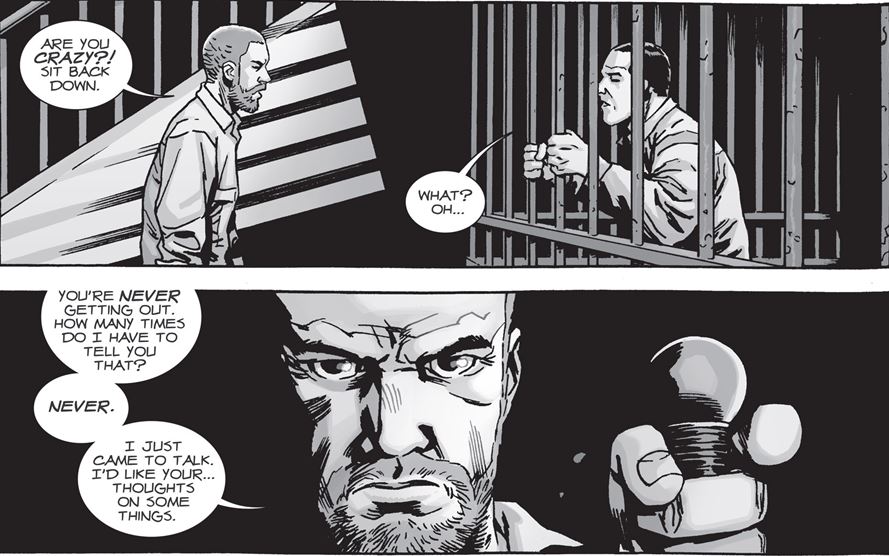
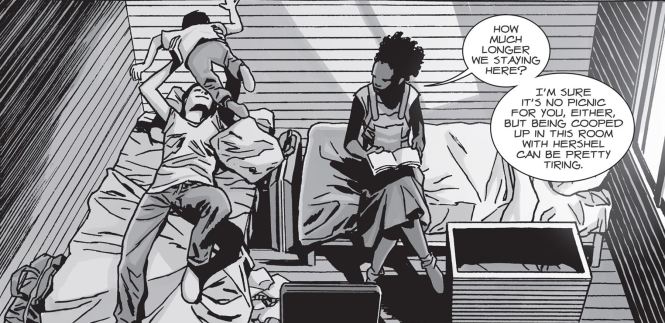
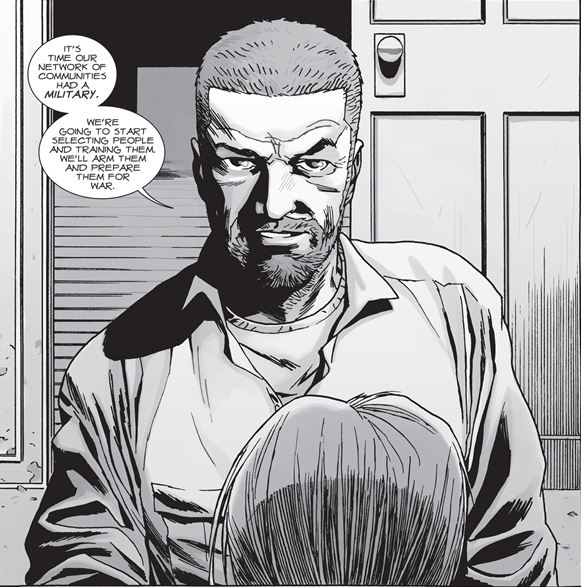
Sometimes I think I know where Robert Kirkman is going with The Walking Dead, then Rick comes along and says something like, “Are you kidding me? Of course I’m not going to let you out, Negan!” I suppose this is why I am just as excited to read the series at issue #149 as I was at issue #1. Due to the fact that I got into comics in the 1990s when there were gigantic, shiny X-Men milestone issues every other Wednesday, I think I may just have foolish expectations for new comics. I was thinking something major was going to go down, something that is impossible to overcome, and Rick was going to have to figure a way out of it in issue #150. Reality was contrary to my expectations. This issue merely puts everyone in their places, presumably so everything can blow up in the next issue. I have to say that this issue is probably one of the more clever lead-ins to something big, because it really does not seem to hint toward what is coming next. We are supposed to feel some anxiety over the fact that Negan is sitting in a cage and the people from his community presumably will want to break him out and elect them his leader once again, but the thing that really makes me anxious is the fact that Maggie was seen playing with her baby boy. Losing him would hurt.
The Walking Dead 149 03

Sure, there’s a ton to talk about, what with Negan and his people on the map alongside the Whisperers and Rick’s people ready to revolt if his military gambit doesn’t work, but what I’d rather do is fast forward to January 13 when The Walking Dead #150 is scheduled to be released.
The Walking Dead 149 04

  1. We Stand on Guard #6 (Image Comics), Spoiled Edition

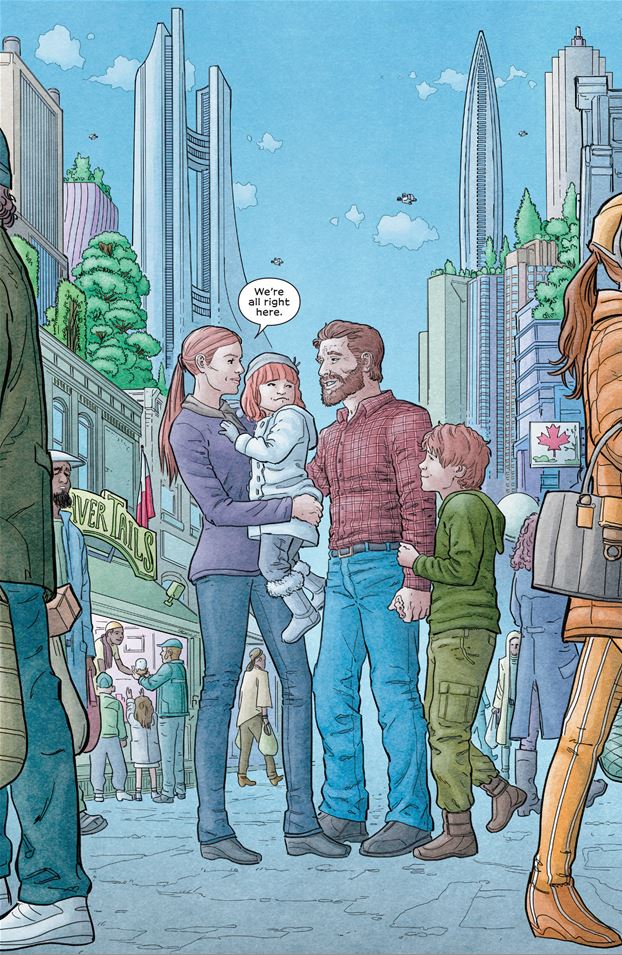
Brian K. Vaughan’s We Stand on Guard is simultaneously a commentary on both comic book superheroes and current world affairs. In issue #6, this dialogue ties up pretty succinctly. Kal El / Clark Kent lost his entire race when Krypton exploded and Bruce Wayne lost his family to inner city crime, but Amber’s final words hit hard. When you murder someone’s family, that person doesn’t turn into the embodiment of truth and justice. The orphan becomes the avenger, the reckoner, the murderer. In other words, war creates terrorists and marauders, not heroes and patriots.

We Stand on Guard 06 02

The easy interpretation would be to suggest that we should not be surprised that sects in the Middle East and across the globe have identified the USA as the great evil. If your parents are killed in a drone attack, you’re probably going to want to inflict the same horrors on the person behind the controls. However, and maybe this is my own age, I think the same thing can be said on the flip side. It should come as no surprise that a child who lost a parent in Iraq or Afghanistan might grow up and buy into Islamophobia. The fact that so much of this world is engaged in international conflict means that we are going to keep pumping out hate-filled blood-thirsty extremists. Clearly, this positions We Stand on Guard as a narrative version of the classic Gandhi quote, “An eye for an eye leaves the whole world blind.” What is the alternative? Peace? I don’t know if Vaughan would claim that peace is even a possibility anymore. The only peace we see in We Stand on Guard comes after the carnage and destruction of the US and Canadian forces. In other words, we see a lot more blood and guts than we do love beads and flowers. Perhaps the only peace lies in the metaphorical afterlife that Vaughan presents in his flashback to before Amber’s family was murdered.
We Stand on Guard 06 03

We Stand on Guard is over, but we will no doubt resume some of these threads of thought in future issues ofSaga. In fact, a comparison between Amber from We Stand on Guard and Hazel from Saga in terms of children raised in wartime might be an interesting thing to read. Somebody write that already!

* * *

Extraordinary X-Men 01 01

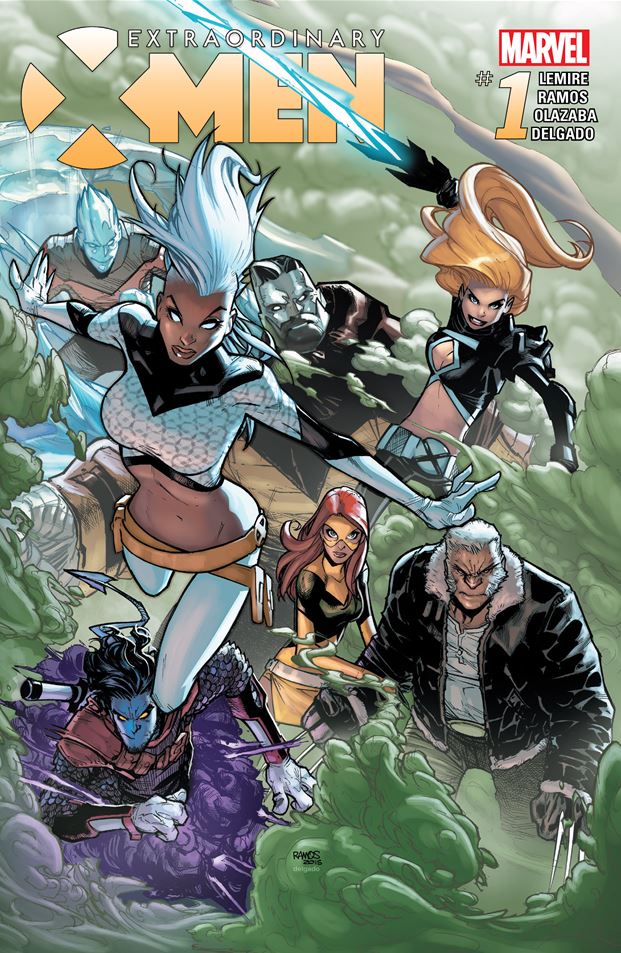
The X-Men were my original gateway into comic books. In the 1990s, I picked up just about everything from Onslaught through Bastion, and a little over a decade ago I read every X-Men-related comic released by Marvel between 1963 and 1986/87. I was really excited for Jason Aaron’s Wolverine and the X-Men, but then Brian Michael Bendis’s All-New X-Men and Uncanny X-Men turned into the flagship of all things X, but I honestly feel like Lemire and Ramos’ Extraordinary X-Men is the truest X-Men comic released in the last five or so years. I only read a couple of issues during the “Decimation” event, so I don’t have the same problems as some of the harder critics who say Extraordinary X-Men is an unoriginal volume rehashing the end of new mutant births, but even taking that into consideration this rewind is not the only innovation of Extraordinary X-Men and innovation is not the only measure of a good comic book.

Extraordinary X-Men 02 03

The X-Men are now living in times much more dangerous than they have ever faced before. To safeguard the Jean Grey school from threats, Storm has asked Magik to transport the school to Limbo, they have called in every ally they can find (effectively putting an end to the Schism just as Bendis attempted in Uncanny X-Men #600), and they are actively attempting to save any remaining mutant and many Inhumans from government sponsored gene-culling. Cyclops has apparently been killed after attacking the Inhumans (who Beast is now teamed up with). Storm is center-stage, which is something that I have wanted for YEARS, and she is haunted (?) by Professor Xavier.

Extraordinary X-Men 01 02

We haven’t seen Xavier since the Amazing X-Men invaded heaven to save Nightcrawler, but between then and now Secret Wars happened and messed everything up. Lemire has continued Aaron and Bendis’ crusade to develop Iceman, who recently unleashed an army of snow men which he controls by going into a Yogic trance. Magik has been rescuing mutants and Inhumans worldwide but doing so solo.

Extraordinary X-Men 01 03

Once this proved too dangerous, she was tasked with bringing in her brother Colossus and his best friend Nightcrawler.
Extraordinary X-Men 01 06

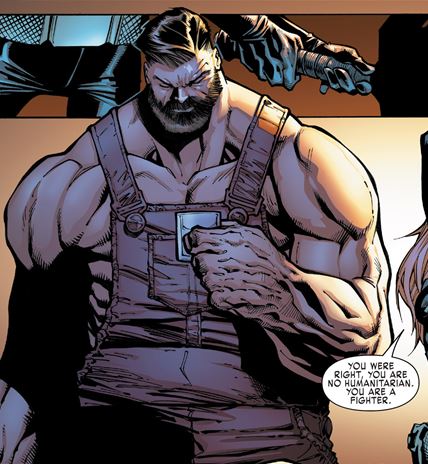
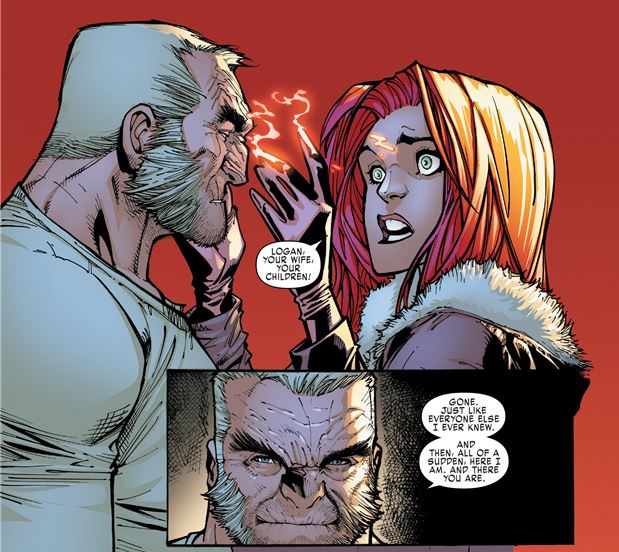
Colossus has been making excuses for not being a part of the action, and Nightcrawler has apparently been hunting a new variant on The Marauders. The team has been actively attempting to recruit young Jean Grey, who they believe to be the lynchpin to their further success, but who wants to pursue her education (just like original Jean Grey when the original series was cancelled for several years in the 60s/70s!). Finally, there is Old Man Wolverine who apparently knows that he doesn’t belong in this time or even in this reality.
Extraordinary X-Men 03 02

I think it is likely that Extraordinary X-Men is Lemire’s best comic to date. Animal Man was fantastic at first, but then after a while it seemed limited by both its character base and too much editorial oversight. With Extraordinary X-Men it really feels like Lemire has the ability to really let loose. Every issue suggests that Lemire is sitting on years of story notes, all of which get straight to the heart of what it means to be the X-Men. The best measure of this comic’s success, however, is the fact that I am left thinking about it from issue to issue. Extraordinary X-Men may be my favorite comic book right now.

Either that or The Walking Dead

Or Revival

Whatever. Leave me a lone. There are a lot of great comic books out there, which brings me to another point: I am out of comics to catch up on. I may get caught up on the Old Man Logan stories since I missed that whole trend when it was coming out, but I’m always looking for current comics that I have overlooked. Like John Stuart Mill, I think I have to guard myself from being wrong and selling something short. To do so, I need my comic book public to keep me in check. Let me know what you love, friends, because I’d love to read it and write about it!

Longest Wind Briefs – Trash, Writing and The One I Love

mota_ru_1062731

Every week, I come across some interesting things that are not big enough to devote an entire post to. I invented Longest Wind Briefs as a digest for misfit ideas. I hope you like it.

The Loser Has to Keep America Clean

6a0105367f07d8970b01156f6b2c76970c-pi

Tiberius and I have a routine. Whenever I take him for a walk, he darts for whatever trash he can find laying around (and there is a lot of trash to be found downtown) and I have to pull him away before he starts to chew or eat said trash. As a result, I am naturally inclined to be on the lookout for trash so I can steer the eager puppy around the veritable landmines of filth. Because of this, the same idea comes to my mind often — I could be picking up trash each and every time I take Tiberius for a walk.

I don’t suppose I would need much in order to do so: just a bag-holder to free up my hands so I could walk the dog AND pick up his poop, a grabber of some sort so I don’t have to bend over too often, some gloves for the particularly yucky stuff, and a bunch of smaller garbage bags. It would be nice if others in the community who would benefit from a cleaner neighborhood were interested in donating the supplies, but chances are I will just have to suck it up and pick this stuff up at my local hardware store.

Director’s Cut

writing

My wife is turning into my favorite writer. The first piece she wrote for her Grand Valley writing class was a narrative recounting a funeral she had attended as a child. Even in the first draft, the story was overflowing with opportunities. I identified a neat nautical theme that I wanted to see her develop, but her writing professor rightly pushed her to expand on a film metaphor that she had included. Amy took a huge risk and changed her piece from a narrative format to a hybrid narrative/film script with setting prompts like Interior and Exterior, stage directions, and narrator voiceovers. It was really bold. If she would ask for advice I would give her my solution to a problem, and immediately afterwards she would have her own solution that made mine look silly. When I imagine my version of the same paper and the paper that my wife pumped out, hers was so much better than mine in every way. There was no contest. The weird thing is that I don’t feel any jealousy. I feel this strange kind of joy from being on the ground floor for the creation of something great. I got to witness every step from brainstorm to final draft. I was able to feel the pride she would have felt if she hadn’t been tired and anxious about what grade it would get her. Amy’s professor eventually suggested she water down some of the more risky elements for fear that the oligarchy of graders would mark it down for MLA compliance issues, but the Director’s Cut I got to see was absolutely stunning.

The One I Love (SPOILERS)

theoneiloveblucover

I have been eyeing The One I Love on Netflix for a long time now. The film stars Elisabeth Moss (Justin talk: “the woman from Mad Men“) as Sophie and Mark Duplass (Justin talk: “the guy from Togetherness“) as Ethan, and it looked like a pretty normal depressing romantic comedy (much like Togetherness, honestly) until Amy found the film under the “Supernatural” category and flipped it on.

I think we can all agree that the filmmaker wants us to believe that Ethan went home with the doppelganger Sophie, but I want to put out another interpretation. I think the therapy was successful and normal Ethan emerged from the house with normal Sophie. It is true that Sophie would never have made bacon for Ethan in the past, but it is also true that doppelganger Sophie would never have left doppelganger Ethan. And Sophie wasn’t the only one who was different. Ethan was at least “20% cooler,” like doppelganger Ethan. What I think happened is that they simply met in the middle. Ethan knew Sophie wanted him to relax, take care of his body, and be more physical. When he followed through on this, Sophie did what she knew Ethan wanted. She became more loving and cuddly and rewarded him with bacon. I don’t think this interpretation robs from the creepiness of the ending; on the contrary, I think it adds to the foreboding. Even assuming that correct Sophie came home with him, Ethan will always wonder if maybe he left his wife behind at that rental house with another man. Unsettling…

If you get a minute, lets talk about how we are supposed to interpret the ending of The One I Love. Extra credit: We could also talk about what our interpretation of this film says about us.

StormCloudsGathering: The Paris Attacks Are Just the Beginning

StormCloudsGathering seems, at first blush, like an absurd conspiracy outlet, but instead of artist’s depictions and unrelated scenery, the video of every post is dedicated to real news articles. That’s right: much of the bibliography is included in the video itself. If you have a problem with how they are interpreting their sources or how they draw their lines of logic, let’s talk about it, but try not to dismiss the content simply because you don’t like what you’re hearing.

FDR’s Living Wage, Take One: The National Industrial Recovery Act of 1933

fdr2

While studying the national movement to drastically increase the minimum wage, I stumbled across the oft-quoted speech by Franklin Delano Roosevelt in support of the National Industrial Recovery Act of 1933. Now, this may be because I am a son of a history geek, but I found it really neat to read. I found it so neat that I decided to include the full text here.

By reprinting the text here, I am not in any way suggesting that it settles the argument regarding the minimum wage as a living wage. I don’t generally agree with Forbes magazine, mainly because it is so hard to tell the articles from the advertisements, but I do agree with Forbes writer Tim Worstall when he points out that Roosevelt was a politician just like anyone else in his position. His words are not gospel.

For the sake of looking into the philosophical and historical basis of the current protest for a higher wage, I have bolded (emboldened?) sections that refer directly to a living wage. This text was borrowed from the FDR Library web page.

The law I have just signed was passed to put people back to work, to let them buy more of the products of farms and factories and start our business at a living rate again. This task is in two stages; first, to get many hundreds of thousands of the unemployed back on the payroll by snowfall and, second, to plan for a better future for the longer pull. While we shall not neglect the second, the first stage is an emergency job. It has the right of way.

The second part of the Act gives employment through a vast program of public works. Our studies show that we should be able to hire many men at once and to step up to about a million new jobs by October 1st, and a much greater number later. We must put at the head of our list those works which are fully ready to start now. Our first purpose is to create employment as fast as we can, but we should not pour money into unproved projects.

We have worked out our plans for action. Some of the work will start tomorrow. I am making available $400,000,000 for State roads under regulations which I have just signed, and I am told that the States will get this work under way at once. I have also just released over $200,000,000 for the Navy to start building ships under the London Treaty.

In my Inaugural I laid down the simple proposition that nobody is going to starve in this country. It seems to me to be equally plain that no business which depends for existence on paying less than living wages to its workers has any right to continue in this country. By “business” I mean the whole of commerce as well as the whole of industry; by workers I mean all workers, the white collar class as well as the men in overalls; and by living wages I mean more than a bare subsistence level-I mean the wages of decent living. 

Throughout industry, the change from starvation wages and starvation employment to living wages and sustained employment can, in large part, be made by an industrial covenant to which all employers shall subscribe. It is greatly to their interest to do this because decent living, widely spread among our 125,000,000 people, eventually means the opening up to industry of the richest market which the world has known. It is the only way to utilize the so-called excess capacity of our industrial plants. This is the principle that makes this one of the most important laws that ever has come from Congress because, before the passage of this Act, no such industrial covenant was possible. 

On this idea, the first part of the Act proposes to our industry a great spontaneous cooperation to put millions of men back in their regular jobs this summer. The idea is simply for employers to hire more men to do the existing work by reducing the work-hours of each man’s week and at the same time paying a living wage for the shorter week.

No employer and no group of less than all employers in a single trade could do this alone and continue to live in business competition. But if all employers in each trade now band themselves faithfully in these modern guilds–without exception-and agree to act together and at once, none will be hurt and millions of workers, so long deprived of the right to earn their bread in the sweat of their labor, can raise their heads again. The challenge of this law is whether we can sink selfish interest and present a solid front against a common peril.

It is a challenge to industry which has long insisted that, given the right to act in unison, it could do much for the general good which has hitherto been unlawful. From today it has that right.

Many good men voted this new charter with misgivings. I do not share these doubts. I had part in the great cooperation of 1917 and 1918 and it is my faith that we can count on our industry once more to join in our general purpose to lift this new threat and to do it without taking any advantage of the public trust which has this day been reposed without stint in the good faith and high purpose of American business.

But industry is challenged in another way. It is not only the slackers within trade groups who may stand in the path of our common purpose. In a sense these groups compete with each other, and no single industry, and no separate cluster of industries, can do this job alone for exactly the same reason that no single employer can do it alone. In other words, we can imagine such a thing as a slacker industry.

This law is also a challenge to labor. Workers, too, are here given a new charter of rights long sought and hitherto denied. But they know that the first move expected by the Nation is a great cooperation of all employers, by one single mass-action, to improve the case of workers on a scale never attempted in any Nation. Industries can do this only if they have the support of the whole public and especially of their own workers. This is not a law to foment discord and it will not be executed as such. This is a time for mutual confidence and help and we can safely rely on the sense of fair play among all Americans to assure every industry which now moves forward promptly in this united drive against depression that its workers will be with it to a man.

It is, further, a challenge to administration. We are relaxing some of the safeguards of the anti-trust laws. The public must be protected against the abuses that led to their enactment, and to this end, we are putting in place of old principles of unchecked competition some new Government controls. They must, above all, be impartial and just. Their purpose is to free business, not to shackle it; and no man who stands on the constructive, forward-looking side of his industry has anything to fear from them. To such men the opportunities for individual initiative will open more amply than ever. Let me make it clear, however, that the anti-trust laws still stand firmly against monopolies that restrain trade and price fixing which allows inordinate profits or unfairly high prices.

If we ask our trade groups to do that which exposes their business, as never before, to undermining by members who are unwilling to do their part, we must guard those who play the game for the general good against those who may seek selfish gains from the unselfishness of others. We must protect them from the racketeers who invade organizations of both employers and workers. We are spending billions of dollars and if that spending is really to serve our ends it must be done quickly. We must see that our haste does not permit favoritism and graft. All this is a heavy load for any Government and one that can be borne only if we have the patience, cooperation, and support of people everywhere.

Finally, this law is a challenge to our whole people. There is no power in America that can force against the public will such action as we require. But there is no group in America that can withstand the force of an aroused public opinion. This great cooperation can succeed only if those who bravely go forward to restore jobs have aggressive public support and those who lag are made to feel the full weight of public disapproval.

As to the machinery, we shall use the practical way of accomplishing what we are setting out to do. When a trade association has a code ready to submit and the association has qualified as truly representative, and after reasonable notice has been issued to all concerned, a public hearing will be held by the Administrator or a deputy. A Labor Advisory Board appointed by the Secretary of Labor will be responsible that every affected labor group, whether organized or unorganized, is fully and adequately represented in an advisory capacity and any interested labor group will be entitled to be heard through representatives of its own choosing. An Industrial Advisory Board appointed by the Secretary of Commerce will be responsible that every affected industrial group is fully and adequately represented in an advisory capacity and any interested industrial group will be entitled to be heard through representatives of its own choosing. A Consumers Advisory Board will be responsible that the interests of the consuming public will be represented and every reasonable opportunity will be given to any group or class who may be affected directly or indirectly to present their views.

At the conclusion of these hearings and after the most careful scrutiny by a competent economic staff the Administrator will present the subject to me for my action under the law.

I am fully aware that wage increases will eventually raise costs, but I ask that managements give first consideration to the improvement of operating figures by greatly increased sales to be expected from the rising purchasing power of the public. That is good economics and good business. The aim of this whole effort is to restore our rich domestic market by raising its vast consuming capacity. If we now inflate prices as fast and as far as we increase wages, the whole project will be set at naught. We cannot hope for the full effect of this plan unless, in these first critical months, and, even at the expense of full initial profits, we defer price increases as long as possible. If we can thus start a strong, sound, upward spiral of business activity, our industries will have little doubt of black-ink operations in the last quarter of this year. The pent-up demand of this people is very great and if we can release it on so broad a front, we need not fear a lagging recovery. There is greater danger of too much feverish speed.

In a few industries, there has been some forward buying at unduly depressed prices in recent weeks. Increased costs resulting from this Government-inspired movement may make it very hard for some manufacturers and jobbers to fulfill some of their present contracts without loss. It will be a part of this wide industrial cooperation for those having the benefit of these forward bargains (contracted before the law was passed) to take the initiative in revising them to absorb some share of the increase in their suppliers’ costs, thus raised in the public interest, It is only in such a willing and considerate spirit, throughout the whole of industry, that we can hope to succeed.

Under Title I of this Act, I have appointed Hugh Johnson as Administrator and a special Industrial Recovery Board under the Chairmanship of the Secretary of Commerce. This organization is now prepared to receive proposed Codes and to conduct prompt hearings looking toward their submission to me for approval. While acceptable proposals of no trade group will be delayed, it is my hope that the ten major industries which control the bulk of industrial employment can submit their simple basic Codes at once and that the country can look forward to the month of July as the beginning of our great national movement back to work.

During the coming three weeks Title II relating to public works and construction projects will be temporarily conducted by Colonel Donald H. Sawyer as Administrator and a special temporary board consisting of the Secretary of the Interior as Chairman, the Secretary of Commerce, the Secretary of Agriculture, the Secretary of War, the Attorney General, the Secretary of Labor and the Director of the Budget.

During the next two weeks the Administrator and this board will make a study of all projects already submitted or to be submitted and, as previously stated, certain allotments under the new law will be made immediately.

Between these twin efforts–public works and industrial reemployment — it is not too much to expect that a great many men and women can be taken from the ranks of the unemployed before winter comes. It is the most important attempt of this kind in history. As in the great crisis of the World War, it puts a whole people to the simple but vital test:–“Must we go on in many groping, disorganized, separate units to defeat or shall we move as one great team to victory?

What do you think about this speech? Is it still relevant today? Is it as important to the current discussion about raising the minimum wage as many people are suggesting it is?

Krampus: The Reddit Sessions

krampus

The wife and I went to see Krampus on Friday and I was having trouble summing up my feelings on the topic, so I decided to check out what the Redditors were saying. The following article is the result of me spending an hour reading Krampus reviews on Reddit. There will be spoilers.

OLD-FASHIONED SPECIAL EFFECTS

Redditor is short for “Reddit predator,” and some people really live up to that name, but when it comes to the Krampus special effects there was one particular person on Reddit who summed up the film’s ingenuity quite succinctly:

In a world where horror films now are filled with [expletive deleted] CGI, I was so relieved to see them use actual prosthetic and animatronics on all the creatures and Krampus himself. My girlfriend and I agreed that the movie was a lot scarier because they were something that was actually there. A tangible object is way more scarier than a CGI one.

This was probably my biggest take-home from the film as well. The CG was mostly limited to the actions of gingerbread men and a lumbering Krampus as he jumps from rooftop to rooftop. When it was used, it was pretty fantastic, but it was used sparingly. Instead, Krampus made use of fantastic set design, masks, costumes, and machines. The balance was similar to Steven Spielberg’s vision for Jurassic Park. My hope is that other films will follow Krampus‘s lead, because an overuse of computer effects has made today’s films feel kind of inauthentic and lazy.

SNOW GLOBES

There’s a lot of confusion regarding the details of what actually happened at the end of the film and what it means. Was the entire town imprisoned in a snow globe or just one family? When were they placed in the snow globe? Was the grandmother in a snow globe within a snow globe because of her two encounters with Krampus? I’m going to try to break this down.

Krampus comes when people have forgotten the true meaning of Christmas through selfishness, materialism, and indifference. He is summoned when the last true believer in Santa Claus and the positive mythology of Christmas loses faith and wishes evil on his/her kin. Krampus uses magic to enter our realm and isolate us from one another using inclement weather. Once this has happened, each family member is murdered and brought to hell, and this happens with every family in the community, until the only person left is the one who wished Krampus into our world. The last survivor is given a Krampus ornament/memento as a permanent reminder of the consequences of his/her actions.

All right, so this is what happens within our reality, but what happens in Krampus’s reality?

I’m not going to quibble on this one. The film makes it clear that Krampus brings the various family members to hell, and hell is depicted as a series of snow globes. Each snow globe is filled with one particular family from one of the towns that Krampus has destroyed over the years. Within the snow globe there is a feeling like life has continued as normal, but there is a constant reminder that you are in hell and you got there because of how you all treated one another.

But what about the individuals who summon Krampus and doom their loved ones to hell?

Those who summon Krampus are the only people who are spared from death and damnation. This is why the grandmother was not placed in a snow globe when she first encountered Krampus. She carried the guilt of receiving a Krampus ornament with her for her entire life. It wasn’t until her grandson summoned Krampus that she finally met her doom. Her fate was with the rest of her modern family in a snow globe, but her old world family was in a separate snow globe in hell without her. Under normal circumstances, Max, the boy who summoned Krampus in modern times, would have been safe from his fate, but because he returned and challenged Krampus he joined his family in hell. By revoking Krampus’s gift (a double-edged sword, certainly), he doomed himself to hell with his family.

Obviously, I’m open to other interpretations, but I thought advancing a positive concept of what happened in Krampus would at least be a good start.

THE MORAL OF THE STORY

635769092027592226-5714-D039-00053-RV2-CROP

I read a couple of comments that suggested that Krampus was morally arbitrary. One person pointed out that Krampus comes not to reward but to punish people who have forgotten the importance of giving and sacrifice, and yet many of the characters died in a self-sacrificial way. In other words, they all learned their lessons but were punished anyways. Furthermore, there were a couple of innocents who were punished alongside the guilty. Because of these facts, some people found the moral nature of this cautionary tale lacking.

In my opinion, this represents a misunderstanding of the moral of the story. The murders are not meant to be redemptive for the people who committed the crimes against Christmas. One person is left alive so the tale can serve to teach others not to make the same mistake. Though Max brings about the destruction, it is the corporate sins of the society that he is a part of that are being punished, and that means that everyone is involved whether baby or dog or otherwise. Someone is not a good person if the choice is between being good or losing everyone they have ever loved. A person is good because of concern for others, habitual good deeds, and learning from mistakes. The lesson Krampus taught Max when he rejected the boy’s offer to take his cousin’s place in hell is that you cannot take serious matters such as these lightly. Life never agrees to take-backsies. Some things, like death, are final. If that doesn’t sound like a moral, then I don’t know what would.

LOST IN TRANSLATION

There was an individual who described the grandmother’s foreign language subtitles sporadic and inconsistent, wondering why inane issues at the beginning were subtitled while other more dire issues later on were left untranslated except occasionally by her son.

The translated/not translated speech of the grandmother was one of the little artistic ditties that I enjoyed the most once I figured out what they were doing. Whenever the grandmother was in a room speaking with people who understood what she was saying, her speech was subtitled. The Redditor said that only Max’s father understood her, but Max understood her as well. The difference is that Max never spoke the foreign language back to the grandmother. He merely understood. Whenever everyone in the room understood her speech, so did we. If the room as a whole did not understand what she was saying, like every time she shared the room with the mother’s side of the family, it was left untranslated. If the people in the room generally didn’t understand her, neither did we.

A lot of these issues – the snow globes, the moral, the subtitles – seem to stem from a belief that the people making this movie didn’t know what they were doing. If we start from the perspective that they have a reason for everything they do and this movie isn’t completely random and arbitrary, it is actually pretty easy to understand what is going on. To me, this only adds to the appeal of the film.

THE HORROR, THE HORROR

The Reddit Krampus audience had quite a mix of positive and negative reviews, and I was happy to see some of the more positive comments and general discussion questions were upvoted. The following quote summed up my own personal feelings about the movie’s horror content much like the commenter above who loved the physical effects:

I’m definitely not an expert on horror, but this movie is the first movie I can recall ever genuinely terrifying me. All those creatures in the attic, and any scene with Krampus.

For me, Krampus was terrifying because it wasn’t clear that it was meant to be a horror movie. This means that the audience didn’t immediately write-off all of the characters as expendable. Because it walked the line between family comedy and horror, you felt like everyone, including the annoying in-laws, deserved to live. Throw in the fact that children were placed into situations with real danger, and I was a mess. I was honestly really shaken during the entire “toys in the attic” scene.

* * *

I honestly think that Krampus is going to become a permanent fixture in the holiday canon alongside White Christmas, Gremlins, Die Hard, Rare Exports, and The Shining. Though the film’s reviews weren’t exactly stellar it managed to dethrone the fourth Hunger Games film as the #1 film in America and is likely to reach cult classic status in no time. The Christmas horror genre is one of my favorite categories of film, especially those involving ancient traditions surrounding the holiday. The more, the merrier. I’m happy to add Krampus to my yearly repertoire.