It’s Only Forever: Making Peace with David Bowie’s Passing

Photo Jan 11, 9 09 26 AM

Don’t tell me truth hurts, little girl
‘Cause it hurts like hell

-David Bowie

Do you remember the words to the songs your parents would sing to you to put you to sleep, the various lullabies of your early youth? The Tiemeyer boys sure do. Well, at least one of them… It went something like this:

There’s a Starman waiting in the sky
He’d like to come and meet us
But he thinks he’d blow our minds
There’s a Starman waiting in the sky
He’s told us not to blow it
‘Cause he knows it’s all worthwhile
He told me
Let the children lose it
Let the children use it
Let all the children boogie

I’ve brought this up with a decent amount of my friends, but my brother and I legitimately thought David Bowie’s “Starman” was a bedtime lullaby. We knew the song by heart before we’d ever heard the actual song, simply because that was what dad sang to us as we were rocked in his arms. I spent the first half of my life rebelling against my dad’s favorite bands — David Bowie and The Rolling Stones most of all  — but now David Bowie is dead and I’m left with regret that I didn’t begin paying my respect sooner.

gettyimages-85057401_custom-f865d003d25a1da5c2dfcf2512b5a3fde118483b-s900-c85

At first, I thought the posts about Bowie’s passing might be just another one of those celebrity death hoaxes like what happened with Jeff Goldblum, Mark McGrath, and Cher, but the story checked out this time. Once I found out that this was the real deal — that David Bowie was really gone — I honestly didn’t know what to do or say, so I broke it down into a to-do list in my mind: call dad at some point today, remove “[ ] See David Bowie live” from the bucket list, figure out something to say about his death… My wife later told me that she cried on the bus to school when she found out. Some girl tried to talk to her and she nearly shouted, “Your generation doesn’t even know what you just lost.” When she asked how I was doing, I told her it felt like a death in the family. In one way or another, David Bowie has always been with me, so I opened up a blank WordPress window and started writing anecdotes about the years I’ve spent with Bowie.

* * *

david-bowie-jareth-labyrinth-Favim.com-154271

When my brother and I were young, we would spend the afternoons at our aunt’s house while both of our parents worked. There were a lot of perks about Aunt Sue’s house. She had a swimming pool, a clipboard and lots of blank paper to draw or write on, and she had all of the premium channels that we didn’t subscribe to at home. One afternoon I flipped over to HBO where some strange puppet/song-and-dance film was playing and I couldn’t take my eyes away. The strange part was that I felt as if I’d watched this film before, with the puzzles and the strange characters. When I saw the little baby crawling on the ceiling, I knew this film was the source of some recurring childhood nightmares.

That evening I boldly confronted my parents. “I saw this movie starring David Bowie and a bunch of Muppets at Aunt Sue’s today. It was called Labyrinth and I swear I’ve seen it before. I remember the baby on the ceiling from my dreams.”

My dad explained that he’d taken me to see Labyrinth when I was three years old, just four months after my younger brother Micah was born. We had gone to this strange theater on 29th street called the Quad 6 because my dad wasn’t going to miss David Bowie’s new movie and when you have both a baby and a little guy in your life you don’t get to sneak out without taking at least one of them with you. It wasn’t my first movie in theaters. I’d seen The Care Bears Movie and Sesame Street Presents Follow that Bird the year before. Labyrinth had certainly stuck with me in a jarring way, but because my dad took me to see the film at such an early age I was better prepared than anyone else when hipsters brought the magnifying glass to David Bowie’s funk opera in the early 2000s.

When I was a child, Labyrinth was the stuff of nightmares, but as a teenager I’d come to terms with the film enough that I could pop it on every day after school if I wanted and even go to sleep with it running in the background.

* * *

For a year I lived with my brother Micah and a guy named Travis on the Northern border of the University of North Texas campus no more than a block away from the DFW’s emerging party Mecca on Fry Street in Denton, Texas. Travis was a musician, photographer, and band promoter, and it was not uncommon for me to come home from work at Chicken Express and find our top-floor apartment filled with people and beer. I was in my mid-twenties with two degrees and I was finally having a traditional college experience.

The centerpiece of our apartment was a formidable wooden plank placed over our entryway at waist-level that we used as a beer pong table. Above it, on the wall, was a poster of David Bowie from the cover of Aladdin Sane. When we played beer pong we made use of what we called the Bowie Rule. If you bounced the ball off of Bowie’s face and it made it into your opponent’s cup, you would automatically win and the loser would have to drink all remaining cups of beer.

1924161_524977346118_7173_n

I knew most of my Texas friends were acquainted with our setup, but I had no idea how far the legend of Bowie Rules beer pong had gone until I was hanging out on Fry Street and overheard a group of complete strangers talking about how someone nearby had a beer pong table with a picture of David Bowie overlooking it. The stranger proceeded to explain how one could use Bowie for the sake of crushing ones beer pong adversaries as if it were some local legend and not some silly thing my brother and I had come up with a couple months earlier. In fact, I wouldn’t be surprised if someone in North Texas who either can’t remember or never learned my name, Micah’s name, or Travis’s name, saw the news about David Bowie’s death and immediately thought of Bowie Rules beer pong.

* * *

The year before I met my wife, I swear there wasn’t a day that went by where I didn’t listen to David Bowie’s album Hunky Dory. The album spoke of artists and poets as space aliens and mutants and expressed dissatisfaction at the ape-like behaviors of your ordinary, every day humans. One of my favorite moments took place about an hour outside of Roswell, New Mexico when the car I borrowed from my brother cast a long shadow on the desert sand and my buddy Stephan and I decided to play this album for our friends Adam and Tom for the first time.

26104_744153503475_3572313_n

When I met Amy, I welcomed a woman into my life who had more David Bowie records than I did. Preparing for our wedding, we had serious problems deciding whether Amy would use Bowie’s song “Kooks” for the father/daughter dance or if I would use it for the mother/son dance. Amy ended up winning, and watching her dance with her step dad Cliff was one of my favorite moments of our wedding. My own dad turned to me and gave me an exhilarated thumbs up when he heard the tune.

1512438_10202104214766469_6775158535387665066_n

Despite the fact that our puppy has torn up nearly all of Amy’s undergarments, socks, and shoes in the eight months he’s been a part of our lives, I don’t think Amy was ever quite as sad as when Tiberius tore up her special edition vinyl copy of David Bowie narrating Peter and the Wolf. Of course, there is a kind of justice in the universe, because this past Christmas my dad went downstairs abruptly and came back with his original copy of the record. This is a record I’d heard my old man talk about nearly as often as he’d talked about how “uncanny” the resemblance was between Johnny Van Zant and deceased Lynyrd Skynyrd lead singer Ronnie Van Zant’s voices or how Mick Jagger was actually a shrewd businessman, and he’d decided he wanted Amy and I to have it.

* * *

Whenever a celebrity dies and people take to the web to express their sadness, there is inevitably going to be someone out there who shames fans because they’re not mourning a more appropriate tragedy like victims of some crisis overseas or a shooting on American soil. Forgive me for my language, but that is a crock of horse shit. Some of us can point to a song, a movie, or a book, and say, “That’s what got me through high school,” or “That’s the reason I didn’t kill myself in 1996.” Somebody had to go to a dark place him/herself in order to make that art and save your sorry ass from yourself. As for me, I can say that David Bowie is a part of some of my most fruitful relationships. My dad introduced Bowie to me before I was even capable of making memories and I heard him sing songs from Bowie’s vast library every day when he took his afternoon shower. My brother Micah was the one who kickstarted my own David Bowie odyssey and he even had a blog for a while called “Letters to Bowie” that, at the time, was my favorite thing on the Internet. I think my wife and I might have still gotten together in a world without Bowie, but we’d be missing some key memories.

David Bowie neither burned out nor faded away. He burned hotter and longer than anyone else I can think of and, like a bright, distant star, we’ll be feeling his influence for years to come. He died last night, on Sunday, January 10, 2016, two days after his 69th birthday and the release of his twenty-fifth studio album Blackstar and after an 18-month struggle with cancer.

12507274_10103004975611805_5429575392921478651_n

I didn’t end up crying until I read Simon Pegg’s tweet about David Bowie’s death. You may want to grab a tissue before you scroll down any further. The following is a Tweet by Dean Podesta that was retweeted by, made popular by, and mis-credited to Simon Pegg.

https://twitter.com/JeSuisDean/status/686090202226528257

December 31, 1969

10906263_10205920051068528_7745438291295767990_n

Tom Mitsos is a good friend of mine. You may know him as the guy who went to the 2014 Winter Classic with me. I have known Tom since around 2002-03, when a band that I was in at the time called Craig played a benefit concert to help Tom pay for medical bills accrued due to his battle with cancer. On December 31, 2015, Facebook alerted me that I had been friends with Tom (on Facebook) for 46 years.

To put this in perspective, I thought I would include some information about the two of us. I turned 33 nearly a week before Facebook made this claim, Tom is currently 29, and Facebook itself will be 12 years old this coming February. There is no way that Tom and I have been friends for 46 years. Nor is there reason for Facebook to believe that we have been friends for that long. I’ve certainly been called an old soul at times, but this is ridiculous. And we weren’t even the only ones. After posting about this apparent error on Facebook’s part, four or five friends immediately responded that they’d experienced the same thing, begging the question: What’s so important about the date December 31, 1969?

UNIX Epoch

The short answer is that the UNIX (UNIplexed Information and Computing Service) operating system, which is the basis of many web servers, operates under the assumption that the beginning of time happened on January 1, 1970 at midnight Greenwich Mean Time. Because the Western Hemisphere didn’t get to 1970 quite as quickly as the time lords in the Greenwich district of London, England, a time zone-adjusted calculation of this zero hour would give us some specific hour on December 31, 1969, varying according to where exactly you live. Moving forward, events in UNIX time — also known as POSIX (Portable Operating System Interface) time or Epoch time — were measured in seconds after the epoch date 46 years ago.

Keeping this in mind, the massive worldwide Facebook notification turns out to be nothing more than a bug in the way that some of Facebook’s servers are calculating time. This glitch can happen on any system that uses UNIX’s epoch as the keystone for measuring time and it usually occurs either when the time returns no value or when its value has been reset for whatever reason. It’s my assumption that if Facebook hadn’t rolled out its On This Day notification platform many of us would have never noticed this server hitch.

Blankman

For years people have been getting phone calls, blank texts, blank picture messages, blank emails, blank Facebook comments, blank voicemails, and seeing information on eBay, Amazon, news web sites, pizza delivery web sites, recorded TV programs, and even home security systems dated December 31, 1969 in the Western Hemisphere or January 1, 1970 in the Eastern Hemisphere. Though many of those afflicted with these phantom communications are now familiar with the UNIX Epoch glitch, there are some other details that have lead some people to suspect that something else is going on surrounding these odd messages. Many of the emails, often called ghost or phantom emails, cannot be deleted and fade in and out of existence. One person reported getting a phantom phone call from an 859 area code where the second to last digit was the letter C (859-???-?C??). Another person reported what appeared to be an encrypted message:

BMy ÓÍ2óè?~d4eA~ݹycÓ?b »ñiÙ?

?ytAOÏ>?v®ASF?h4óA¿vÏ(0 é??EÀ[1]

Perhaps more disturbing is not the content of these messages, but some of the information surrounding them. If we are to trust the scattered online discussion, we would have to conclude that certain individuals are being targeted more often than others by these messages. In fact, many who report these issues have mentioned that they either experienced a recent death of a family member or close friend or are actively involved in subversive political discussions. One person on a cell phone message board suggested that he had tracked down a guy in the Washington DC area who was spying on the American public and somehow these messages were proof. Because of these incidental details, many are suggesting that these messages are evidence of Big Brother watching us or, to use more specific terms, evidence of NSA conducting illegal surveillance of the general populace.

12118846_811704252279567_7492788549169545391_n

It is incredibly difficult to find information on what might be called conspiracy theories surrounding the UNIX Epoch, and this fact could either feed into the validity of people’s claims or prove that the suppositions have already been invalidated according to the UNIX error. If there is such thing as a central hub for these phantom messages, it would probably have to be a pair of Facebook pages called December 31, 1969 and January 1, 1970. On these pages, concerned web surfers post pictures of strange comments on Facebook by an anonymous user that some have begun calling Blankman and discuss issues of NSA overreach and persecution. The individual who started the page has put up many posts in the last year or so about how his access to this page which he created had been blocked and various other complications had taken place. The people on this page do not take this lightly. They are convinced that there are federal employees whose entire job is spying on the American population, and they’re doing what they can to out these people for what they are doing.

Cyber Burial

All of the claims about the origin of these phantom messages appear to be unsubstantiated, but it does make a person wonder. I did run across a post on the Justice Gagged blog titled “My Dec. 31, 1969 Google+ Posts” where writer/activist Mary “Loves Justice” Neal collects all of her posts that were re-dated to December 31, 1969 in order to keep them from public viewing. I think the logic behind this accusation is that posts enter public feeds according to the date and time they were posted, so if some posts are mis-dated to before blogging was even a thing they could just collect unread in a mass grave of posts with the same date and time. In other words, the UNIX Epoch error could essentially be weaponized in order to bury information perceived to be dangerous to the interests of our federal government for whatever reason.

Mary Neal fit into both of the above categories of the people who appear to be harassed the most by phantom posts. According to Neal’s profile, her brother Larry Neal was “a handicapped American who was secretly arrested and returned to his family as a naked corpse after 18 days with records and accountability denied.” After this event, Mary Neal dedicated herself to outing the people who did this to her brother, advocating for mentally handicapped individuals in the prison system, and responding to retaliation, both on the Internet and in person, for her claims. The difference between Neal and the people we were talking about earlier is that instead of encountering ghost posts on social networking sites, her posts are being ghosted at an alarming rate. I’m not going to lie. I felt a little bit of a shiver when I read the following question on her blog post:

Does this symbolize NSA’s attempt to hide my existence in order to cover up the government’s secret arrest and murder of Larry Neal and prevent advocacy for 1.25 million mentally ill inmates in the U.S.A.?

I can’t verify the truth of Neal’s assertions, but I can verify that her posts express some real hurt. Whether the conspiracy that she speaks of is legitimate or not, something heinous certainly happened to her brother Larry and I can understand her desire for answers and for justice.

The USA PATRIOT Act of 2001

If history had unfolded in a different way, I think that the accusations of Blankmen with their empty messages and cyber burial could be immediately dismissed as groundless. However, because the USA PATRIOT (Uniting and Strengthening America by Providing Appropriate Tools Required to Intercept and Obstruct Terrorism) Act of 2001 breezed through Congress to an eager President’s desk in the aftermath of the September 11 terrorist attacks, there has never been more reason to suspect that government agencies are involved in monitoring and disappearing American citizens.

To start, Title II gives the FBI what appears to be a blanket authority over the surveillance of American citizens. With the use of National Security Letters (NSLs), the FBI was given the power to search telephone, email , and financial records without a court order. For those of you who like to follow the party line and blame this massive overreach under George W. Bush’s leadership, keep in mind that when Edward Snowden leaked classified information regarding a massive NSA data harvesting campaign fingers pointed to the Obama administration as well. The only difference between the Blankman accusations and the verifiable reality is that the FBI/NSA probably would not leave these blank after-images to mark their overreach. If our data was being gathered or disrupted, we would probably never know.

As for disappearing and potentially killing American citizens, there is reason to believe that the USA PATRIOT Act of 2001 has a provision for that as well. Under section 412, the act justifies indefinite detention without trial for resident aliens suspected connections to terrorist organizations or activities. As is the case with an unfortunately large amount of US policy concerning immigration and/or terrorism, racial profiling becomes a concern. For years, I have heard of people reporting that persons of color had been detained, sometimes intentionally, sometimes accidentally, without ever being charged a crime and without being able to contact friends and family members, let alone a lawyer.

Perhaps the most famous example is that of Jose Padilla, a US citizen from Brooklyn, New York. Padilla was held for three and a half years as an enemy combatant and subjected to enhanced interrogation techniques with no explicit criminal charges raised against him. Eventually, his case was brought before a series of courts where it was deemed that the President lacks the constitutional authority to detain Americans on American soil outside of a zone of combat. The Bush administration was eventually ordered to release Jose Padilla or charge him. Either way, his period indefinite detention had to come to an end.

I doubt it would surprise Mary Neal if her brother experienced a similar illegal detention and interrogation, if his mental handicap was perceived as willful lack of cooperation, resulting in harder interrogation that was simply more than he could survive. I am not saying that this is what happened. What I am saying is that the United States has not had a great track record for respecting civil liberties in the fifteen years since the USA Patriot Act was signed into law and this gives the people reason to believe that such abuses are much more commonplace than they might have believed during other periods.

* * *

In writing this post I promised myself that I would follow what I then referred to as “the conspiracy theories” as far as I could, and I think I have done so. Regarding Facebook’s assertion that I have been friends with Tom Mitsos for 46 years, I think this was little more than a widespread server error. There are some who suggest that Facebook’s severs aren’t UNIX based and others who believe any such error should be viewed as a serious security risk, but in my opinion I think the incident that brought about my inquiry was probably fairly benign. As for the accusations against the government, I think most of them fall under the category of a stopped clock being right twice a day. The strange artifacts of the UNIX Epoch only accidentally point to a government conspiracy, and it is only coincidental that we now have verifiable proof that the FBI and NSA are committing espionage against the people of the United States. I’d like to be a little more careful with the case of Mary Neal and her deceased brother Larry. Something happened here, and the last two Presidents have given us plenty of reason to believe that Mary Neal’s suspicions are true. Unfortunately for Neal, I doubt she will ever find the truth she is looking for.

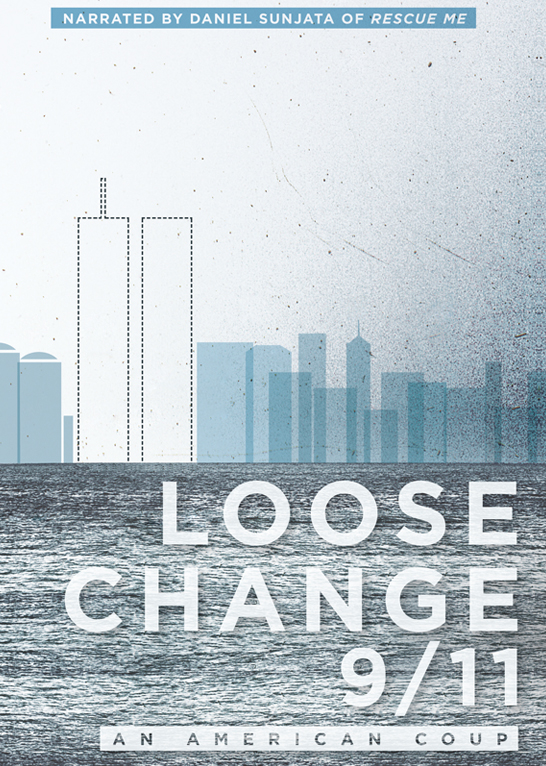
Is Big Brother watching me? Probably, but I can’t imagine he’s finding anything interesting. It certainly crossed my mind that NSA surveillance might be the reason I was hit with the Facebook UNIX Epoch error rather than someone else. In the week prior to the incident, I’d published a critical post about wage and labor and a documentary film round-up post referencing the Edward Snowden film Citizenfour and the 9/11 conspiracy film Loose Change, and that wasn’t even the worst of it. I’ve been courting revolutionary ideas about economic reform for over four months and there’s a veritable bread trail out there to prove it. That said, I have to believe that what separates me from those we might call conspiracists is an understanding that I am just not that important to the NSA, the FBI, the CIA, and President Barack Obama himself. I could be a nuisance some day, but only with a lot of effort and no interruptions. At the end of the day, I’m just not a big enough fish for the President and all the President’s people to fry at this time.

To conclude this article I just want to say one more thing to my good friend years, Tom Mitsos:

Hey buddy.

If you’re reading this I want to wish you a happy 2016. We’ve crammed 46 years of friendship into somewhere near a decade of intensive hanging out. Here’s to 46 more years of the same.

Your friend,

Justin Tiemeyer

PS. If I get disappeared you know who did it. Tell Tiberius he can finally fulfill his dream and eat all my underwear, socks, and shoes. Tell my wife I love her very much. She knows.

PPS. You might want to back up this post on your hard drive and maybe with a hard copy as well, just in case it gets disappeared too. I wish I could have sent a droid with a holograph, but alas, we have the technology to monitor every human on the planet but an astromech droid is beyond us.

Henry Ford on the 40-Hour Workweek

0-VqIC8okmzzsNKm_s

Just when I thought I had concluded my work on regular wages, I received the following email from a co-worker:

What do you think about the concept of the 40 hour work week?  I watched this show yesterday about how the 40 hour work week is an outdated piece of crap and how it negatively affects both businesses and their employees.  I have noticed some of your blog posts in regards to wages and was wondering what you thought about this.

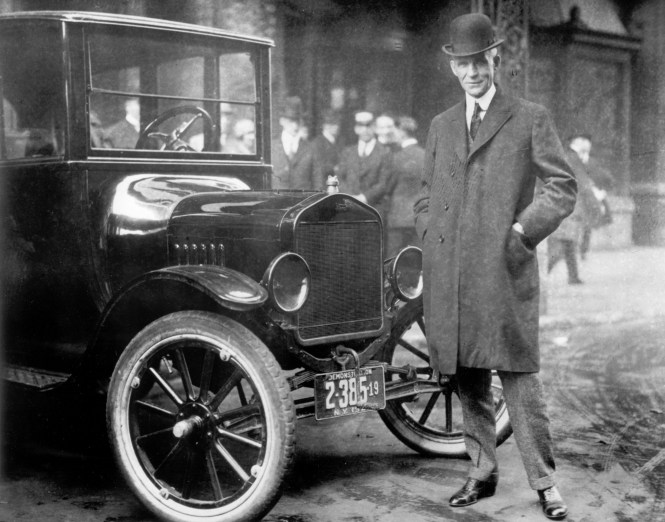
I was immediately interested — I expect that I might pump out a few posts on the topic of the 40 hour work week before too long — and honored that my name is now synonymous with labor justice in at least one person’s mind. Not only did this topic address issues of underemployment that I’d addressed in my first post on regular wages, but it has added another implement to our toolbox of effecting positive change in personal finance. As Henry Ford himself said, “We have stopped thinking in terms of a minimum wage. That belongs to yesterday, before we quite knew what paying high wages meant.” In addition to increasing the minimum wage and expanding the Earned Income Tax Credit (EITC), we can now talk about decreasing hours without subsequent decreases in weekly pay. I wonder what that would look like!

Back when I was doing research for my minimum wage post I ran across a speech by Franklin Delano Roosevelt that I thought was worth quoting as a whole. Something similar happened while researching the 40 hour work week when I stumbled across an interview that Samuel Crowther conducted with Henry Ford for World’s Work in 1926 titled “Why I Favor Five Days’ Work With Six Days’ Pay.” As with the FDR speech, I have decided to embolden sentences with information I found enlightening for the discussion to come.

JUST twelve years ago, Henry Ford made an announcement which, for the moment, turned industry upside down and brought workmen by the tens of thousands storming for jobs. His announcement was that thereafter the minimum wage in his industries would be five dollars for a day of eight hours. At that time a good wage was two dollars and a half for a day of ten hours. Now he makes another announcement far more important than the one which then went round the world.

We have,” he said, “decided upon and at once put into effect through all the branches of our industries the five day week. Hereafter there will be no more work with us on Saturdays and Sundays. These will be free days, but the men, according to merit, will receive the same pay equivalent as for a full six day week. A day will continue to be eight hours, with no overtime.

“For the present this will not apply to the railroad, and of course it cannot apply to watchmen or the men on certain jobs where the processes must be continuous. Some of these men will have to work Saturdays and Sundays, but they constitute less than one per cent. of our working force, and each of them will have two consecutive days off some time during the week. In short, we have changed our calendar and now count a week as five days or forty hours.

“The actual work week of the factories as distinguished from the work week of the men will also be cut to five days. For of course an eight hour man day is not the same as an eight hour factory day. In order to make the full use of our plants we shall as before work the men in shifts. We found long ago, however, that it does not pay to put men at work, excepting in continuous operations, frommidnight until morning. As a part of low cost production — and only low cost production can pay high wages — one must have a big investment in machinery and power plants. Expensive tools cannot remain idle. They ought to work twenty-four hours a day, but here the human element comes in, for although many men like to work all night and have part of their day free, they do not work so well and hence it is not economical, or at least that is our experience, to go through the full twenty-four hours. But a modern factory has to work more than eight hours a day. It cannot be idle two thirds of the time, else it will be costly.

“This decision to put into effect the short work week is not sudden. We have been going toward it for three or four years. We have been feeling our way. We have during much of this time operated on a five day basis. But we have paid only for five days and not for six. And whenever a department was especially rushed it went back to six days — to forty-eight hours. Now we know from our experience in changing from six to five days and back again that we can get at least as great production in five days as we can in six, and we shall probably get a greater, for the pressure will bring better methods. A full week’s wage for a short week’s work will pay.”

“Does this mean,” I asked, “that your present minimum wage of six dollars a day will become a fraction over seven dollars a day that is, the minimum for five days’ work will still be thirty-six dollars, just as it was for six days?”

“We are now working out the wage schedules,” answered Mr. Ford. ” We have stopped thinking in terms of a minimum wage. That belongs to yesterday, before we quite knew what paying high wages meant. Now so few people get the minimum wage that we do not bother about it at all. We try to pay a man what he is worth and we are not inclined to keep a man who is not worth more than the minimum wage.

“The country is ready for the five day week. It is bound to come through all industry. In adopting it ourselves, we are putting it into effect in about fifty industries, for we are coal miners, iron miners, lumbermen, and so on. The short week is bound to come, because without it the country will not be able to absorb its production and stay prosperous.

“The harder we crowd business for time, the more efficient it becomes. The more well-paid leisure workmen get, the greater become their wants. These wants soon become needs. Well-managed business pays high wages and sells at low prices. Its workmen have the leisure to enjoy life and the wherewithal with which to finance that enjoyment.

“The industry of this country could not long exist if factories generally went back to the ten hour day, because the people would not have the time to consume the goods produced. For instance, a workman would have little use for an automobile if he had to be in the shops from dawn until dusk. And that would react in countless directions, for the automobile, by enabling people to get about quickly and easily, gives them a chance to find out what is going on in the world-which leads them to a larger life that requires more food, more and better goods, more books, more music — more of everything. The benefits of travel are not confined to those who can take an expensive foreign trip. There is more to learn in this country than there is abroad.

“Just as the eight hour day opened our way to prosperity, so the five day week will open our way to a still greater prosperity.

“Of course, there is a humanitarian side to the shorter day and the shorter week, but dwelling on that side is likely to get one into trouble, for then leisure may be put before work instead of after work — where it belongs. Twenty years ago, introducing the eight hour day generally would have made for poverty and not for wealth. Five years ago, introducing the five day week would have had the same result. The hours of labor are regulated by the organization of work and by nothing else. It is the rise of the great corporation with its ability to use power, to use accurately designed machinery, and generally to lessen the wastes in time, material, and human energy that made it possible to bring in the eight hour day. Then, also, there is the saving through accurate workmanship. Unless parts are a made accurately, the benefits of quantity production will be lost-for the parts will not fit together and the economy of making will be lost in the assembling. Further progress along the same lines has made it possible to bring in the five day week. The progression has been a natural one.

“The eight hour day law to-day only confirms what industry had already discovered, If it were otherwise, then the law would make for poverty instead of for wealth. A man cannot be paid a wage in excess of his production. In the old days, before we had management and power, a man had to work through a long day in order to get a bare living. Now the long day would retard both production and consumption. At the present time the fixing by law of a an five day week would be unwise, because industry is not ready for it, but a great part of industry is ready, and within a comparatively short time I believe the practice will be so general in industry that it be made universal,

“It is high time to rid ourselves of the notion that leisure for workmen is either ‘lost time’ or a class privilege.

“Nature fixed the first limits of labor, need the next, man’s inhumanity to man had something to do with it for a long time, but now we may say that economic law will finish the job.

“Old-fashioned employers used to object to the number of holidays in this country. They said that people only abused leisure and would be better off without so much of it.

“Only lately a French professor accounted for the increased consumption of alcohol by pointing to the eight hour day, which he denounced as a device which gives workingmen more time to drink.

“It will be generally granted that if men are to drink their families into poverty and themselves into degeneracy, the less spare time they have to devote to it the better. But this does not hold for the United States. We are ready for leisure. The prohibition law, through the greater part of the country, has made it possible for men and their families really to enjoy leisure. A day off is no longer a day drunk. And also a day off is not something so rare that it has to be celebrated.

“This is not to say that leisure may not be dangerous. Everything that is good is also dangerous — when mishandled. When we put our five dollar minimum wage for an eight hour day into effect some years ago, we had to watch many of our men to see what use they made of their spare time and money. We found a few men taking on extra jobs — some worked the day shift with us and the night shift in another factory. Some of the men drank their extra pay. Others banked the surplus money and went on-living just as they had lived before. But in a few years all adjusted themselves and we withdrew most of our supervision as unnecessary.

“It is not necessary to bring in sentiment at all in this whole question of leisure for workers. Sentiment has no place in industry. In the olden days those who thought that leisure was harmful usually had an interest in the products of industry. The mill-owner seldom saw the benefit of leisure time for his employees, unless he could work up his emotions. Now we can look at leisure as a cold business fact.

“It is not easy so to look at leisure, for age-old custom viewed leisure as ‘lost time’ -time taken out of production. It was a suspension of the proper business of the world. The thought about leisure usually went no further than that here were hard-driven working people who should have a little surcease from their labors. The motive was purely humane. There was nothing practical about it. The leisure was a loss — which a good employer might take from his profits.

“That the Devil finds work for idle hands to do is probably true. But there is a profound difference between leisure and idleness. We must not confound leisure with shiftlessness. Our people are perfectly capable of using to good advantage the time that they have off — after work. That has already been demonstrated to us by our experiments during the last several years. We find that the men come back after a two day holiday so fresh and keen that they are able to put their minds as well as their hands into their work.

“Perhaps they do not use their spare time to the best advantage. That is not for us to say, provided their work is better than it was when they did not have spare time. We are not of those who claim to be able to tell people how to use their time out of the shops. We have faith that the average man will find his own best way — even though that way may not exactly fit with the programs of the social reformers. We do know that many of the men have been building houses for themselves, and to meet their demand for good and cheap lumber we have established a lumber yard where they can buy wood from our own forests. The men help each other out in this building and thus are meeting for themselves one of the problems in the high cost of living.

“We think that, given the chance, people will become more and more expert in the effective use of leisure. And we are giving the chance.

“But it is the influence of leisure on consumption which makes the short day and, the short week so necessary. The people who consume the bulk of goods are the people who make them. That is a fact we must never forget — that is the secret of our prosperity.

“The economic value of leisure has not found its way into the thought of industrial leaders to any great extent. While the old idea of ‘lost time’ has departed, and it is no longer believed that the reduction of the labor day from twelve hours to eight hours has decreased production, still the positive industrial value — the dollars and cents value — of leisure, is not understood.

“The hours of the labor day were increased in Germany under the delusion that thus the production might be increased. It is quite possibly being decreased. With the decrease of the length of the working day in the United States an increase of production has come, because better methods of disposing of men’s time have been accompanied by better methods of disposing of their energy. And thus one good thing has brought on another.

“These angles are quite familiar. There is another angle, however, which we must largely reckon with — the positive industrial value of leisure, because it increases consumption.

“Where people work longest and with least leisure, they buy the fewest goods. No towns were so poor as those of England where the people, from children up, worked fifteen and sixteen hours a day. They were poor because these overworked people soon wore out — they became less and less valuable as workers. Therefore, they earned less and less and could buy less and less.

“Business is the exchange of goods. Goods are bought only as they meet needs. Needs are filled only as they are felt. They make themselves felt largely in leisure hours. The man who worked fifteen and sixteen hours a day desired only a comer to be in and a hunk of food. He had no time to cultivate new needs. No industry could ever be built up by filling his needs, because he had none but the most primitive.

“Think how restricted business is in those lands where both men and women still work all day long! They have no time to let the needs of their lives be felt. They have no leisure to buy. They do not expand.

“When, in American industry, women were released from the necessity of factory work and became the buyers for the family, business began to expand. The American wife, as household purchasing agent, has both leisure and money, and the first has been just as important as the second in the development of American business.

“The five day week simply carries this thought farther.

“The people with a five day week will consume more goods than the people with a six day week. People who have more leisure must have more clothes. They must have a greater variety of food. They must have more transportation facilities. They naturally must have more service of various kinds.

“This increased consumption will require greater production than we now have. Instead of business being slowed up because the people are ‘off work,’ it will be speeded up, because the people consume more in their leisure than in their working time. This will lead to more work. And this to more profits. And this to more wages. The result of more leisure will be the exact opposite of what most people might suppose it to be.

“Management must keep pace with this new demand — and it will. It is the intersection of power and machinery in the hands of management which has made the shorter day and the shorter week possible. That is a fact which it is well not to forget.

“Naturally, services cannot go on the five day basis. Some must be continuous and others are not yet so organized that they can arrange for five days a week. But if the task is set of getting more done in five days than we now do in six, then management will find the way.

“The five day week is not the ultimate, and neither is the eight hour day. It is enough to manage what we are equipped to manage and to let the future take care of itself. It will anyway. That is its habit. But probably the next move will be in the direction of shortening the day rather than the week.”>>

I have not completed my research just yet, but if there is not at least one movement of Neo-Fordians based on the prescription of this final paragraph I would be happy to eat my shoe. Also, there are a lot of gems in this interview that are worthy of meditating on in their own right. Ford’s distinction of viewing leisure as a “cold business fact” resonates with my own personal feeling that we need to view social and environmental issues according to their economic impact. Since this is the first post in the series on the 40 hour work week (a series that may only have two posts, but a series no less) I guess this also kicks off the discussion. What do you think about Ford’s understanding of labor justice? Do you think we’ve reached the time when the days and hours of the working week need to be decreased? Does Ford’s situation have any parallels in our world? I know there are some Henry Ford lovers out there, especially here in my home state of Michigan, and probably some Henry Ford haters as well — word is he was an antisemite — so I think this could make for a good talk.

Longest Wind Briefs – Star Wars, Aokigahara Forest, and Wells Fargo

mota_ru_1062731

I think my favorite thing about writing these posts is getting to put up a picture of kittens on an underwear chair lift. If you can get past the cuteness, maybe you’ll find something to pique your interest below.

Dreaming of a Star Wars Christmas

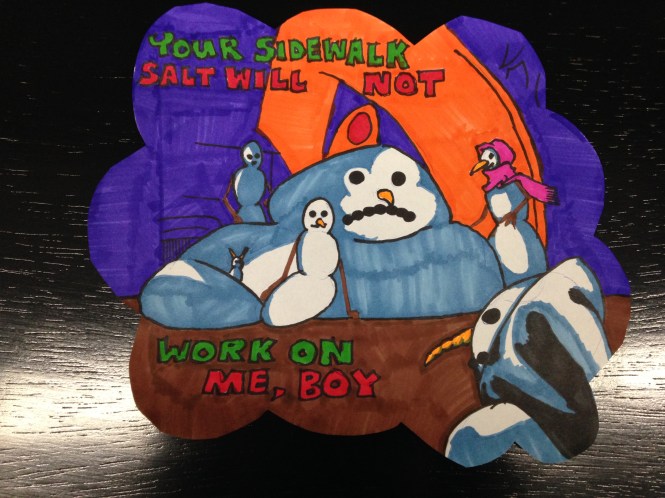
At work I recently had the opportunity to use my down time designing Christmas-related scenes from each of the seven Star Wars movies. They feature snow people as the main characters and are even accompanied by cheesy catch phrases. As it turns out, our scenes won a contest and there are cookies and milk in my future as a prize. A co-worker offered to buy these drawings, but I told him to just take them for free. If you’re reading this, thank you for the ego boost.

Photo Dec 16, 11 08 23 PM

As you can tell, many of the subtitles were pretty far on the cheesy side.

Photo Dec 16, 11 08 40 PM

We were told that we couldn’t depict light sabers because they are too violent. Instead of replacing them with walkie talkies a la Spielberg, I decided to replace them with candy canes.

Photo Dec 16, 11 08 56 PM

I was especially proud to depict the Twilek snowman with a scarf to represent the limp protrusions hanging from his head.

Photo Dec 17, 9 50 56 PM

This was the picture where I ran out of orange marker. I would have to use highlighter for the later lava scene.

Photo Dec 17, 9 51 15 PM

I tried not to think about the logical implication that niceness leads to the dark side. I was too busy being quippy and nostalgic.

Photo Dec 17, 9 51 30 PM

Despite the fact that there are no violent light sabers in this scene, I thought for sure it would get torn down by leadership because I depicted with snowmen the most gruesome scene in Star Wars history.

Photo Dec 17, 9 51 40 PM

I hadn’t yet seen The Force Awakens when I drew this picture. You probably recognize this scene from the teaser trailer.


Sea of Green

The Forest, starring Natalie Dormer of Game of Thrones fame, is only the most recent of series of films devoted to the Aokigahara forest at the base of Mount Fuji in Japan, a dense wilderness the locals refer to as “suicide forest” due to the astounding amount of suicide corpses that are found there each year. There was Forest of the Living Dead (or The Forest outside of the US) in 2010, Grave Halloween in 2013, and The Sea of Trees in 2015, but the film that really drew my attention is a short documentary filmed in 2010 titled Suicide Forest in Japan and published on YouTube by Vice.

Aokigahara-forest-550x412

The film follows a local man named Azusa Hayono who sweeps the forest to find the corpses of the deceased and perhaps to convince the still living to hang in there. It is not very long, but I expect it packs a bigger punch than any of the feature length fictional films about the forest. It is a little bit on the disturbing side, but definitely worth a watch.

Goodbye, Wells Fargo Student Loan. May We Never Meet Again

Recovering alcoholics put time aside to celebrate each month and year without drink. In a debt-driven culture, I think maybe we ought to celebrate each outstanding debt that has been paid off or forgiven. While in college I accumulated more in debt than I would like to say. If you throw in the automobile loan we took out a couple years ago, you can get an idea of just how low I had sunk. Well, I hit a milestone the other day. It wasn’t easy, but I was able to pay off my second of four college loans, this one serviced by Wells Fargo. The first loan I paid off was a small loan with the University of Toledo which was serviced by ECSI. I was almost sad when I paid off this, my first student loan, not because I was going to miss being in debt — who could ever miss being in debt? — but because the people at ECSI were so amazingly intelligent and caring. It really felt like they were on my side rather than that of the institution I owed. Wells Fargo wasn’t unhelpful, but it is hard to look at an interest rate of nearly 8% without some of your happy thoughts running away. The remaining loans are my largest, a private consolidation loan that Discover bought from Citibank and a federal consolidation loan serviced by Great Lakes. Luckily the latter is in IBR.

If you have federal loans that are not in some form of income-contingent payment you should stop what you’re doing right now and call your loan servicer, especially if you work for the the government or a nonprofit like a hospital or social services. Depending on how much you owe, this decision could literally give you your life back. No lie.

The remaining portion of my journey is up hill, but right now I’m not thinking about that. Right now, I’m thinking of the fact that I am one step closer to being debt-free. I think I’m going to celebrate by not spending money and simply enjoying my time with my beautiful wife and my loving dog.

This doesn’t have to be all about me though. If you’ve recently paid off a debt, chime in. Let me know how it felt for you. This is the kind of joy that transfers from person to person, or at least it should be. What if we lived in a world without debt? Wouldn’t every sunrise feel different? Wouldn’t your pillow feel softer when you go to bed at the end of the day? We just got a step closer to that future. How can anyone contain themselves?!?!

Comic Recommendations: December 30, 2015

Because DC now has weekly comics I think their portion of my introduction has been filled by Batman & Robin Eternal on each and every one of my posts, but let’s not forget that they also put out a new Justice League this week too; and Marvel’s release lists were screwy and confusing, but they totally concluded the Chewbacca mini-series and the final scene was pretty awesome, especially considering that the Marvel Star Wars books that launched in January of 2015 are all canon now! The last week of 2015 gave us a wimpy-sized load of comics, but they certainly weren’t lacking in quality.

UNSPOILED

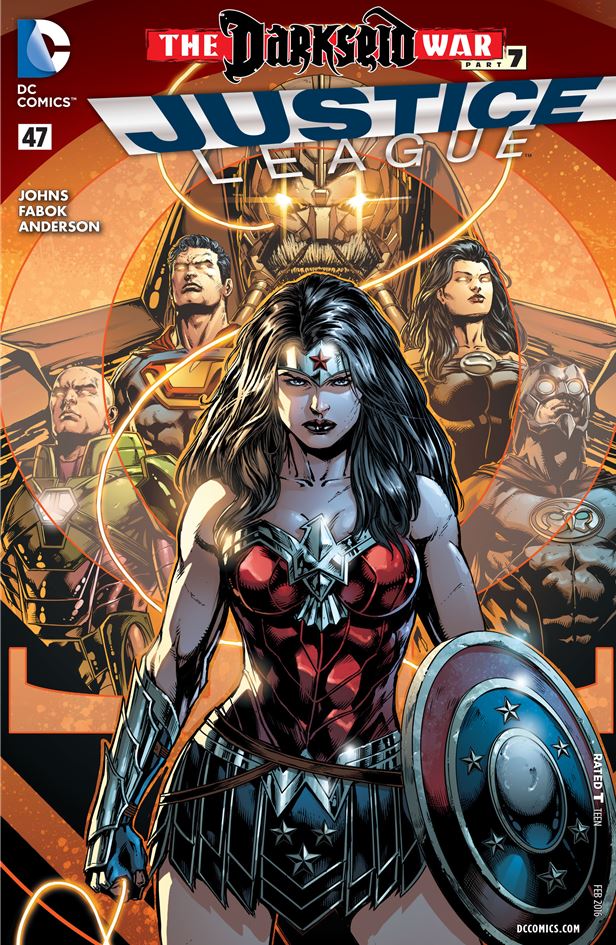
  1. Justice League #47 (DC Comics), Unspoiled Edition

Justice League 47 01

In the second volume of “Darkseid War,” Justice League is really starting to funnel toward something spectacular. I expect that Justice League #47 is just the beginning of a series of truly fantastic issues by Geoff Johns and Jason Fabok. As if the cast of characters for this mega-event four or so years in the making wasn’t big enough, the Crime Syndicate has now entered the fold and it is completely unclear what is going to come from their inclusion.

SPOILED

  1. Justice League #47 (DC Comics), Spoiled Edition

I usually like to stay away from anything that might give me any foresight into story revelations for future issues, but I couldn’t help but read DC’s description for future issue Justice League #49:

In this, the penultimate chapter of the critically-acclaimed epic “Darkseid War,” the fate of the Justice League and the entire universe is on the line! But can even the combined might of the Justice Gods contend with the secret machinations of Grail, the deadly daughter of Darkseid? Death, rebirth and the life of one of the members of the League changed forever!

Maybe in the near future we can talk about all of the DC comics that are going to have an issue #50 in the next couple of months, but for now I want to talk about which member of the Justice League is going to experience some sort of mega change. I figured I would give some sort of ranking of who I feel is most likely to experience a serious change. I am only going to deal with the primary seven Justice League members, Batman, Superman, Wonder Woman, Green Lantern, Flash, Aquaman, and Cyborg.

  1. AQUAMAN

Aquaman

Aquaman would probably get the award for the most ignored character during the entire “Darkseid War” story arc. Similarly, he’s my vote for least likely to experience a serious change in issue #50. I’m pretty sure Geoff Johns has at least one more Aquaman/Atlantis arc in store for the title though, so change may be coming but it is probably not coming in the next couple of months. The moment we start seeing Mera in the pages of Justice League — that’s when I would start fearing for Aquaman’s fate.

What would a change look like for Aquaman at the end of “Darkseid War”? This is a tough one. The only thing that comes immediately to my mind is the idea that the god powers of the Justice League members may get focused into one individual, like Superwoman’s baby, and the League will have to keep this threat from the public without killing it. To do so they would have to build a secret containment facility in the Mariana Trench with advanced security and permanently guarded by Aquaman.

  1. BATMAN

Justice League 47 02

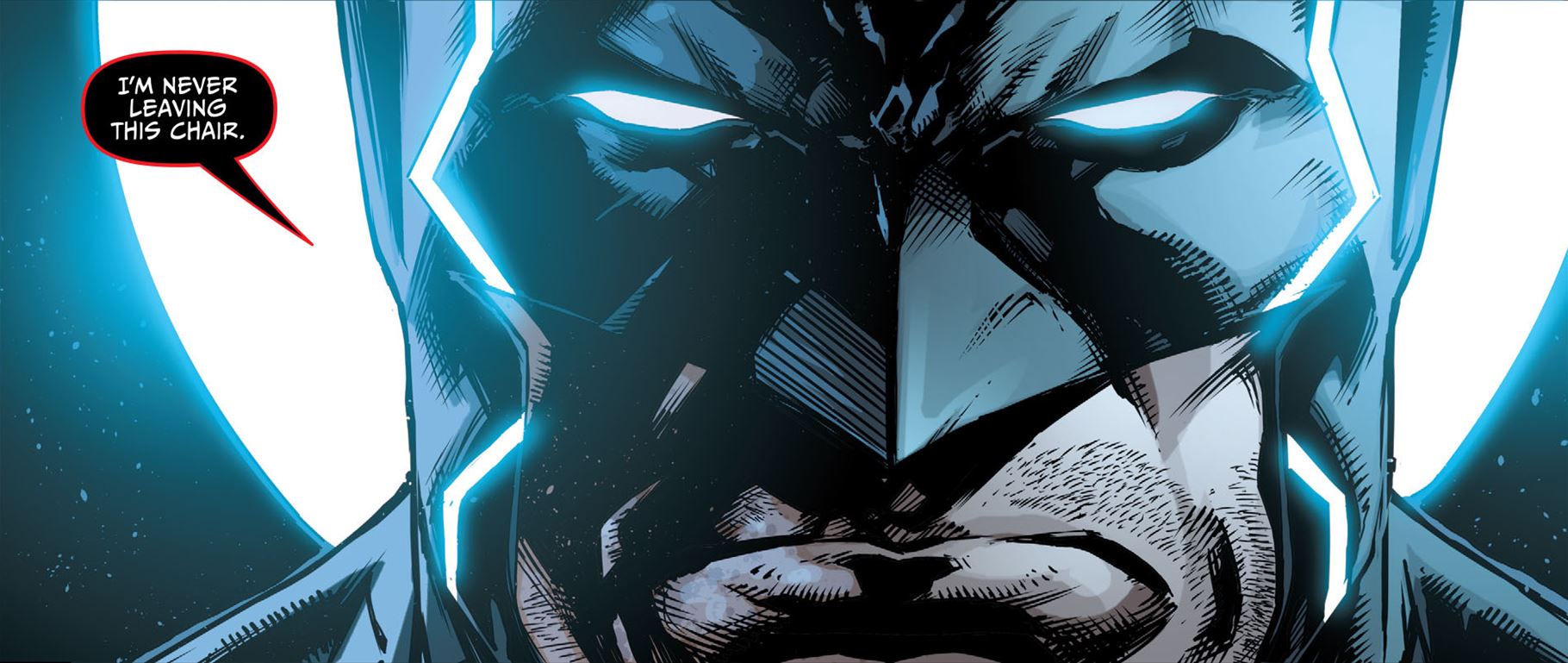
I’m not taking a risk with Batman, despite the fact that Geoff Johns seems to be having a lot of fun with Bruce Wayne’s character during this arc. We have already seen him learn the identity of his parents’ killer (Joe Chill), the identity of Joker (never revealed to readers), and we have seen that he is in serious trouble now that Mobius has returned. Because of all these details, I think he might be the main focus for a lot of speculation. I’m cool on a transformation for Batman because there are already two other series (Batman, and Batman & Robin Eternal) that are actively involved with mixing things up for Bruce Wayne and company, and Batman doesn’t need as much help as nearly all of the other Justice League members. He’s as complex as Hamlet, meaning that even a static Batman gives Johns more to work with than a dynamic anyone else.

What would a change look like for Batman at the end of “Darkseid War”? I think the most impactful thing that has happened to Batman during this arc is the fact that his curious detective intellect was bonded with a  source of infinite information. Once he is inevitably removed from this source, things may get shaky. The most interesting transformation I can imagine for Batman would be that he is reduced to a state similar to Alzheimer’s in which he is constantly grasping for information that isn’t there, making him simultaneously much slower at deducing solutions and much more prone to bouts of anger when the information he seeks simply isn’t there. We have a diversity of characters now who deal with problems facing people of color, women, people of different social classes, sexuality, and even disability, but it is not often that we see superheroes who face issues that frighten us all as we get older. This could be a fantastic opportunity for personal growth for Batman but also for expanding the inclusivity of comic book readership.

  1. GREEN LANTERN

Justice League 46 03

There is another list in my head where Hal Jordan, the Green Lantern is at the bottom, and this is because Geoff Johns re-opened and closed the book on this character. It would be far more likely that he would devote time to changing life for Power Ring than Hal Jordan. The conclusion of Geoff Johns’ Green Lantern was perfect, and then he passed the character on to another creative team. He’ll pop into the pages of Justice League here and there, but I honestly think Johns keeps him around as a foil for other characters. In the light that he casts, we can see sides of these other characters that we wouldn’t have otherwise. That is Hal Jordan’s purpose in Justice League and I like it.

What would a change look like for Green Lantern at the end of “Darkseid War”? It would be the best thing ever, because nobody knows Hal Jordan better than Geoff Johns. We know that the Justice League has proxies in other universes. Look at the Earth 2 comics, Multiversity, and Johns’ recent work with the Crime Syndicate. We also know that the red (animal), green (plant), and black (death) of Jeff Lemire’s Animal Man and Scott Snyder’s Swamp Thing also has proxies in Earth 2. What I think Johns would play with is the proxy to the seven color spectrum in the main universe that exists in the Crime Syndicate’s home reality on Earth 3. We know about Volthoom, the power behind Power Ring’s green ring, but what of Red, Orange, Yellow, Blue, Indigo, Violet, White, and Black. Personally, I would love to see a yellow ring from Earth 3 on Hal Jordan’s finger. If we assume that the entities associated with the rings possess the ring-holder and that they are a kind of opposite entity to the Earth 1 proxy then Hal Jordan would occasionally get possessed by a braggadocios heroic beasty and we would get to have fun with the ego conflicts between this over-the-top avatar and cocky pilot Hal Jordan.

  1. SUPERMAN

Justice League 47 07

I don’t know if any of you read Geoff Johns’ arc on Superman but it was insane-good and Johns already gave Superman quite a character development. Superman can now release the energy from all of his cells at once in a gigantic body blast which permanently depletes him and turns him into a basic human being in terms of power and skill set for about 24 hours. That said, I think there is still plenty of room to further develop Superman and Geoff Johns must have some ideas up his sleeve.

What would a change look like for Superman at the end of “Darkseid War”? One of the big cliffhangers of Justice League #47 was that the energy Superman absorbed on Apokolips may be destroying Superman’s cells and killing him. However, when it comes to Geoff Johns “death” actually means “change.” I wouldn’t be surprised if Superman’s cells are actually transformed so that he needs Apokoliptic energy instead of solar energy in order to gain super powers. This would effectively make him human or banish him to Apokolips, and I think neither possibility is more entertaining than the dilemma itself. Does a helpless Superman stay on Earth or migrate to Apokolips where he might be able to do some good? That’s a story I’d love to read.

  1. CYBORG

Justice League 47 08

Now we’re starting to get into the characters that I legitimately think Geoff Johns wants to make some changes with. Much of “Darkseid War” forces us to remember the first arc of Geoff Johns’ Justice League in which the team was assembled in response to Darkseid’s first attack on Earth 1, and lets not forget that Cyborg occupied the b-story to the assembly of the League. A Volthoom-possessed Power Ring uploaded Grid into Cyborg at the end of Justice League#47, so we already have a pretty good in for changing it up for Cyborg. In the same issue, Cyborg is outclassed at his niche by Mister Miracle and Barda, which might even suggest Cyborg dropping from the active roster for a time.

What would a change look like for Cyborg at the end of “Darkseid War”? Cyborg has been “infected” with Grid before, and he was able to wipe Grid from his system. Johns is smart enough not to do the same thing twice. This means that the interfacing of Cyborg and Grid is going to be transformative more likely than not. I think the most likely option would be that Cyborg and Grid become partitioned within Cyborg’s body. This could be forced against Grid or a mutual decision. While this might seem a little too much like the dual nature of Firestorm, I think we could get some awesome Evil Dead-style comedy where Grid suddenly gets control of Cyborg’s hand or something else.

  1. FLASH

Justice League 46 02

Much like with Green Lantern, Geoff Johns has become the master of The Flash over the years, but unlike with Green Lantern, I don’t think Johns is done with Flash just yet. When Flash was transformed into the Black Racer, it felt like there was a new venue for character development. Also, now that CW’s The Flash is entering its second season it certainly wouldn’t hurt to have a strong The Flash comic so that the two support one another. In other words, it might be time for Geoff Johns to come back to The Flash again.

What would a change look like for Cyborg at the end of “Darkseid War”? I think the knee-jerk suggestion is that Flash will semi-permanently become the Black Racer. Maybe he will be a good guy with a Black Racer power set. Maybe he will be a bad guy and one of the other Flashlings will have to step to the forefront in order to battle him a la the Hal Jordan/Parallax and new Green Lantern Kyle Rayner story line from long ago. For some reason, and feel free to laugh in my face if/when I’m wrong, I don’t think this is where Johns wants to go with The Flash. Since “Darkseid War” appears to be a book-end to the first Justice League arc, we might see a similar bookend for The Flash. By this I mean that The Flash either travels to or remembers the previous universe and is forced to deal with the consequences of Flashpoint in some shape or form. If this were to happen, Johns could potentially even redeem Convergence and all of its awkward enormousness (enormous awkwardness? you decide). I’m not sure how, but this is the guy who made good on Hal Jordan’s incredibly confusing and difficult past. If Johns can’t do it, no one can.

  1. WONDER WOMAN

Justice League 47 04

I don’t think Wonder Woman is necessarily the character who needs a change the most, but I do think that there is a reason that she has narrated the “Darkseid War” for the last few issues. In the background of this story arc there has been a “Wonder Woman, This is Your Life” theme. There is another Amazonian in the mix, and it is unclear what is going to happen between her and Wonder Woman, she has been attempting to make peace with her romantic relationships with both Steve Trevor and Superman, and we got a fleeting glimpse of Themyscira that felt kind of scary. If I’m a betting man, I’m putting my money on Wonder Woman as the character whose life is going to be changed forever.

What would a change look like for Wonder Woman at the end of “Darkseid War”? Honestly, with the events that have unfolded in Justice League #46-47 I wouldn’t be surprised if Geoff Johns killed Wonder Woman off. I wouldn’t be surprised, but I do think I might be a little disappointed. In story telling, it is always more rewarding to wound than to kill, and there are many things that could hurt Wonder Woman at this point. If something were to happen where Superman or Steve Trevor were killed, transformed, alienated, or in some other way removed as a friend or lover from Wonder Woman’s life, that would hurt, but something inside me says that the island of Themyscira and potentially the entire Amazonian race might be wiped from the planet.

Justice League 47 05

We’re talking Alderaan! Wonder Woman never felt that she belonged anywhere other than on that island. Themiscyra was her crutch. If Themyscira were gone she’d be forced to assimilate, and that process is probably one of the most gut-wrenching things I can imagine for a strong woman from a foreign culture. In terms of art, this means that it is an incredibly fruitful story generator as well.

Who do you think is most likely to experience the big change and what do you think Geoff Johns has in store for that character? Also, what did you think of Justice League #47?

* * *

The Totally Awesome Hulk 01 02

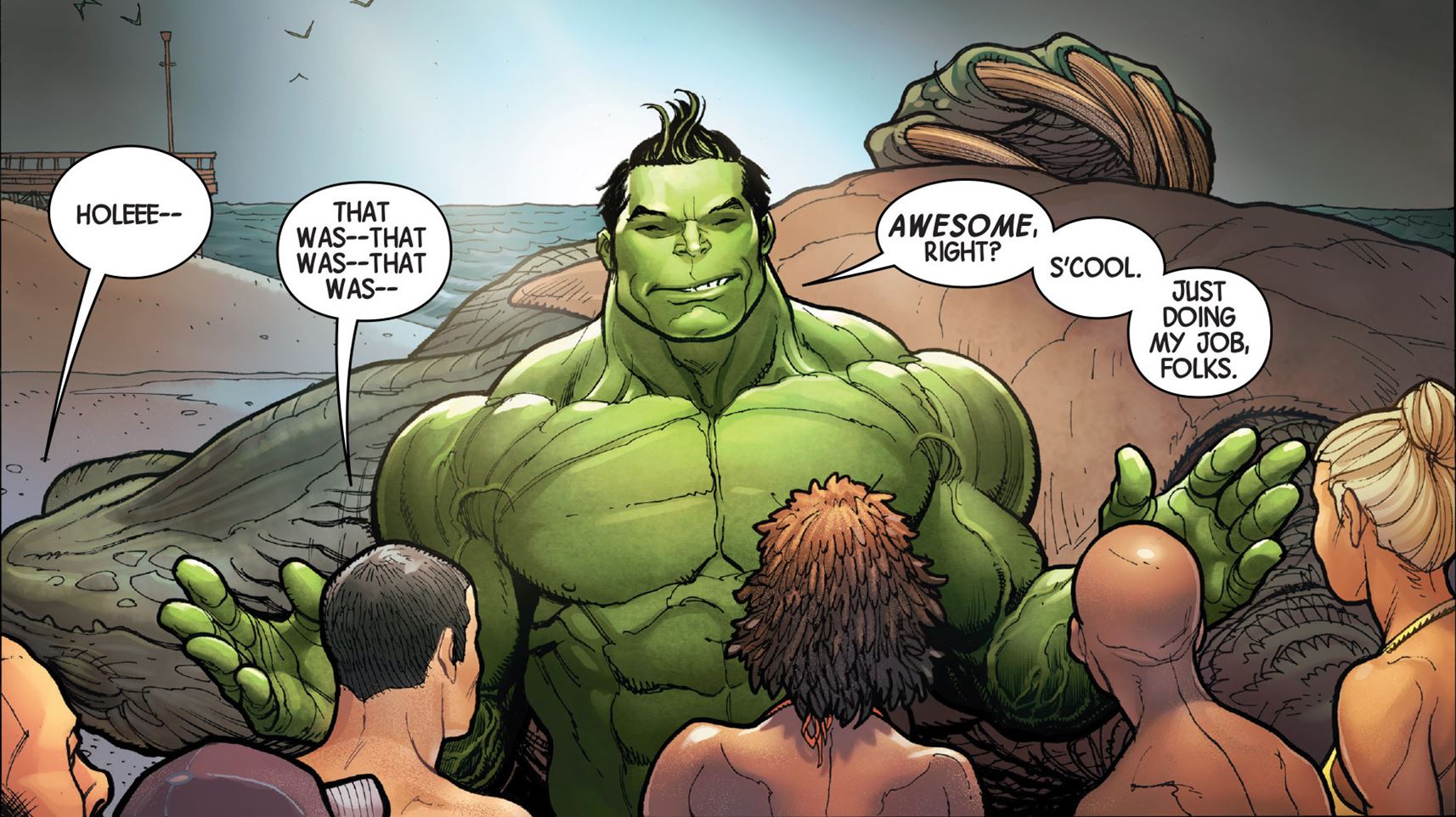
One of the most surprising books in the All-New, All-Different Marvel line, both in terms of title and content, is The Totally Awesome Hulk. Greg Pak and Frank Cho’s story follows Amadeus Cho, a young genius who has inherited the purple shorts of the Hulk. This title first and foremost shows Marvel’s commitment to stirring things up with their foundational characters in a way that we haven’t seen since DC replaced Superman with Superboy, Cyborg, Steel, and the Eradicator, Batman with Jean-Paul Valley/Azrael, and Green Lantern Hal Jordan with Kyle Raynor. It is an interesting time to be alive now that Captain America is Sam Wilson (the first prominent black superhero without the word “Black” in his name!), Thor is Jane Foster (a female superhero fighting a losing battle against cancer!), Ms. Marvel is Kamela Khan (the first Muslim character to headline her own comic and a young woman of Kitty Pryde quality to boot!), Spider-man is Miles Morales (a multi-racial black/latino teenager from another dimension!), and now Hulk is Amadeus Cho (a Korean American super genius!). I think that the only reason Tony Stark is still Iron Man is not actually for the sake of continuity, but because Marvel still needs to prove that Tony Stark can be approachable outside of the big screen unlike Steve Rogers, Thor Odinson, Carol Danvers, Peter Parker, and Bruce Banner.

The first thing you notice about The Totally Awesome Hulk is that it is fast-paced and entertaining. Pak’s writing is simultaneously fresh and reminiscent of Stan Lee’s early Marvel work. I felt intrigued by the things that were not told in issue #1. While we were given a flashback to somewhat explain why Bruce Banner is now off the Hulk roster, it is still not certain exactly what happened as a result of his heroics on that fateful day in the recent past.

The Totally Awesome Hulk 01 03

Was Bruce Banner’s gamma mutation reversed? Was he killed? Did he mutate into something uncontrollable? Is his fate to be Amadeus Cho’s villain? Perhaps a new Abomination? Perhaps more interesting is the question of how and why Amadeus Cho has become the Hulk and taken to hunting monsters. While I think Pak is building something that could be really interesting, I think Frank Cho’s art might be what keeps readers coming back in the short-term. What makes Frank Cho particularly qualified for this title, other than making both male and female characters look fantastic, is the fact that he does not draw Hulk with some static Hulk-face. He uses Amadeus Cho’s natural facial features and simply Hulks them out. If Frank Cho were required to draw a lineup of all of Marvel’s superheroes as Hulks you would know which one was Amadeus Cho, which was Bruce Banner, which was Steve Rogers, which was Tony Stork, etc. etc. etc. Does this mean that we’re going to see our fair share of green Hulks in this series? Not necessarily, but it never hurts to have an artist who is equipped for the task.

I would say that it is definitely worth taking a risk on Greg Pak and Fank Cho’s The Totally Awesome Hulk. It is incredibly uncommon for a minority creative team with a minority main character to get any kind of traction in the current comic book climate. These books don’t always get the support of the marketing department of their respective publishers, and it is getting harder year after year to compete with the white boys club of foundational superheroes created in the Golden and Silver Age of comics. In comics, you vote with your paycheck and your pull list, so if representation matters and you really like what you’ve seen make sure you pick up The Totally Awesome Hulk once a month.

Next week we get to enjoy the first new comics of 2016 and with it some minor tweaks in the methodology and presentation of these comic book posts. Thanks for talking with me about comics for the last quarter of 2015. I’m feeling optimistic this year. I think comics are only going to get better and better. Also, if any of you are going to read through Civil War in preparation of the third Captain America movie that’s coming out later this year, hit me up. I never read the crossover when it first came out, and I would love to have a community, even just a small community, of people I can talk to while I’m pushing through it.

Catch it in the Trades: The Top 10 Best New Comics of 2015

I wanted to start a tradition of looking back at the best comics of the year, but I wanted to make sure that successive yearly posts don’t get repetitive. To keep things fresh, I thought I would only talk about comic series and mini-series debuting in 2015. That way we don’t end up talking about The Walking Dead and Saga every year and acting surprised. The biggest weakness of the following list is that I did not take enough time in 2015 to delve into some of the smaller independent-publisher gems that I know are out there. This is why I suggest that you use this list as an excuse to head out to your local independently-owned comic book retailer with a primary mission of picking up some trades and back issues. Your secondary mission is to talk to the employees, check out other indie-oriented lists online, and take a risk on something you’re unfamiliar with.

Here are my favorite new comics of 2015.

NOTE: Most of the release dates for collected editions are listed online for Tuesday release dates. I have adjusted these releases for the following day mainly because that’s when new comics come out and we should all get in the habit of stopping by our local comic shop every Wednesday.

  1. Batman & Robin Eternal #1-13 (DC Comics), writers: Scott Snyder, James T Tynion IV, Tim Seeley, Steve Orlando, Genevieve Valentine, Collin Kelly, Jackson Lanzing, and Ed Brisson; artists: Tony S. Daniel, Paul Pelletier, Scot Eaton, Francis Manapul, Sandy Florea, Raul Fernandez, Alvaro Martinez, Roge Antonio, Fernando Blanco, and Fernando Pasarin.

Whereas last year’s weekly Batman Eternal title made the case for there always being a Batman, this year’s weeklyBatman & Robin Eternal claims that for every Batman there ought to be a Robin. Decades of evidence exists to suggest that a sidekick humanizes and softens our mission-oriented caped crusader, but once the Bruce Wayne / Batman piece has been removed from the board it seems that Robins flock together. Of course, they’re not all Robins anymore.Batman & Robin Eternal follows Grayson (formerly Nightwing), Red Hood, Red Robin, Spoiler, and Bluebird as they seek to uncover the truth behind a mystery that reaches backward in time to the good old days of Bruce and Dick. These Eternal titles that Scott Snyder and James T Tynion IV have been executively producing are probably intended to act as a buttress for struggling Bat Family titles, introduce new and pre-New 52 characters into the mix, and to use up Snyder’s deep well of Bat-book notes before he eventually changes gears and makes another title his number one priority. Batman & Robin Eternal is not always brilliant, but it is consistently fun. In fact, the flashback in issue six, by Snyder, Tynion, Florea, and Daniel, borders on sublime.

The first volume of Batman & Robin Eternal collects issues #1-12 and is scheduled for release on March 9, 2016. The second volume will presumably collect issues #13-24. At this time, there is no release date for volume two. As for last year’s Batman Eternal, there are three available volumes collecting issues 1-21 (Vol. 1), 22-34 (Vol. 2), and 35-52 plusBatman #28 (Vol. 3). Batman, volume 7: “Endgame” collects Batman #35-40 and is also currently available.

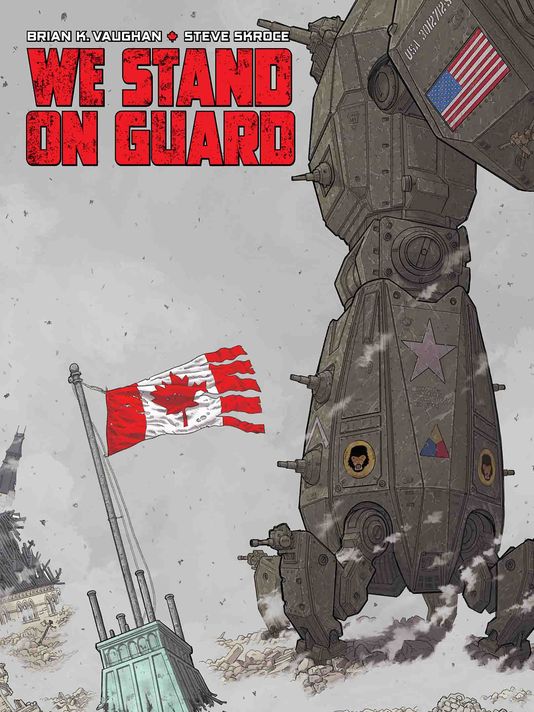
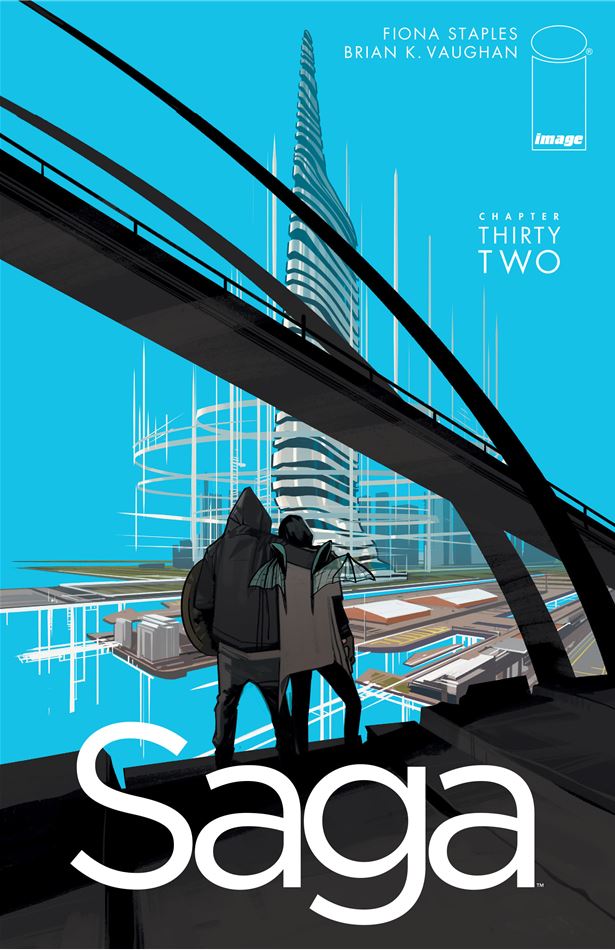
  1. We Stand on Guard #1-6 (Image Comics), writer: Brian K. Vaughan; artists: Steve Skroce and Matt Hollingsworth.

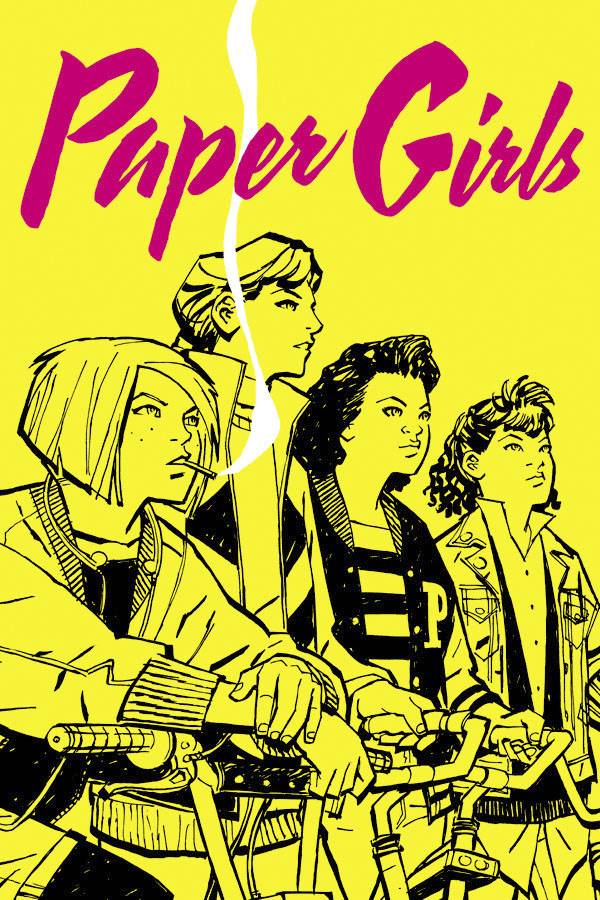
If you needed proof that 2015 was a great year for comic books, look no further than the fact that, at one point, there were three Brian K. Vaughan titles (Saga, We Stand on Guard, and Paper Girls) being published by Image Comics. We Stand on Guard is a six-issue mini-series following a woman named Amber as she joins up with a rag-tag band of Canadian fighters as they plan their final show-down against invading American forces. This is not present day war, but future war with its giant space ships and mech warrior suits. Like much of his previous work, We Stand on Guardtouches upon issues concerning children growing up during times of war and how they are, in some way or another, affected for their entire lives. The more interesting novelty that Vaughan adds to the extensive literature on this subject that he has already written is an interesting comparison between superheroes who have lost their parents and dedicated their lives to fighting for justice and children who lose parents due to terrorism, politics, and war and what kind of people they turn out to be.

I haven’t been able to track down a specific date for a We Stand on Guard collected edition, but the sixth issue just came out on December 9th so we shouldn’t have to wait too long for a release date. I would image we’re going to have a March release date like Batman & Robin Eternal.

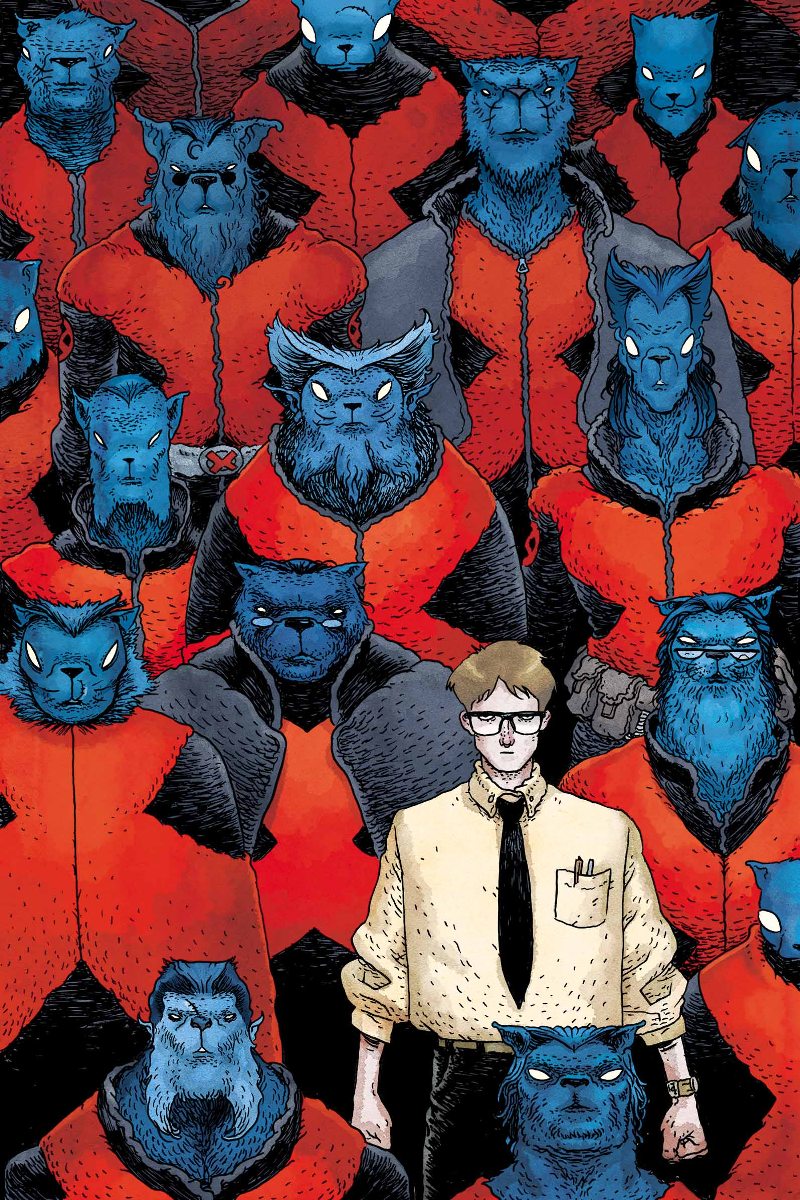
  1. E is for Extinction #1-4 (Marvel Comics), writer: Chris Burnham; artist: Ramon Villalobos.
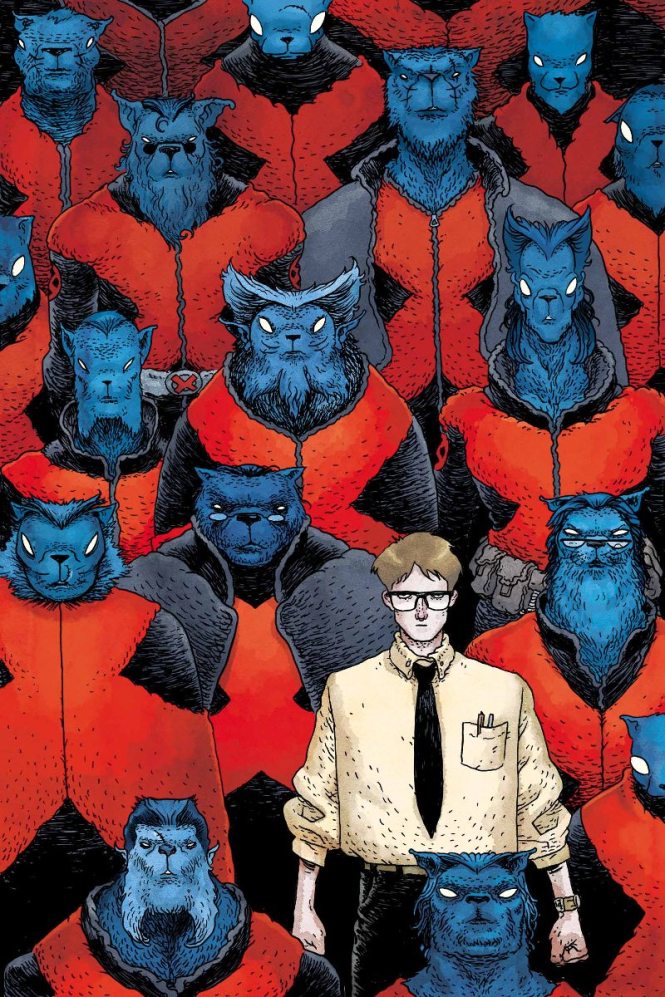
EISFOREX003_cov_col

E is for Extinction was probably Marvel’s best Secret Wars mini-series, at least when it comes to nostalgia factor. Burnham and Villalobos perfectly encapsulate the feeling of Grant Morrison and Frank Quitely’s work on New X-Menduring the early 2000s and deliver a brand new story featuring some Morrison-era favorites like Cassandra Nova, the Stepford Cuckoos, Xorn, and Quentin Quire. On the story-end it feels like Secret Wars is meant to be the crossover to end all crossovers — don’t hold your breath on this idea, though — while on the business end it feels like many of these stories were meant to sell trades of some of Marvel’s better past story arcs. Whatever Marvel is trying, sometimes it is just really great to have fun in a familiar sandbox, and this is what you get when you read E is for Extinction.

The one-volume E is for Extinction: “Warzones” collects the full 4-issue miniseries with the addition of the now classicNew X-Men #114 by Morrison and Quitely and will be released March 2, 2016. As for Morrison and Quitely’s New X-Men, the entire run is available in either one omnibus, three hardcover volumes or fourteen trade paperbacks covering New X-Men #114-154 and Annual #1.

  1. Star Wars #1-13 (Marvel Comics), writer: Jason Aaron; artists: John Cassaday, Simone Bianchi, Stuart Immonen, and Mike Deodato.

STK660748

When Aaron and Cassaday’s Star Wars #1 was released in early 2015 I don’t think that it had even set in that by the end of the year I would have seen Star Wars, Episode VIII: The Force Awakens in theaters, but at that time Star Wars#1 was enough. I remember grinning from cover to cover, feeling like I was watching a new movie featuring young Luke Skywalker, Han Solo, Leia Organa, and friends with every page I turned. Die hard fans will be happy to learn that Marvel’s 2015 Star Wars is considered canon now that Disney has purchased the rights to George Lucas’s franchise. In other words, the events of these comics matter and could be referenced at any time as the canonical universe expands with new comics, books, TV series, and films. A while back I joked that the only way Marvel would ever be able to separate Jason Aaron from writing Wolverine comic books would be if they killed off Wolverine and got the rights to Star Wars, but all jokes aside I think Aaron is great at writing Star Wars and I think he has found his next Wolverine. In other words, he is likely here to stay.

The first volume of Star Wars titled “Skywalker Strikes” (issues #1-6) was released on October 6, 2015. Volume two (“Showdown on the Smuggler’s Moon,” issues #7-12) is scheduled for a January 27, 2016 release and the crossover Star Wars: Vader Down (Vader Down #1, Star Wars #13-14, Darth Vader #13-15) is scheduled for an April 20, 2016 release.

  1. Doctor Strange #1-3 (Marvel Comics), writer: Jason Aaron; artist: Chris Bachalo.

doctor-strange

Remember what I just said about how hard it must have been to separate Jason Aaron from Wolverine? Well, the last time Jason Aaron and Chris Bachalo worked together was actually on Marvel’s Schism-era series titled Wolverine and the X-Men. The team-up was a little more short-lived than I would have wished, but Doctor Strange is certainly an acceptable continuation. In fact, the second issue’s exploration of the Sanctum Sanctorum was probably one of my favorite issues to come out this year. It seems pretty clear that Marvel has rolled out a couple of its heavy hitters to flesh out the character of Doctor Strange prior to the release of the Doctor Strange film on November 4, 2016, and I think this particular decision was a success. Aaron has already gotten me more interested in Marvel’s arcane side than I ever have been before, and Bachalo’s art looks so good that I’d probably leaf through each issue even if Aaron weren’t any good at spinning a tale.

We won’t be seeing the first volume of Doctor Strange until May 11, 2016, but it is titled “The Way of the Weird” and it includes issues #1-5.

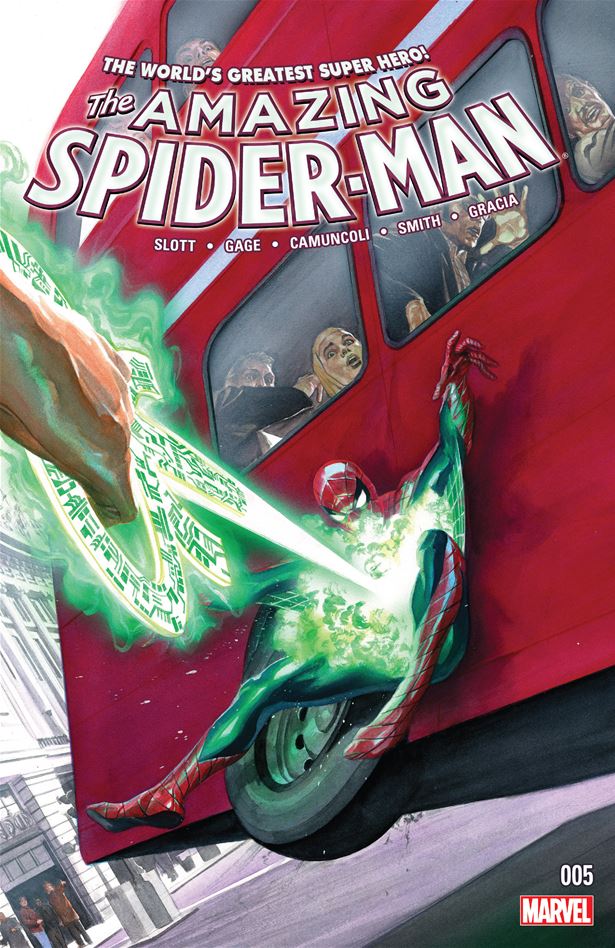
  1. Amazing Spider-man: Renew Your Vows #1-5 & Amazing Spider-man #1-5 (Marvel Comics), writer: Dan Slott; artists: Adam Kubert and Giuseppe Camuncoli.

amazing-spider-man-renew-your-vows-1

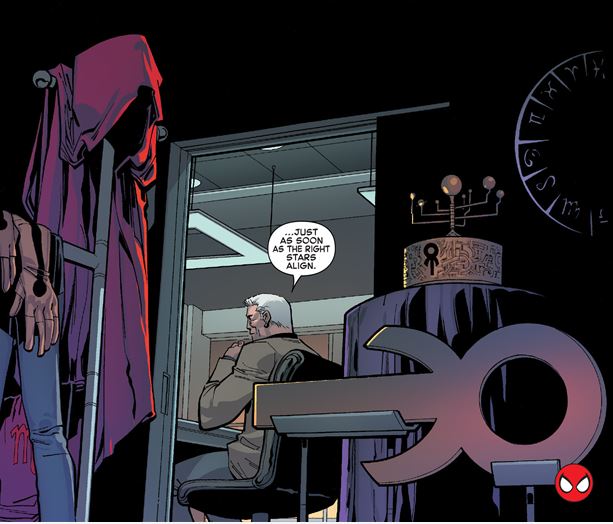
Dan Slott’s Secret Wars-era “Renew Your Vows” was a momentary glimpse into what the world might look like if Peter Parker and Mary Jane Watson’s marriage hadn’t been erased from continuity by Mephisto, and that glimpse was pretty cool. It was especially neat to see Pete’s rebellious daughter Annie trying to protect people in need against the backdrop of Peter Parker applying his responsibility only to his wife and his daughter. The contrast, as we return to regular continuity in Amazing Spider-man, is stark. In this post-Superior Spider-man world, Peter Parker has more power and therefore more responsibility than ever before now that he is the CEO of a multinational corporation. Of all of the neat innovations Slott has already brought to this volume just in the first five issues, I would have to say that his efforts in making the Zodiac interesting is probably worthy of a medal. In the same year, we get to see Pete back with MJ and Pete getting a chance to move forward with his post-MJ life. In a lot of ways, since both of these volumes are a continuation of Dan Slott’s multi-year Amazing Spider-man tenure they probably don’t belong on this list, but it is not my fault Marvel keeps playing the stop and start game. I did think it would be appropriate to collapse both volumes into one so we could talk about some other comics as well.

The Amazing Spider-man: Renew Your Vows TPB just came out on December 30, 2015, so you can grab one fresh off the presses once you hit your local comic shop. The first TPB for the new volume of Amazing Spider-man titled “Worldwide” collects issues #1-5 and is showing a street date of April 20, 2016.

  1. Invincible Iron Man #1-4 (Marvel Comics), writer: Brian Michael Bendis; artist: David Marquez.

Invincible_Iron_Man_Vol_2_1

I can’t be the only one out here who has had extreme difficulties relating to or caring about Iron Man for most of his life. In fact, I don’t think I cared for him as anything more than Avengers air support until Robert Downey Junior appeared on the big screen as a version of Tony Stark that felt like George W. Bush with a pickled heart of gold. In light of this I think Bendis’s new volume should actually be titled Surprising Iron Man, which is not very farfetched in a comic book environment which includes Totally Awesome Hulk and an Avengers book with such a long title that it requires two hyphens and a comma (All-New, All-Different Avengers). Though only the fourth best new comic this year, I think Bendis and Marquez have created a comic that would be a perfect benchmark for other comics. If you’re looking to work on a serialized comic depicting an established character who you want to take in an interesting direction, your sourcebook should probably be the current volume of Invincible Iron Man.

The first volume of Bendis’s Invincible Iron Man, titled “Reboot,” collects issues #1-5 and will be released April 20, 2016.

  1. Constantine – The Hellblazer #1-7 (DC Comics), writers: Ming Doyle and James T Tynion IV; artists: Riley Rossmo, Vanesa Del Rey, and Ming Doyle.

Constantine_4

I am normally about as keen on John Constantine as I am on Tony Stark, but I’m also happy to admit when I’m wrong.Constantine – The Hellblazer has been one of the most refreshing comics that I have read in years. If Peter Milligan’s 1988 comic Hellblazer was the first chapter of the John Constantine story, I am honestly beginning to believe that Tynion and Doyle’s Constantine – The Hellblazer is the beginning of the second chapter. John Constantine has always been this complicated brooding anti-hero with an edge, but now, impossibly, he is depicted in vivid colors and potentially emotionally available. Against all odds, I am rooting for John Constantine’s love life to take center stage and for everything to work out for him. I find this reimagination of Constantine particularly exciting because most of the art is done by a guy named Riley Rossmo, who I’m proud to say I discovered before he was doing work for the big publishers. He was always one of the little guys, someone like you and me, only he works harder than anyone you know and his passion for his craft is really paying off. DC can go ahead and cancel whatever they like next year, so long as they keep their hands off of Constantine – The Hellblazer.

The first six issues of Constantine – The Hellblazer will be available on February 17, 2016 in a volume titled “Going Down,” followed by a second volume consisting issues #7-12 to be released on August 17, 2016.

  1. Extraordinary X-Men #1-4 (Marvel Comics), writer: Jeff Lemire; artist: Humberto Ramos.
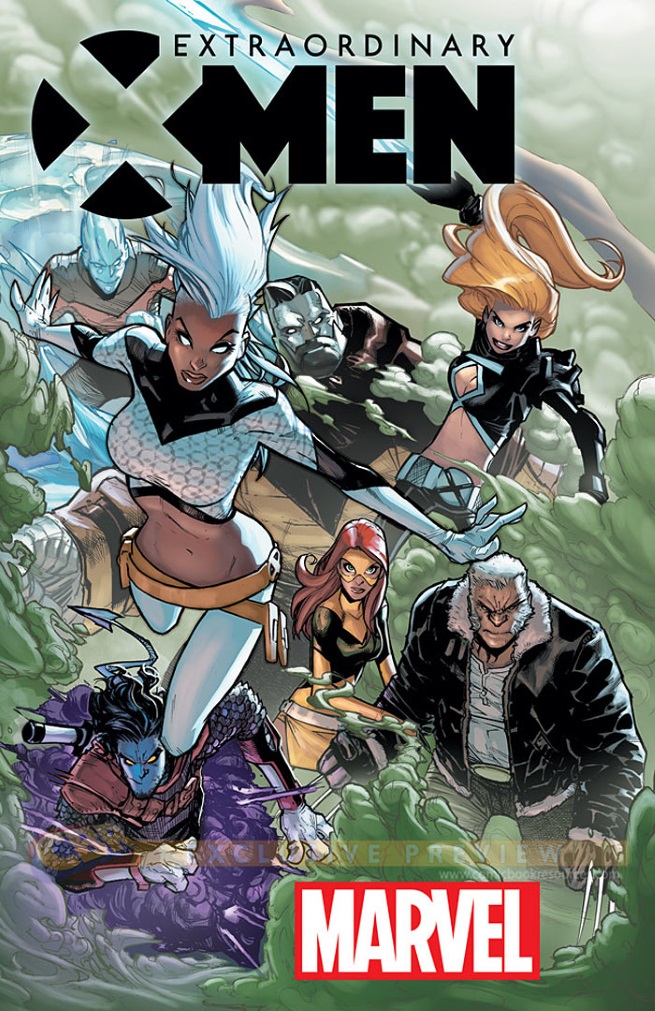
extraoxmn2015001-mock-358c0-141888

With a couple of possible exceptions, I have probably read more X-Men comics than anyone I know. As a result, I have a strong idea for when a creative team is sticking true to the core of what it means to be mutants in a world that fears and hates you. I loved Jason Aaron’s Schism and Brian Michael Bendis’s recent work on All-New X-Men and Uncanny X-Men, but if I’m being honest I think Extraordinary X-Men has already blown them away in its first four issues. Jeff Lemire has gone from this unknown quantity to a surprise hit with DC’s The New 52 and Animal Man to perhaps one of the most consequential X-Men writers since Grant Morrison, and it has been a great ride. Until 2015, I knew Humberto Ramos as that guy who does a lot of art for Dan Slott’s Spider-man comics, but now his vibrant characters remind me of the Jim Lee and Joe Madureira days of the X-Men and I hope he’ll never leave. What else is great about Extraordinary X-Men? Everyone’s favorite mutants are fighting a battle both on the home front — on the streets of every city where a mutant’s life is in danger — but also away, in fantastical places like Limbo. Storm is finally back in charge after seemingly everyone in the comic book industry forgot that she’s always been one of the most successful leaders the team has ever seen, outshining Cyclops at every turn and talking down Wolverine whenever he starts thinking with his animal side. We get comic relief in the form of Cerebra the Sentinel while in the meantime the fate of mutant life on earth may rely on whether or not the X-Men can summon their allies to their side. There’s some cheese here and there, but every good X-Men title has had a little bit of that. Not every X-Men title feels like it fits perfectly into the continuous story since 1963 though.

The first volume of Extraordinary X-Men titled “X-Haven” collects issues #1-5 and is scheduled for release on May 11, 2016.

  1. Huck #1-2 (Image Comics), writer: Mark Millar; artist: Rafael Albuquerque.

Huck01-Cvr-724b8

There are quite a few comics that were released during the last quarter of 2015 that I had to bump to the Honorable Mention category, but when the first issue of Huck was released on November 18 I was pretty sure that, barring some sort of Christmas miracle, this was going to be the best new comic book of the year. Huck himself is Mark Millar’s secret weapon. It doesn’t really matter what happens in the span of this 24-issue comic, because so long as our small town autism spectrum man of steel is the main character it is going to be fantastic. I like Batman, but I’m not so sure I’d like to know Batman. I like Cyclops, but he isn’t exactly the type of person I like to spend time with. I like Huck, and I think I could move in with him and maybe help him with some of the smaller good deeds on his to do list. This is the comic book that you don’t want to miss out on. It is something you want on your shelf. The series had barely hit the shelves and already there is rumor of a movie in development. If you didn’t read Huck in 2015, you’re going to want to make it the first thing on your to do list for 2016. This is not a comic to pass up.

I’m not sure that Image Comics has set a release date for the Huck Volume 1 TPB, but luckily Huck is still new enough that you might be able to pick up first editions of the first two issues.

Honorable Mentions

Paper-Girls-1

I really loved reading All-New, All-Different Avengers (Marvel), I Hate Fairyland (Image), Karnak (Marvel), and Paper Girls (Image) this year, but unfortunately all four are just now starting to find their footing so I didn’t really know where to put them in the rankings. Marvel’s Darth Vader had a fantastic first arc with a one of the best annual issues I’ve read in some time, but unfortunately it fell just short of the top ten. Secret Wars and Ultimate End both had so much promise but were ultimately a little too all over the place for my own tastes. That said, Secret Wars is up there with Avengers vs. X-Men as one of the best crossovers in the last five to ten years and the final issue of Ultimate End was a great conclusion to Bendis’ work in the Ultimate Marvel imprint.

* * *

I hope you had as much fun reading these posts as I did writing them for the last quarter of 2015. I expect to continue with the weekly comic book posts until some huge life change or lack of motivation hits me. As we move into 2016, I am going to devote the introduction specifically to highlighting the new comic books that the various publishers are releasing that week. To make things a little more interesting, I am going to vow to read every first issue of every comic released by Dark Horse, DC, IDW, Image, Marvel, and Vertigo. There are a couple of reasons for this. This will make next year’s round-up post a lot easier to pull together, but more importantly it means that I won’t miss as many comics in my evaluation. If it weren’t for the help of my friends / readers, I would have overlooked Extraordinary X-Men, Constantine – The Hellblazer, and Invincible Iron Man, my second, third, and fourth place new comics! This is more than likely due to the fact that I only promise to read the first three pages of every new comic that I am trying out. I’m still looking for a good methodology so I don’t miss out on the better comics from the independent publishers. Hit me up if you have any ideas outside of just asking the employees at my local comic shop, and until next time lets talk comic shop.

Raising Your Regular Wage: Conclusion

weekend-work

The refrain of the last few financial posts should be: Regular wage increases are not the solution to the problem of debt; control of spending is the only way out. What an increased income provides is a speedy way to get toward where you are aiming, but whether you’re pointed at increased or decreased debt has everything to do with your habits and your will power. If the take home message is that we shouldn’t worry as much about increasing revenue as we should about decreasing spending, then what was the purpose of all of these posts about increasing your regular wages? The system of these posts is guided by attacking our budget from largest factor to smallest factor, which means that, assuming your budget balances, your income is going to be the largest portion of the equation.

I have had three major influences in my own personal financial research, Mr. Money Mustache, Dave Ramsey, and Strike Debt. While Mr. Money Mustache and Dave Ramsey focus mostly on the personal responsibility for your financial well-being, Strike Debt focuses on how policy and power structures either enable or disable your ability to stay out of debt. I prefer to take the broad spectrum approach, because the problem of debt involves both personal and corporate responsibility.

If we do not win the head game and become personally responsible in all aspects of our lives, it wouldn’t matter whether we’re in a socioeconomic utopia or surrounded by leeches who bleed us dry; in all circumstances, irresponsible people will lose their money. When it comes to personal responsibility we have already dealt with the obvious routes toward making more money — getting a raise, getting a promotion, and getting a higher paying job. Clearly, there are other issues here that we didn’t spend any time on like transitioning from temporary employment to permanent employment, moving from part time employment to full time employment, and keeping a job once you have it. I didn’t feel like I personally had any insight regarding these issues, but I would love to give a signal boost to anyone who is interested in tackling these issues. I welcome guest posts and I will liberally share your blog posts if you send them my way.

Whereas personal economic responsibility is often limited by current practices and laws, our corporate responsibility for our debt reaches above and beyond policy and procedures. In other words, once you have reached the end of your possibilities for economic growth you need to focus on opening up other possibilities. If we created a community based on economic responsibility, the assumption is that the ground would be fertile for people to succeed. There is also the dangerously irresponsible individual that I mentioned above who will always be a hazard in any society, but those people are less common in an environment where people are concerned with the economic well-being of all of their neighbors. When you’re surrounded by people who are making the right decisions, you make the right decisions on accident. To create this world, we have to create a system that assures that everybody has acquired certain basic needs, that enables higher earning for lower and middle class families, and that eliminates the predatory practices that tend to enslave the many to the whims of the few. Our focus for discussing the kind of actions that aim to change policy was the Fight for $15 and expansion of the Earned Income Tax Credit (EITC), but these are clearly only the tip of the iceberg. When it comes to fixing what is wrong with our community, the only things setting limits on us are our collective imagination and our collective passion.

To wrap up the topic of increasing your regular rate of pay, I wanted to shift from the quantitative issues of more income and less spending to some qualitative issues that come up every single day as our workplaces define our lives. I want to talk about turning our time at work into quality time.

The most common phrases regarding employment are “working for the weekend,” or “It’s five o’clock somewhere,” but if we were satisfied by what goes on while we are on the clock we would say much stranger things like “working for the week,” or “it is always now here.” What these sentiments sum up are that we currently want to speed up time while we are at work while slowing down time when we are free from our labors. There are few things I can think of that are more disgusting than wishing that you could just throw away eight hours each day, looking toward the clock hoping it might be over soon, or that time with the family is tainted by degrees as the amount of hours until you’re back at work tick down. For the sake of our collective sanity, I think we ought to find a way to eliminate this anxiety by being present to what we’re doing at all times and getting to a point where we are no longer concerned with the passage of time. These worries are stealing years from our lives, and that’s just not something that we can afford to lose.

The easiest step toward adding value to your work life is to build up your relationships with your co-workers. Even if you continue to view your job as intolerable, your co-workers at the very least are the people who suffer through it all with you. Get to know the people around you. Find some common ground. Whatever you think is so important in your own head is probably not quite as important as the random value that another person can add to your life. This is probably really easy for most people, but it isn’t for me. I can be loud and over-the-top, but all of this is just a coping mechanism for an introvert who is constantly forced into social situations. While you’re learning to love your co-workers not as lovers, friends, or relatives, but as co-workers — which I think is an important and overlooked type of love — you can join together and determine how you can add value to your work life in other ways. Through some combination of personal pride, entertainment, challenge, and probably a lot of other factors that aren’t immediately coming to my mind, the goal is to enjoy even the most mundane facets of your job.

The best model for determining whether or not your job provides everything you need is asking yourself whether you would still work there in the event that you no longer needed the money. If you had enough money to retire tomorrow, would you still work for your current employer? If not, where would you be working? If so, are there any things that you would do differently? There are plenty of reasons to leave your job for something else. Maybe you need more money, maybe you need to live closer to home, maybe you need better hours, but have you ever considered what your life would be like if you loved every moment of your day whether you’re at work or at home or off somewhere spending your money?

There is still plenty to study pertaining to the paycheck, and I hope the other portions of the breakdown might end up as enlightening as the search for a higher wage has been for me. At the very least, I got to spend some time reading some interesting bills, rulings, and speeches surrounding Franklin Delano Roosevelt, the New Deal, and the establishment of the first federal minimum wage. I didn’t expect to touch on any of these issues when we started down this path. As I focus on moving forward, I may throw in some more quality of life posts as I focus on transitioning toward making my passion (writing) into a career. Wherever we go, I want you to come with me. I appreciate all of the people who contributed their two cents and helped direct our studies. I hope those of you who really got involved will stick around and I hope that we can stir up some more interest with some of the other interesting people who surround us.

Your homework for the next post: What are your feelings on overtime? Do you wish you had more of it? Less of it? Do you wish you got paid more for it? Taxed less for it? Can you think of any issues regarding overtime that might be interesting to talk about?

Documentary Round-Up

A co-worker of mine recently expressed an interest in learning more about Scientology so I recommended the recent HBO documentary Going Clear: Scientology and the Prison of Belief (2015).

Docs_GoingClear_Poster

This lead to a broader discussion about great documentaries. The discussion was good enough that I thought I would publish the results. Here are some of the better recent documentaries that I can remember seeing:

6 Days to Air: The Making of South Park (2011)

605full-6-days-to-air--the-making-of-south-park-poster

Don’t doubt my credibility simply because I started this list with a documentary about the making of South Park. You’ll have plenty of reasons to doubt my credibility when it starts coming to the conspiracy-based documentaries. What 6 Days to Air delivers is an incredibly human perspective on a couple of creators who seem to put themselves above everyone else’s criticism. Who is South Park co-creator Trey Parker the most critical toward? Scientologists? Mormons? David Hasselhoff? The correct answer is that Trey Parker is the most critical about himself and his own art.

Citizenfour (2014)

MV5BMTc0MTM0MTA5MF5BMl5BanBnXkFtZTgwNzEwODEwMzE@._V1_SX640_SY720_

If you’re lucky, Citizenfour will convince you that Edward Snowden’s thought process got derailed somewhere along the way, because otherwise you’re bound to start believing that there is a massive global surveillance scheme in which everything you say and do is being monitored. Regardless of the outcome, Citizenfour paints a rare picture of a man who will either be considered a traitor or a great patriot for years to come.

Dark Days (2000)

Dark-Days

I have always been interested in “hidden cities.” There are societies rumored to exist beneath Berlin, Portland, and, of course, New York City. In Dark Days, we actually get to follow the lives of several people who live off the grid and then some in abandoned subway tunnels beneath New York City. It is amazing how well some of these people are able to live compared to their above-ground counterparts. This film definitely gets you thinking.

Dogs on the Inside (2014)

xIGLiFtn_400x400

The first of two prison documentaries on the list, Dogs on the Inside follows several prison inmates who have decided to take in rescue animals and train them to be good pets. The heartwarming part of this documentary is the two-way benefit. The dogs find out that they don’t have to fear abuse or neglect, and the prisoners get a chance at emotional rehabilitation. This one is definitely a tear-jerker.

The Elephant in the Living Room (2010)

the-elephant-in-the-living-room-movie-poster-2010-1020684200

In my home town there has always been a rumor that there is a guy at the end of a long driveway who has giraffes and other exotic animals. My curiosity about people keeping exotic animals as pets lead me to checking out The Elephant in the Living Room. The documentary is mostly interesting but at one point it gets really disturbing. I couldn’t recommend it more highly.

Exit Through the Gift Shop (2010)

Poster-04

This documentary is about street artist Thierry Guetta and his strange attempt at greatness. What draws you in are the diaspora of street art artists centered around Banksy who are interviewed and the contrast between Guetta’s obvious flaws and his amazing drive to fake it until he makes it.

Indie Game: The Movie (2012)

IndieGameTheMovie-SundancePoster

It is not exactly easy to make a living off of video game creation, but a handful of creatives have achieved the sublime and succeeded at creating some truly fantastic independent games, some of which might give EA or Activision a run for their money, but you don’t make it this far without sacrifice. If you don’t think there was any blood, sweat, or tears shed in the making of Super Meat Boy, Braid, or Fez, then you are certainly wrong.

Jiro Dreams of Sushi (2011)

810Fw8dOh4L._SL1500_

Jiro Dreams of Sushi is one of the most brilliantly shot documentaries I have ever seen. One would think that the film crew has the same kind of work ethic as Jiro, the sushi chef who has devoted every ounce of his being and every moment of his time to becoming the best there is at what he does. When reflecting on the tough economic climate in the United States, it is hard not to wonder what things would look like if we all focused on increasing our skill the way that Jiro does while preparing sushi.

Loose Change 911: An American Coup (2009)

LooseChange_546x766.jpg

It is certainly controversial to suggest that the terrorist attacks of September 11, 2001 were an inside job, but nobody is forcing you to jump to conclusions. Loose Change examines details regarding the destruction in New York City and elsewhere that just don’t seem to add up. Paranoia is a dangerous and discrediting disorder, but healthy suspicion on the other hand ought to be a pre-requisite for patriotism.
Resurrect Dead: The Mystery of the Toynbee Tiles (2011)

resurrect-dead-the-mystery-of-the-toynbee-tiles-poster

When I lived in New York City I remembered seeing this strange inscription in the middle of a cross walk, but I was drunk so I didn’t pay it much heed. A few years later, I became enamored with the documentary Resurrect Dead which deals with these cryptic messages claiming that the dead can be resurrected on Jupiter as witnessed by Stanley Kubrick’s film 2001: A Space Odyssey. This documentary really creeped me out.

Serving Life (2011)

4e2f5f1534dac-serving-life-review-1

The second of two prison documentaries on this list, Serving Life shows what can happen when convicts are given a chance to do good for their community by serving as end of life hospice care practitioners. If you’re the least bit concerned with prison reform, consider what might come from giving prisoners on good behavior an opportunity at meaningful and possible life-changing employment. In fact, imagine what it would be like if we all had some kind of meaning at our day-to-day job.

TINY: A Story About Living Small (2013)

e7f3ecfcefb2819560fccb5381ced797_original

For most people there is a serious dilemma that occurs when you get to a certain age. You have to decide if you want to spend your life travelling or if you want to buy a house and stay in the same place for your whole life. However, there is a growing group of people who have decided to take a middle path. They build small houses on top of a trailer and take them wherever they go. TINY certainly forced me to reassess my concept of housing. Just keep in mind, if you have a significant other you both have to agree to live this way. You can’t force an issue like this.

* * *

My personal belief is that not all documentaries have enough content or are not gripping enough to warrant a 90-120 minute length. The documentaries I chose for this list not only justify their runtime, but each of them brought me a great deal of inspiration during a time when I was, as Jackson Browne would say, “running on empty.” You don’t have to be particularly interested in the specific subject matter of each of these films. Just try them out when you need a little more oomph to your viewing schedule. You won’t be disappointed.

Star Wars, Episode VII: The Force Awakens – Focus on Family (SPOILERS)

tfa_poster_wide_header

I’ve watched enough of J.J. Abrams’ films and television shows to know that one of his central themes is “daddy issues.” Star Wars, Episode VII: The Force Awakens (TFA) is no exception. There are quite a few angles that we can approach talking about the new Star Wars film, and I am beginning to understand that it is going to take a few posts to get through this, but I think the most central approach to TFA is from the angle of family.

Many of us made sure to rewatch Episodes I-VI prior to seeing TFA for the first time, and in so doing we exposed ourselves to a genealogy. This genealogy has been used to suggest that Episode VII’s protagonist Rey is the daughter of Luke Skywalker. Episodes I-III recount the story of Anakin Skywalker, the grandfather with great power. In Episodes IV-VI, we follow Luke Skywalker — presumably the father — and his hero’s quest to redeem his own dad. The assumption is that Episodes VII-IX are going to follow Rey, the daughter of Luke Skywalker and granddaughter of Anakin.

Though I love this argument’s comparison between George Lucas’s trilogy of trilogies and the generations of a family, I think this simplified form can be misleading. While Anakin and Luke are certainly the central figures of their respective trilogies, the stories that occur are much bigger than that. While it is suggested that Anakin’s mother gave birth to him without her ever experiencing the touch of a man, there is never a suggestion that Luke simply jumped out of the loins of Anakin Skywalker. The generation that is exemplified by Anakin Skywalker also includes Padme Amidala, the materfamiglia and a dynamic character in her own right. Similarly, it wasn’t just Luke Skywalker who was hidden from the Empire by the remaining heroes of the Jedi Order and the Republic. Leia was taken in by Bale Organa, and the story of A New Hope is one of reuniting a family (Darth Vader, Luke Skywalker, and Leia Organa) that had been purposely dispersed. How does this play into the assertion that Rey is Luke Skywalker’s daughter? First and foremost, if all we need is another generation in the Skywalker bloodline we need nobody other than Kylo Ren to fulfill that requirement. He is the grandson of Anakin and the nephew / apprentice of Luke and there is plenty of reason to believe that his own struggle is meant to be the main storyline for Episodes VII-IX. I will admit that it is probably likely that Rey is either the child of Leia and Han (and younger sister of Kylo Ren) or the daughter of Luke Skywalker and some unknown mother, but I don’t think the structure of the trilogies necessitates that she is of this same bloodline. It is just as likely that she was simply a youngling under the tutelage of Luke Skywalker who was saved from Kylo Ren’s wrath. The theory that is really growing on me is that she is Obi Wan Kenobi’s granddaughter, and if you ever watched the 2008 series Star Wars: The Clone Wars you know that Kenobi is no stranger to the power of love and desire.

This discussion of whether Episodes VII-IX are ultimately going to be about Han and Leia’s son Kylo Ren or so-and-so and so-and-so’s daughter Rey leads me to a concept that I believe will be central to the future of this new trilogy. While we are all familiar by now with the fact that Kylo Ren has acquired Darth Vader’s mask somehow from the forest moon of Endor, there is another development in TFA that suggests a rivalry for who is ultimately the heir to Anakin Skywalker’s legacy. Another relic from the past, Luke Skywalker’s lightsaber, spoke directly to Rey, and it was through this action that we realize that she is meant for great things in the future as a Jedi. There is one detail that everybody seemed to skip over while talking about “Luke’s Lightsaber.” That lightsaber was not Luke’s. That is Anakin’s lightsaber, given to Luke by Obi Wan Kenobi. This leads to two interesting conclusions: 1. Maz Kanata must have gone to some great lengths to pick up the lightsaber that was last seen falling from Cloud City in The Empire Strikes Back, and 2. more importantly, this means that Kylo Ren and Rey are now in competition for who will be the true heir to Anakin Skywalker’s legacy. To me, this is the main question that TFA poses, pulling in ancient notions of the parent or teacher being judged by the quality of their children / students. If Kylo Ren proves the victor, then Darth Vader is the dominant personality for his grandfather and Luke is a failed Jedi Master. If Rey can overcome Ren, then Anakin Skywalker defeats Vader and Luke Skywalker is redeemed as a Master. We have seen the thesis (Anakin’s fall), and antithesis (Luke’s redemption), but what is the synthesis. Does good win? Does evil? Or do Kylo and Rey persuade one another to the middle? This is what is on the line when we talk about the conflict between Kylo Ren and Rey and because this is the last of the three trilogies we have to assume that winner takes all!

An interesting idea that a good friend of mine pointed out is the idea of father figures or surrogate fathers. While I am going to hold onto the Anakin Skywalker / Darth Vader legacy as the central theme of J.J. Abrams’ trilogy, I also think that the idea of father figures is important. Prior to Han Solo’s death, Rey identified him as the closest thing she ever had to a father. From our perspectives, it looked like Han Solo learned a whole lot more from Rey than Rey did from Han, but I think from Rey’s perspective it was much different. I think we can assume that if Rey knew her parents it was only just barely. Her entire life was defined by what we saw on the screen — she lived alone and salvaged parts from a ship graveyard in order to acquire the basics of life. In Han Solo she found a kindred spirit. Sure, she was better at piloting and repairing the Millennium Falcon than Han, but Han was a caring old man with similar hobbies. In Han she gets affirmation that she is not a freak and in fact she can be a good person. Meanwhile, Kylo Ren has modeled himself after the great and powerful Darth Vader. Though we know that Han Solo is his father, he has rejected that part of his lineage and taken up another. In an interesting way, Han Solo’s compassion represents the light side of the force while Darth Vader’s indomitable power represents the dark side. It is through their choice of parental figures that they define who they want to be.

Finally, I want to tackle a couple of the side issues regarding the Skywalker family tree that people have been discussing.

First of these is the criticism of Han and Leia’s choice to name their son Ben Solo. After all, Han Solo only spent the equivalent of a long car ride with Obi Wan “Ben” Kenobi before the old man died and Princess Leia encountered him for maybe a couple of minutes. For me, this point is moot because Obi Wan Kenobi was the one who brought the family together. If he hadn’t brought Luke to the Death Star then Luke might have never met his sister Leia. Furthermore, they couldn’t have gotten off the ground without Kenobi negotiating a ride with Han Solo. This means that Luke would never have met his lifelong friend Han and Leia would have never met her significant other and the father of her child/children. There is no Skywalker/Solo/Organa family without Obi Wan Kenobi. Add to this the fact that Obi Wan Kenobi trained both Anakin and Luke Skywalker, was considered a brother by Anakin (and thus an uncle to Luke and Leia), and played lead on the scheme to place Luke with Beru and Owen Lars and Leia with Bale Organa, and suddenly Ben Solo doesn’t seem like quite so ridiculous of a name.

Second is the fact that we weren’t given any hints in TFA of whether or not Leia has been trained in the use of the force. As early as Empire Strikes Back, Yoda identifies Leia as the sister of Luke and an heir to some pretty powerful force sensitivity. Almost immediately after Yoda says, “No. There is another,” Leia feels Luke’s presence and rescues him from Cloud City with the Millennium Falcon. Since the Battle of Endor, we know that Luke has started a school for Jedi. It would only make sense that his newly identified sister would be the first student. In fact, I wouldn’t be surprised if one of those three Jedi ghosts pointed out the necessity to train Leia in the use of the force. I think the counter-argument is that Leia chose not to follow that path, and I respect this. Her power is political and she was more useful as the figurehead for the reassembly of the Republic and the continued efforts to stop the Emperor’s “backup plans” from taking hold. I find no reason why we can’t have both. In TFA, there is some word interplay regarding whether Leia should be called Princess Leia or General Leia. I think this mixed identity is meant to point us to another possible identity, either Jedi Leia or even Master Leia. This may be wishful thinking, but I imagine a scene in Episode VIII where Leia is cornered by a powerful adversary and disarmed. We think that Leia is surely going to meet Han in the great Ewok jub jub party in the sky, but at the last moment she force pulls a lightsaber to her and defeats her opponent. Readers be forewarned: my other strong prediction was that Han Solo was going to shrug and say to one of the characters, “Hey, I’m your father,” in a comedic rehash of the classic Darth Vader line, a line that is now impossible. Take my predictions with a grain of salt, but I think we’ll probably have some reference to Leia’s training in the next film.

I’m not even sure that we’ve covered all of the issues that pertain to the first family of the force, but I just spent an eight hour shift talking about Star Wars with a co-worker and I imagine we could probably do so for a year or so without too much repeated arguments. This blog is called The Longest Wind, but it is not meant to be a Torturer’s Rack. Feel free to weigh in with your own perspective on the family issues revealed in Star Wars, Episode VII: The Force Awakens. For the time being I plan on moving on to a greater discussion of the force in the Star Wars trilogy. I touched on the different interpretations of the force in Episodes IV and V in my review of the first six films, but I think it is worth spending a little bit more time on the issue, especially as we now have more source material. You’ll also notice that this was not a proper review of TFA, and that is on purpose. I don’t want to tell you what to think about the movie. I would rather tackle the deep well of issues that TFA brings to the surface.

Comic Recommendations: December 23, 2015

Dark Horse Comics delivered another Archie/anime-esque issue of Buffy the Vampire Slayer: Season 10; over at DC we got another issue of Miller and Azzarello’s Dark Knight III; we start to see Mikey’s side of things in the newest Teenage Mutant Ninja Turtles (IDW); Saga #32!!!!!! (nuff said); and Marvel hit us with some interesting stories with Amazing Spider-man, Darth Vader, and Extraordinary X-Men.

UNSPOILED

  1. Saga #32 (Image Comics), Unspoiled Edition

Saga 32 01

The past few issues of Saga have been somewhat dark and hopeless. Life goes on, but it is not always what we would like it to be. Saga #32 introduces the possibility of a light at the end of the tunnel. I’m not sure what was hinted at in the solicits, but I don’t want to spoil anything for those who read only this portion. All you need to know is that this is a pretty good issue of Saga.

  1. Amazing Spider-man #5 (Marvel Comics), Unspoiled Edition

Amazing Spider-man 05 01

Who would have thought that Dan Slott could transform the Zodiac into a legitimate threat in his new Amazing Spider-man volume? Well, he has, and this new Scorpio is quite menacing, but the real thing that is interesting about Amazing Spider-man #5 is the question of whether Peter Parker is responsible enough for the great power associated with being the owner of a multi-national corporation.

SPOILED

  1. Saga #32 (Image Comics), Spoiled Edition

Saga 32 02

It was pretty difficult to see young Hazel apart from her family. Sure, her life doesn’t seem like it is all death and torture, but this family belongs together. Their existence is a symbolic overcoming of the warring forces of the universe, the classic Shakespearean tale reimagined. Maybe that’s why Saga #32 felt so satisfying. Reuniting Marko and Alana felt just a little bit like resurrecting Romeo and Juliet.

I really like this side of Marko and Alana. Their love in the beginning of this series was really honest, but despite their own wartorn pasts it was also somewhat immature. Between the passion behind their drive to rescue their daughter and the tension surrounding their pact to keep from making love until Hazel is safe, Marko and Alana have never been more electrifying. When Marko is skeptical of making the literal leap of faith in order to escape on their tree space ship and he realizes that leaps like that are why he married Alana, I just felt this rush of joy, love, and inspiration. Every couple of issues Brian K. Vaughan is able to deliver these bursts of pure emotion that I’m not sure I’ve ever encountered elsewhere.

Saga 32 03

What I’m wondering is whether or not Saga translates the same to single readers as it does to readers who are in couples. When Saga came out, I had been dating a beautiful girl for just under two years and everything about their romance felt as revolutionary as our own. I feel strongly that our society functions on loneliness, which means that the pursuit of love is a rebellion against social entropy. Now that Marko and Alana have been together for years, I feel like their mutual suffering has forged them into something much bigger than they were before. As I read about this, I cannot help but reflect on the fact that my wife and I have been together closer to a decade than to a day and that we have survived some pretty difficult struggles. However, for the single readers out there, did the marital problems of Alana and Marko and their time apart hurt you deeply? Did their love drive you mad with joy? Did their recent return as a team make you want to shout?

Saga 32 04

I think however you answer these questions determines the quality of Brian K. Vaughan as a writer. If it doesn’t translate, then he’s merely preaching to the choir. However, if it does make you feel the same way it seems pretty clear that Vaughan can leverage his readers’ imaginations and aim them toward real, true feelings. Saga isn’t over just yet, which makes me a little uneasy about bringing Marko and Alana back together so soon. I really hope that they have the best, but we know how these things go. For now, I think I’ll ride the high of the Marko/Alana team-up!

  1. Amazing Spider-man #5 (Marvel Comics), Spoiled Edition

Amazing Spider-man 05 03

I was originally bored when it was hinted that the mind of Doctor Octopus was now inside Peter Parker’s robot assistant The Living Brain, but in Amazing Spider-man #5 it appears that Octavius’s plan for destroying Peter Parker / Spider-man is much more nuanced than some of his past plots. When he uses Parker Industries nanotech to illegally infiltrate London’s closed security grid, he pushes Pete into a very sticky international business situation where the image of his company is on the line. Perhaps even more dangerous is the fact that Octavius / The Living Brain framed Sajani in the process, especially considering what Sajani knows about Peter Parker / Spider-man and how she already has some villainous intentions.

Amazing Spider-man 05 02

If that weren’t enough, Scorpio is revealed as one of Parker Industries’ largest shareholders. Since we’re already wondering what Doctor Octopus’s endgame is, why don’t we throw Scorpio’s endgame into the mix? With Scorpio’s stock interests he is clearly concerned with one of two things, power or money. I would assume that he wishes to attain some level of power considering the fact that his organization is attacking Parker Industries and driving a wedge between the company and their SHIELD contracts. These do not seem like things you do in order to turn a profit. Of course, there’s also the off chance that the surveillance fiasco could be seen internationally as a test run, something that might secure Parker Industries some highly profitable contracts from the public and private sector alike. This doesn’t seem like something Peter Parker would agree with, especially with what would happen with that kind of power in the wrong hands — one might assume that Parker’s tech might even make SHIELD obsolete — but if Scorpio is able to wrestle control of the board anything is possible.

Amazing Spider-man 05 04

With Scorpio’s presumed schemes for either power or money (or both) in mind, one has to wonder whether Octavius is complicit with Scorpio’s agenda or whether he is marching to the beat of his own drum. Doctor Octopus is not often a tool in another mastermind’s scheme —  the man has enough ego to give Dr. Doom a run for his money — but he might play the fool in order to accomplish his own personal goals. Something tells me that Otto is unaware of Scorpio’s plans and is only coincidentally assisting in furthering the ends of the Zodiac. I would feel more inclined to suggest that he is manipulating Sajani than Scorpio, but something tells me that Otto Octavius is currently going rogue. I think he might be a little more short-sighted than usual, and I think he might just accidentally foil Scorpio’s plans.

Regardless of how these many moving parts end up working together or against one another, I am really enjoying the theme Dan Slott is playing with surrounding the massive power that CEO Peter Parker is currently playing with and the unimaginable responsibility that must go along with it. One scene that was particularly noteworthy was Johnny Storm’s comment that Peter might be burning the candle at both ends. As it stands, this current volume of Amazing Spider-man reads more as a Greek tragedy than a heroic action/adventure book. Peter Parker exhibits so much confidence regarding his business, the technology that he is creating, his contracts, and his interpersonal relationships, and it comes off as the type of hubris that precedes a fall. I am reminded of Ian Malcolm’s “standing on the shoulders of geniuses” rant from Jurassic Park. Parker Industries was the brainchild of Otto Octavius, not Peter Parker. Parker simply kept it going, building his Babel higher and higher. While I love the idea of playing with different responsibilities, I really think that Peter Parker is going to fail miserably. I find it hard to imagine a situation where he does not. Businesses are built slowly and surely. You have to have a strong foundation before you can build toward the stars, and the fastest way to make money quickly is to make money slowly. I’m not suggesting that Peter Parker isn’t a hard-working guy. What I’m suggesting is that if he’s going to try to do everything he just needs to slow down.

Of course, maybe if this business venture crashes and burns, Peter Parker might step back and consider what really matters to him, like starting a family. (Still crossing my fingers that Mephisto is going to reverse the deal and Pete and MJ are going to re-marry.)

* * *

All-New X-Men 02 01

I was told to check out the newest volume of All-New X-Men by Dennis Hopeless, which deals with the fallout from the death of Scott Summers (as told in Extraordinary X-Men). I actually got a chance to talk to Hopeless at the Cherry Capital Con, and I really like him as a person. I’m happy that he’s getting a chance to write a Cyclops story, because during our previous discussion he expressed a strong desire to write post-AvX Cyclops stories. What All-New X-Menproves is that Hopeless has a deep love for Scott Summers and that he’s concerned with making these young X-Men feel young. I think more people should love Scott Summers / Cyclops like Dennis Hopeless does. The version of Cyclops that we have been given in the 90s animated series and just about all other subsequent television and film representations has created a generation of people who default to hating Cyclops, but I think that he is perhaps the best developed character in the Marvel universe.

The next suggestion I am going to look into is Totally Awesome Hulk. It is hard not to love a title that I assume is making fun of Marvel’s adjective-driven new series. Here’s to hoping there’s a lot more to love about the series than just the title. Next time we get to read the last set of new comics for 2015. I’m excited, personally. Let me know if any of you have any interest in a new comics of 2015 roundup post. I think something like that might be fun.